
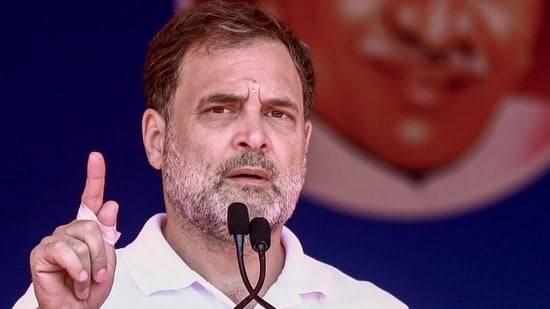
'Every time...victim is Dalit, poor': Rahul seeks high-level probe into Ghazipur rape-murder, demands swift justice| India News
# Ghazipur Crime: Rahul Demands High-Level Probe
**By Siddhartha Rao, National Affairs Editor, India Policy Watch | April 25, 2026**
On April 25, 2026, Leader of the Opposition Rahul Gandhi demanded a high-level, court-monitored investigation into the tragic rape and murder of a Dalit girl in Ghazipur, Uttar Pradesh. Strongly condemning the reported institutional delays in registering a First Information Report (FIR), Gandhi launched a scathing political attack on the state government. He asserted that an administration lacking the basic empathy to promptly register complaints from marginalized citizens has forfeited its moral authority to govern. The grim incident has once again ignited intense nationwide debates regarding caste-based violence, rural law enforcement accountability, and the safety of vulnerable communities in India.
## The Political Backlash and Calls for Accountability
The brutal crime in Ghazipur has rapidly evolved into a major political flashpoint, drawing sharp criticism from opposition leaders and civil society activists. Taking to social media and addressing the press, Rahul Gandhi emphasized a disturbing pattern in crimes against women in rural India.
“Every time… the victim is Dalit, poor,” Gandhi noted, pointing to the structural inequalities that leave marginalized communities uniquely vulnerable to violence. His strongest criticism was reserved for the local law enforcement’s initial reluctance to act. Gandhi stated that in a country where parents must literally beg to get an FIR filed for their deceased daughter, the ruling government has “no moral right to remain in power.” **[Source: Hindustan Times]**
The demand for a high-level probe is rooted in allegations that local police authorities attempted to suppress the matter or delay formal proceedings, a recurring accusation in high-profile cases of violence against marginalized castes. By demanding swift justice, the opposition is not only seeking accountability for the perpetrators but also demanding punitive action against negligent officials who failed in their statutory duties.
## Systemic Apathy and Institutional Delays
The crux of the outrage stems from the alleged delay in the registration of the **First Information Report (FIR)**. Under Indian law, particularly following the criminal law amendments over the last decade, the registration of an FIR in cases of cognizable offenses—especially those involving sexual assault—is mandatory. Furthermore, the concept of a ‘Zero FIR’ allows for a complaint to be registered at any police station regardless of jurisdiction.
Yet, reports from Ghazipur indicate a distressing familiar narrative: impoverished parents facing bureaucratic stonewalling and intimidation when seeking police assistance.
Dr. Manish Tewari, a former IPS officer and advocate for police reforms, notes the systemic issues at play. “The refusal or delay in filing an FIR in cases involving marginalized communities is an administrative failure that borders on complicity,” Dr. Tewari explains. “When local police outposts hesitate to record crimes against Dalits, it emboldens perpetrators and destroys the community’s faith in the criminal justice system. A prompt FIR is the absolute minimum standard of state response, and failing this standard requires immediate departmental action.” **[Additional Source: Expert Commentary on Police Reforms]**
The hesitation by local authorities is often attributed to a mix of local power dynamics, political pressure, and deeply ingrained caste prejudices. For poor families, navigating the labyrinthine and often hostile environment of a rural police station remains a daunting, traumatic ordeal.
## The Persistent Vulnerability of Marginalized Communities
Rahul Gandhi’s assertion that the victims are invariably “Dalit and poor” highlights a harsh sociological reality. Despite stringent legal frameworks such as the **Scheduled Castes and Scheduled Tribes (Prevention of Atrocities) Act**, enforcement remains uneven, and conviction rates often lag behind the national average for other crimes.
Historically, data from the **National Crime Records Bureau (NCRB)** has consistently shown a disproportionate vulnerability of Dalit women to severe crimes. The intersection of gender, caste, and economic deprivation creates a “triple burden” that severely restricts access to justice.
Sociologist Dr. Arpita Menon from the Centre for Policy Research elaborates on this dynamic: “Violence against Dalit women is frequently utilized as a tool to assert caste supremacy and suppress economic mobility within rural hierarchies. When the state apparatus, represented by the local police, acts sluggishly, it reinforces the societal message that the lives of the poor and marginalized are expendable. The Ghazipur tragedy is a horrific manifestation of this systemic rot.” **[Additional Source: Sociological Analysis of Rural Demographics]**
## Legal Framework and the Hurdle of Swift Justice
India’s legal framework surrounding sexual violence and caste-based atrocities is robust on paper. However, the translation of these laws into swift justice is fraught with procedural bottlenecks. The initial delay in evidence collection—caused by the delay in filing the FIR—can critically compromise the prosecution’s case. Forensic evidence, medical examinations, and witness testimonies are highly time-sensitive.
Senior Advocate Kavita Sharma emphasizes the legal ramifications of such delays. “In cases of rape and murder, the first 48 hours are crucial. When police delay the FIR, they inevitably delay the medical examination and the securing of the crime scene. This gives perpetrators ample time to destroy evidence or intimidate witnesses. Therefore, seeking a high-level, possibly court-monitored probe, as suggested by the opposition, is not just a political demand; it is a legal necessity to salvage the investigation.”
The demand for a specialized investigative team, such as a **Special Investigation Team (SIT)** or a probe by the Central Bureau of Investigation (CBI), reflects a profound lack of trust in the local police machinery to conduct an unbiased investigation, especially when local political or caste equations are involved.
## Civil Society Mobilization and Public Outcry
The Ghazipur incident has not remained confined to political corridors; it has sparked significant mobilization among civil society organizations, student unions, and human rights watchdogs across the country. Digital platforms have played a critical role in amplifying the voices of the victim’s family, bypassing traditional rural media blackouts that often suppress such stories.
Hashtags demanding justice for the Ghazipur victim trended throughout the weekend, accompanied by widespread calls for peaceful protests in major metropolitan centers. Activists are demanding not only the immediate arrest and fast-track trial of the perpetrators but also the immediate suspension of the police personnel who allegedly turned away the victim’s parents.
“We are witnessing a familiar cycle of tragedy, outrage, and institutional amnesia,” stated a spokesperson from the Dalit Human Rights Defenders Network. “Unless the police officers who delayed the FIR are booked under Section 4 of the SC/ST Atrocities Act—which explicitly penalizes neglect of duties by a public servant—this cycle will continue unabated.”
## Political Repercussions in Uttar Pradesh
For the Uttar Pradesh state government, the Ghazipur crime presents a severe administrative and public relations crisis. The state administration has consistently campaigned on a platform of stringent “law and order” and zero tolerance for crime. However, incidents highlighting police insensitivity and delayed responses directly challenge these claims, providing potent ammunition to the opposition.
The state government is expected to announce compensation for the victim’s family and the formation of a departmental inquiry to investigate the alleged police lapses. However, political analysts suggest that financial compensation alone cannot repair the damage to the government’s image.
The opposition, led by Rahul Gandhi and regional parties, is likely to keep the issue alive in the legislative assemblies, pushing for broader debates on police reforms, minority safety, and administrative accountability. This incident may also serve as a catalyst for political realignment among marginalized voters in the region, who view police apathy as a reflection of state indifference.
## Conclusion: A Litmus Test for the Criminal Justice System
The tragic rape and murder of the Dalit girl in Ghazipur is a stark reminder of the deep-seated societal and institutional fractures that continue to plague rural India. Rahul Gandhi’s demand for a high-level probe and his poignant critique of a system that forces impoverished parents to beg for an FIR encapsulate a broader national frustration with a sluggish and biased criminal justice system. **[Source: Hindustan Times]**
Moving forward, the credibility of the state administration hinges entirely on its immediate actions. Ensuring swift, transparent justice for the victim’s family, initiating stringent actions against negligent police officials, and implementing systemic reforms to guarantee the prompt registration of complaints are imperative steps.
Ultimately, the true measure of a government’s moral right to rule is not found in its political rhetoric, but in its unwavering commitment to protecting its most vulnerable citizens. The Ghazipur case will undoubtedly serve as a critical litmus test for India’s judicial mechanisms and democratic promises in the days to come.





