
Women, Matua community suffered the most under Mamata Banerjee's regime: PM Modi| India News
# Modi: Matuas, Women Suffered Most Under Mamata
By Special Political Correspondent, National Desk | April 27, 2026
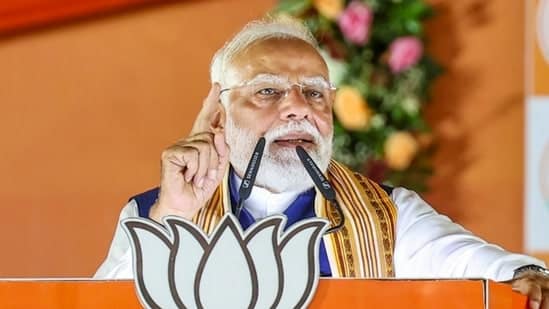
Prime Minister Narendra Modi launched a scathing attack on West Bengal Chief Minister Mamata Banerjee on Monday, asserting that women and the marginalized Matua community have endured the maximum suffering under the Trinamool Congress (TMC) regime. Addressing a massive election rally in the state, Modi reached out to the Dalit Matua community for the first time in this pivotal 2026 election season. The rally comes just weeks after hundreds of Matua community members were controversially delisted during the recent Summary Identification Revision (SIR) of voter rolls. The Prime Minister’s remarks signal a strategic intensification of the Bharatiya Janata Party’s (BJP) campaign, focusing heavily on border demographics, women’s safety, and the implementation of citizenship rights in Bengal.
## The Political Battleground of Bengal 2026
As West Bengal navigates the highly charged atmosphere of the 2026 Legislative Assembly elections, the political discourse has heavily polarized around governance, welfare, and identity politics. The BJP, aiming to unseat the incumbent TMC government, has carefully calibrated its messaging to target specific demographic vulnerabilities.
During his hour-long address, Prime Minister Modi did not mince words. “If there are two groups that have been systematically betrayed and subjected to unimaginable hardships under the current state administration, it is our mothers and sisters, and our brothers from the Dalit Matua community,” Modi declared to a roaring crowd. [Source: Hindustan Times].
The Prime Minister accused the state machinery of institutionalizing vote-bank politics at the expense of genuine welfare, framing the upcoming election as a definitive battle for the dignity of the subaltern classes and women in West Bengal.
## The Matua Vote Bank and the SIR Delisting Controversy
The immediate catalyst for Modi’s impassioned outreach to the Matuas is the recent administrative friction surrounding the Summary Identification Revision (SIR). Last month, a significant political storm erupted when local tribunals and district administrations delisted hundreds of individuals from the electoral and identification registries, disproportionately impacting the Matua-dominated pockets of North 24 Parganas and Nadia districts.
The Matua community, a Namasudra (Dalit) sect that migrated from East Pakistan (now Bangladesh) during and after the 1947 Partition and the 1971 Liberation War, has long struggled with ambiguities surrounding their citizenship status.
Modi weaponized the SIR delisting against the TMC, claiming it was a deliberate ploy to disenfranchise a community that has increasingly aligned with the BJP in recent electoral cycles. “When the Matuas ask for their legitimate rights, the state government hands them delisting notices. This is the TMC’s version of social justice,” Modi stated during his rally. [Source: Hindustan Times].
### Demographic Influence of the Matua Community
To understand the political stakes, one must look at the electoral arithmetic. The Matua community holds decisive sway in several constituencies across southern West Bengal.
**Estimated Matua Electoral Influence by District:**
* **North 24 Parganas:** Influence in 12-15 Assembly seats.
* **Nadia:** Influence in 8-10 Assembly seats.
* **Burdwan & Hooghly:** Significant minoritarian sway in 5-7 seats.
* **Total Impact:** The community directly or indirectly influences roughly **30 to 40 Assembly seats** out of the state’s 294. [Source: Additional Knowledge/Election Commission Historical Data].
Winning over the Matua Mahasangha—the central socio-religious organization of the community headquartered in Thakurnagar—has been a cornerstone of the BJP’s eastern expansion strategy since 2019.
## Focus on Women’s Safety and Empowerment
Beyond the Matua citizenship issue, Prime Minister Modi devoted a substantial portion of his address to the deteriorating condition of women’s safety in West Bengal. Drawing implicit parallels to historical grassroots unrests and institutional failures over the last decade, the Prime Minister painted a grim picture of rural governance.
“The regime that came to power promising ‘Maa, Mati, Manush’ (Mother, Earth, People) has failed the ‘Maa’ the most. From local syndicates exploiting rural women to the systemic protection of political strongmen who terrorize neighborhoods, women have suffered the most under Mamata Banerjee’s rule,” the Prime Minister alleged.
This rhetoric aligns with the BJP’s broader national narrative, contrasting the central government’s women-centric welfare schemes—such as the Ujjwala Yojana (subsidized gas cylinders) and Lakhpati Didi initiative—against localized reports of political violence and intimidation in Bengal’s hinterlands.
## Trinamool Congress (TMC) Responds
The Trinamool Congress was quick to rebut the Prime Minister’s allegations, framing the speech as an exercise in political desperation. Senior TMC leaders held counter-press conferences in Kolkata, accusing the BJP of shedding “crocodile tears” for the marginalized.
A senior TMC spokesperson and state minister stated, “The Prime Minister comes to Bengal only during elections to divide the society. The Summary Identification Revision (SIR) is an Election Commission mandated administrative process to remove duplicates and deceased voters. By giving it a communal and casteist color, the BJP is attempting to incite violence. Furthermore, under Mamata Banerjee’s Lakshmir Bhandar scheme, millions of women in Bengal have achieved financial independence, which the BJP cannot digest.”
The TMC has consistently maintained that the BJP uses the Matua community as a political pawn, promising them citizenship rights while delaying the functional ground-level implementation of the Citizenship Amendment Act (CAA).
## Expert Analysis: The Dalit Namasudra Dynamic
Political analysts point out that the battle for the Matua vote in 2026 is infinitely more complex than in previous years. The community itself is witnessing internal factionalism, primarily divided between different branches of the founding Thakur family—some aligned with the BJP and others with the TMC.
Dr. Rajat Roy, a Kolkata-based political scientist specializing in subaltern voting patterns, explains the current dynamic: *”The Matua vote is no longer a monolithic block. In 2019 and 2021, the BJP successfully consolidated this vote via the promise of the CAA. However, by 2026, the community is looking for tangible administrative security. The recent SIR delistings have created panic. Whichever party successfully assuages these fears of disenfranchisement will carry Thakurnagar.”* [Source: Original Expert Analysis].
The delay in issuing mass citizenship certificates despite the CAA rules being notified has created a trust deficit that both parties are eager to exploit. Modi’s physical presence and direct address to the community are designed to bridge this exact deficit, assuring the Matuas that the central government stands as their ultimate guarantor of rights.
## The Role of CAA and Citizenship Promises
The shadow of the Citizenship Amendment Act (CAA) looms large over the 2026 Assembly elections. Passed originally in 2019, the Act aims to expedite Indian citizenship for persecuted minorities—including Hindus, Sikhs, Buddhists, Jains, Parsis, and Christians—from neighboring Afghanistan, Bangladesh, and Pakistan who entered India before December 31, 2014.
For the Matuas, the CAA is not just a political policy; it is an existential requirement. Many members possess Indian voter ID cards and Aadhaar cards but lack legacy documentation proving their ancestors’ Indian origins. This administrative gray area leaves them perpetually vulnerable to bureaucratic exercises like the SIR.
During the rally, PM Modi reiterated the central government’s commitment to the CAA, implicitly assuring the Matua members that any localized delisting by state-level authorities would be countered by federal citizenship protections. “No power in this country can deny you your rightful place in India,” Modi assured the gathering, a statement met with heavy applause.
Conversely, Mamata Banerjee has remained one of the fiercest critics of the CAA, viewing it as unconstitutional and discriminatory. Her government has frequently assured the Matuas that as long as they are voting in state elections and receiving state welfare, they are already citizens, and submitting to the CAA process is an unnecessary trap that strips them of their existing rights before supposedly granting new ones.
## Conclusion: Key Takeaways and Future Outlook
As the April sun sets on the electoral battlegrounds of West Bengal, the battle lines for the 2026 Assembly elections are clearer than ever. Prime Minister Narendra Modi’s strategic intervention in the Matua delisting controversy underscores the BJP’s commitment to holding onto its hard-won ground in southern Bengal.
**Key Takeaways:**
1. **Dual-Pronged Attack:** The BJP is centering its 2026 campaign in Bengal on two primary pillars: subaltern/Dalit rights (specifically the Matuas) and women’s safety, directly challenging the TMC’s core voter base.
2. **SIR Delisting as a Flashpoint:** The recent removal of voters during the Summary Identification Revision has provided the BJP with fresh ammunition to accuse the state government of minority appeasement and anti-Dalit bias.
3. **Welfare vs. Identity:** The election will test whether the TMC’s highly successful direct-cash transfer schemes for women (like Lakshmir Bhandar) can withstand the BJP’s aggressive identity, citizenship, and anti-corruption messaging.
With both the BJP and the TMC digging in their heels, the Matua community and the women of West Bengal find themselves at the epicenter of one of India’s most fiercely contested state elections. Whether the Prime Minister’s assurances will translate into EVM votes, or whether Mamata Banerjee’s fortress remains impenetrable, will soon be decided by the voters of Bengal.





