
Centre targets Northeast insurgency with 2029 deadline, first focus on Manipur| India News
# India Sets 2029 to End Northeast Insurgency
**By Siddharth Rao, National Security Desk**
**April 27, 2026**
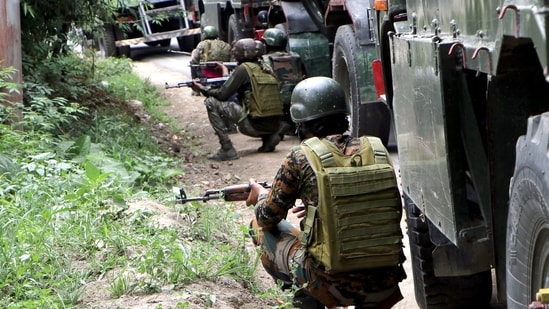
The Union Government has formalized an ambitious operational blueprint to entirely eradicate armed insurgency in Northeast India by a definitive deadline of 2029, with the volatile state of Manipur serving as the initial focal point. To achieve this monumental geopolitical objective, the Ministry of Home Affairs (MHA) has authorized a comprehensive realignment of the Central Armed Police Forces (CAPF). This massive strategic redeployment of security personnel is slated to commence immediately after the culmination of the ongoing state assembly elections in West Bengal and the conclusion of the annual Amarnath Yatra. Driven by a dual strategy of targeted kinetic operations and accelerated peace dialogues, the Centre aims to secure the region, seal porous international borders, and integrate the Northeast seamlessly into the nation’s primary economic corridor. [Source: Hindustan Times | Additional: MHA Policy Guidelines 2026].
## The Phased CAPF Realignment Strategy
The foundation of the Centre’s 2029 roadmap relies heavily on the tactical repositioning of the Central Armed Police Forces. Currently, tens of thousands of CAPF personnel—comprising the Central Reserve Police Force (CRPF), Border Security Force (BSF), and the Indo-Tibetan Border Police (ITBP)—are deeply engaged in maintaining public order and electoral integrity during the highly contested West Bengal assembly elections. Following the electoral process, a significant contingent will be diverted to Jammu and Kashmir to secure the challenging terrain of the Amarnath Yatra during the summer months.
According to internal security blueprints, once these two massive logistical commitments conclude by August 2026, the MHA will initiate “Operation Purvoday”—a phased, multi-tier redeployment of highly trained battalions directed explicitly toward the Northeast.
**Key elements of the CAPF realignment include:**
* **Specialized Counter-Insurgency Units:** Deploying battalions specifically trained in jungle warfare and high-altitude operations to flush out remnant insurgent factions hidden in densely forested border corridors.
* **Intelligence Grid Integration:** Synchronizing CAPF operational commands with the Intelligence Bureau (IB), National Investigation Agency (NIA), and local state police forces to ensure real-time data sharing and preemptive strikes against militant logistics networks.
* **Infrastructure Defense:** Stationing robust security perimeters around vital developmental projects, including national highways, railway networks, and telecom grids, which have historically been targets for extortion and sabotage by armed groups.
## Manipur: The Critical First Frontier
The decision to place Manipur at the absolute epicenter of this renewed anti-insurgency drive is deeply rooted in the state’s recent turbulent history. Following the severe ethnic clashes that paralyzed the state in 2023 and 2024, Manipur became heavily factionalized, with various valley-based and hill-based armed groups using the socio-political vacuum to rearm and expand their extortion networks.
The Centre views the stabilization of Manipur as the undeniable prerequisite for regional peace. If insurgent networks continue to find safe havens in the state’s peripheral hill districts, the broader vision for a peaceful Northeast remains unattainable.
The operational focus in Manipur will initially target the dismantling of unauthorized militant camps and the aggressive enforcement of the Suspension of Operations (SoO) ground rules. The deployment will aim to strictly separate warring factions, confiscate illegal weaponry looted from state armories in previous years, and establish an uncompromising state monopoly on violence. By restoring absolute law and order, the Centre intends to build the necessary environment for long-delayed socio-political reconciliation among the state’s diverse ethnic communities. [Source: Hindustan Times | Additional: Regional Security Analysis].
## Securing the Indo-Myanmar Border
A core pillar of the 2029 deadline is the total securitization of the 1,643-kilometer-long Indo-Myanmar border. For decades, insurgent groups from Assam, Nagaland, and Manipur have utilized the porous border—and the political instability within Myanmar—to establish training camps, procure illicit arms, and traffic narcotics.
In a decisive move recognized as a paradigm shift in border management, the Indian government scrapped the Free Movement Regime (FMR) and commissioned advanced smart-fencing projects along the frontier. As of early 2026, the construction of this fence is being expedited through the deployment of the Border Roads Organisation (BRO) and private engineering conglomerates.
The CAPF realignment will see dedicated BSF and Assam Rifles contingents securing these newly fenced sectors. The implementation of drone surveillance, seismic sensors, and thermal imaging will supplement physical barriers, effectively suffocating the logistical supply lines that have historically kept Northeast insurgencies financially and militarily viable.
## Dual Approach: Peace Accords and Political Outreach
While the augmentation of security forces represents the kinetic edge of the Centre’s strategy, the 2029 deadline is equally dependent on aggressive political outreach. Security analysts emphasize that the government is utilizing a “carrot and stick” methodology. Over the past five years, the Centre has successfully brokered historic peace settlements with numerous factions, including major milestones with Bodo, Karbi, and Dimasa groups in Assam, as well as several valley-based insurgent groups (VBIGs) in Manipur.
The overarching strategy dictates that as the CAPF tightens the operational noose around active militant groups, the MHA will simultaneously leave the door open for unconditional peace talks.
**The rehabilitation framework offers:**
* **Cadre Integration:** Comprehensive vocational training and stipends for surrendered militants to ensure their smooth transition into civilian life.
* **Political Representation:** Facilitating the transition of insurgent leadership into democratic political entities, allowing grievances to be addressed through constitutional mechanisms.
* **Infrastructure Packages:** Multi-billion rupee special development packages granted to regions that completely renounce armed rebellion, directly linking local prosperity to permanent peace.
## Economic Imperatives of a Peaceful Northeast
The urgency behind the 2029 deadline is heavily intertwined with India’s “Act East” policy. The Northeast is geographically positioned to serve as India’s premier gateway to the booming economies of Southeast Asia. However, chronic insurgency and systemic extortion have historically deterred domestic and foreign direct investment (FDI), stalling vital trans-national projects.
By setting a hard deadline for the elimination of militancy, the Union Government is signaling absolute stability to global investors. Mega-infrastructure initiatives—such as the India-Myanmar-Thailand Trilateral Highway, the Kaladan Multi-Modal Transit Transport Project, and the expansion of the Jiribam-Imphal railway line—require a zero-insurgency environment to function profitably.
Economists project that a completely pacified Northeast could witness a double-digit boost in its Gross State Domestic Product (GSDP) growth rate by 2030, driven by cross-border trade, eco-tourism, and natural resource extraction.
## Expert Perspectives on the 2029 Deadline
Defense and policy experts view the Centre’s timeline as highly ambitious but achievable, provided the government maintains its political will and operational momentum.
“Setting a specific year like 2029 fundamentally changes the operational psychology of the security apparatus. It transitions the state’s approach from indefinite conflict management to definitive conflict resolution,” notes Dr. Abhinav Sharma, a senior fellow specializing in internal security at the New Delhi Center for Policy Research. “By freeing up the CAPF post the Bengal elections, the MHA is ensuring that the numerical and qualitative superiority of the state forces in Manipur will be overwhelming.”
Similarly, Dr. Meenakshi Gogoi, a geopolitical analyst focused on Northeast border dynamics, highlights the external variables. “The physical containment of the insurgency is possible by 2029, especially with the scrapping of the FMR. However, the ultimate success of this deadline hinges heavily on the internal situation in Myanmar. So long as the junta-rebel civil war rages next door, the risk of arms spillover remains a potent threat that the CAPF will have to vigilantly manage.” [Source: Independent Policy Review].
## Future Challenges and Geopolitical Variables
Despite the robust framework, the road to 2029 is fraught with intricate challenges. The dense, mountainous terrain of the Indo-Myanmar border presents a perpetual logistical nightmare for traditional infantry operations, necessitating a heavy reliance on aerial and drone-assisted reconnaissance.
Furthermore, deeply entrenched ethnic loyalties and historical inter-tribal suspicions cannot be erased by military presence alone. The Centre must ensure that the CAPF operates with maximum restraint and respects human rights, as any civilian collateral damage could easily be weaponized by militant propagandists to fuel fresh recruitment drives.
Additionally, the geopolitical landscape remains a critical wildcard. Hostile foreign intelligence agencies have historically exploited the Northeast’s vulnerabilities to bog down Indian security forces. Countering external funding and cyber-radicalization will require a sophisticated, tech-driven approach alongside traditional boots on the ground.
## Conclusion: A Paradigm Shift in Internal Security
The Centre’s declaration of a 2029 deadline to eradicate insurgency in the Northeast, spearheaded by a massive CAPF realignment starting with Manipur, represents one of the most assertive internal security mandates in modern Indian history.
As the nation waits for the conclusion of the West Bengal assembly elections and the Amarnath Yatra, the stage is being quietly set for “Operation Purvoday.” If successful, this comprehensive blend of kinetic enforcement, border sealing, and inclusive peace dialogues will not merely silence the guns that have echoed in the hills for decades. It will permanently unlock the boundless economic potential of the Northeast, transforming a historically restive frontier into a thriving, peaceful bridge to Southeast Asia.





