
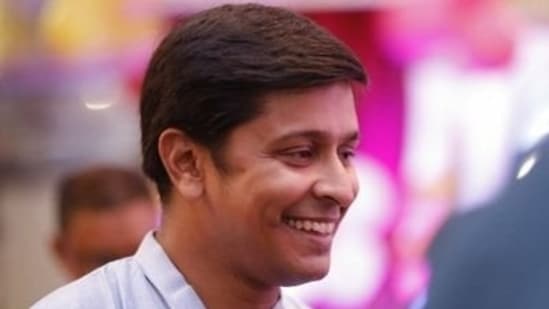
CPI(M)'s Kalatan Dasgupta to fight first major electoral contest in West Bengal
# CPI(M) Leader Dasgupta’s Major Bengal Debut
By Political Correspondent, National Desk, April 27, 2026
On April 27, 2026, the Communist Party of India (Marxist) confirmed that prominent youth leader Kalatan Dasgupta will fight his first major electoral contest in the highly anticipated West Bengal Assembly elections. Emerging as a highly recognizable face of the Democratic Youth Federation of India (DYFI), Dasgupta has spent years leading high-profile street agitations and student protests across Kolkata and the districts. However, the youth leader has never previously served as a Member of the Legislative Assembly (MLA) or held any formal legislative position. His high-stakes candidacy marks a definitive shift in the Left Front’s political strategy, reflecting a conscious pivot towards fielding dynamic grassroots activists in a bid to reclaim lost political ground against the ruling Trinamool Congress (TMC) and the principal opposition, the Bharatiya Janata Party (BJP). [Source: Hindustan Times].
## The Emergence of a Grassroots Agitator
For the better part of the last decade, West Bengal’s political landscape has been overwhelmingly dominated by the fierce binary between Mamata Banerjee’s Trinamool Congress and the Bharatiya Janata Party. During this period, the CPI(M), which once ruled the state uninterrupted for 34 years, found itself pushed to the electoral margins. However, the systemic vacuum in opposition spaces on the streets provided an opening for the Left’s youth wing, the DYFI, to reassert its relevance. It is within this crucible of street-corner meetings, civil society protests, and police barricades that Kalatan Dasgupta forged his political identity.
Unlike traditional politicians who climb the ranks through local municipal bodies or panchayat systems, Dasgupta’s political capital has been built almost entirely on direct action and public agitation. He became a familiar face on Bengali news channels and digital media platforms, debating government policies, demanding employment generation, and calling for transparency in state administrative recruitment processes.
His transition from a vocal youth leader to a mainstream electoral candidate in the 2026 Assembly elections underscores a critical juncture for the CPI(M). The party hierarchy at Alimuddin Street has recognized that the traditional reliance on aging veterans is no longer viable in a state where the demographic dividend is increasingly youthful. Dasgupta’s entry into the electoral fray is not just a personal milestone; it is a litmus test for the Left’s ability to convert street-level sympathy and viral social media popularity into tangible votes inside the Electronic Voting Machine (EVM). [Additional: Pre-election Political Analysis].
## 5 Key Facts About Kalatan Dasgupta
As the electoral battlelines are drawn for the West Bengal Assembly elections, understanding the profile of this first-time candidate is essential. Here are five crucial facts about Kalatan Dasgupta:
**1. A Product of the DYFI’s Rigorous Cadre System**
Dasgupta is deeply entrenched in the ideological framework of the Left Front. Rising through the ranks of the Democratic Youth Federation of India (DYFI)—the youth wing of the CPI(M)—he has held key organizational responsibilities. His training involves grassroots mobilization, organizing massive rallies at Kolkata’s Brigade Parade Ground, and coordinating district-level student strikes. His elevation to an MLA candidate is a direct reward for his organizational discipline and ability to mobilize youth cadres during the party’s leanest electoral phases. [Source: Hindustan Times].
**2. No Prior Legislative Experience**
Perhaps the most striking aspect of Dasgupta’s candidacy is his clean electoral slate. The CPI(M) youth leader hasn’t previously served as an MLA, a Member of Parliament (MP), or even a municipal councilor. While political opponents may highlight this lack of legislative experience as a vulnerability, the CPI(M) is strategically pitching it as an asset. In an era where anti-incumbency and political corruption are major talking points, Dasgupta is being presented as an uncorrupted, fresh voice untainted by the compromises of institutional power. [Source: Hindustan Times].
**3. Forefront of Major Civil Agitations**
Dasgupta’s political stock rose exponentially due to his active participation in major civil society movements over the past few years. From the protracted protests regarding the West Bengal School Service Commission (SSC) recruitment irregularities to his vocal stance during the tragic medical college protests of 2024, Dasgupta has consistently positioned himself on the frontlines against the state administration. These agitations often resulted in detentions and legal battles, which only served to solidify his reputation as a fearless opposition voice among urban and semi-urban voters.
**4. Strong Orator and Digital Communicator**
While the Left Front in Bengal has historically struggled to adapt to the digital age, leaders like Dasgupta represent a paradigm shift. He is known for his articulate, data-driven speeches that resonate well beyond physical rallies. By leveraging social media platforms, podcasts, and digital news interviews, Dasgupta has managed to bypass traditional media blackouts, directly reaching first-time voters and urban millennials who are generally disillusioned with mainstream political rhetoric.
**5. The Face of CPI(M)’s Generational Overhaul**
Dasgupta is not an isolated phenomenon but part of a broader, deliberate strategy by the CPI(M) politburo. Alongside other prominent youth leaders like Minakshi Mukherjee and Srijan Bhattacharya, Dasgupta forms the vanguard of the “New Left” in Bengal. His selection underscores the party’s realization that to break the TMC-BJP duopoly, they must present a modern, energetic alternative that speaks directly to the aspirations and anxieties of the state’s younger demographic. [Additional: Regional Political Think Tanks].
## CPI(M)’s Generational Shift: A Do-or-Die Strategy
The decision to field Kalatan Dasgupta in a major electoral contest in 2026 is deeply intertwined with the existential crisis the Left Front has faced in West Bengal. After being routed in the 2011 assembly elections, the CPI(M) witnessed a steady hemorrhage of its vote share, culminating in the devastating 2021 assembly elections where the Left-Congress alliance failed to win a single seat. The party’s traditional vote bank had heavily polarized, shifting either to the TMC for welfare schemes or to the BJP as an anti-TMC alternative.
To arrest this decline, the state committee undertook a painful but necessary recalibration. The 2024 Lok Sabha elections saw the first glimpses of this strategy, where younger candidates were given precedence over veteran leaders. As the 2026 state elections approached, this strategy was amplified. The old guard, characterized by aging leaders who governed during the Left Front’s 34-year rule, has largely stepped back into advisory roles, allowing the DYFI and SFI (Students’ Federation of India) leadership to take the steering wheel.
Dasgupta’s candidacy embodies this transition. By giving him a ticket, the CPI(M) is sending a clear message to its wavering cadres and the general electorate: the party is rebuilding from the ground up. This generational shift aims to shed the historical baggage associated with the later years of Left rule, focusing instead on contemporary issues such as unemployment, women’s safety, industrial stagnation, and the defense of democratic rights.
## The Challenge of Translating Agitation into Votes
While Kalatan Dasgupta enjoys considerable popularity in civil society circles and among the left-leaning intelligentsia, electoral arithmetic in West Bengal presents a formidable challenge. The transition from a successful street agitator to an elected legislator is fraught with hurdles, particularly in a state characterized by deeply entrenched political machinery.
The ruling Trinamool Congress possesses a robust organizational network, bolstered by extensive state-sponsored welfare schemes (like Lakshmir Bhandar) that have solidified a massive rural and female voter base. On the other hand, the Bharatiya Janata Party relies on a strong ideological narrative, immense financial backing, and the polarizing appeal of national leadership to consolidate the anti-incumbency vote.
For a first-time candidate like Dasgupta, the primary challenge lies in breaking this polarized voting pattern. Observers note that while voters may sympathize with the Left’s youth leaders and admire their courage during protests, this sympathy does not automatically translate into votes on election day. Many anti-incumbency voters suffer from the “wasted vote” syndrome, opting for the BJP simply because they perceive it as the only force capable of defeating the TMC, regardless of their personal affinity for young Left candidates.
To succeed, Dasgupta will have to run a hyper-local campaign, combining his overarching narrative of systemic change with specific solutions for the constituency he contests. He must convince voters that the CPI(M) is not merely a party of protest, but a viable, governable alternative. [Additional: Election Commission Data Trends].
## Expert Analysis: A Litmus Test for the “New Left”
Political analysts are closely monitoring Dasgupta’s electoral debut, viewing it as a critical indicator of West Bengal’s shifting political currents.
“Kalatan Dasgupta’s entry into the electoral fray is one of the most interesting sub-plots of the 2026 Bengal elections,” notes Dr. Anindya Sengupta, a political researcher focusing on Eastern Indian electoral dynamics. “He represents a demographic that is deeply frustrated with chronic unemployment and political violence. However, the Left’s structural weakness at the booth level remains their Achilles’ heel. Dasgupta has the charisma to draw crowds, but does the CPI(M) have the booth-level agents to protect those votes? That will be the deciding factor.”
Furthermore, experts suggest that even if Dasgupta does not secure a landslide victory, a strong runner-up finish with a significant increase in vote share would be viewed as a long-term strategic success for the CPI(M). It would validate their youth-centric approach and establish a new generation of leaders capable of sustaining the party’s relevance well into the 2030s. His performance will be benchmarked against the historical lows of 2021, meaning the only trajectory for the Left in this context is upward.
## Conclusion: Redefining Bengal’s Opposition
As West Bengal navigates the intense political heat of the 2026 Assembly elections, Kalatan Dasgupta’s major electoral debut stands out as a compelling narrative of reinvention. Stepping out from the shadow of the CPI(M)’s historical monolith, this first-time candidate carries the heavy burden of his party’s future on his shoulders.
While he lacks the legislative experience of his seasoned rivals, his grassroots credibility, unyielding presence during civil agitations, and appeal to the younger demographic make him a wild card in a highly polarized election. Whether Dasgupta successfully bridges the gap between street-level activism and legislative power remains to be seen. However, his candidacy unequivocally guarantees that the voices of Bengal’s agitated youth will feature prominently on the ballot, forcing both the TMC and the BJP to address the pressing economic and social anxieties of a new generation.
The 2026 election will not just decide who sits in the legislative assembly; it will determine whether the “New Left,” championed by leaders like Dasgupta, has finally found the formula to rise from the ashes in West Bengal.





