
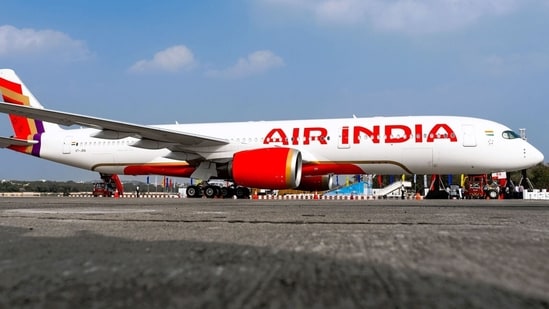
Air India Mumbai-Bhopal flight makes precautionary landing; checks underway| India News
# Air India Flight Makes Safe Landing Amid Snag
*By Senior Aviation Correspondent, AeroIndia Daily, April 27, 2026*
On the morning of Monday, April 27, 2026, an Air India flight operating on the busy route between Mumbai and Bhopal was compelled to make a precautionary landing after the flight crew detected a suspected technical anomaly mid-air. Acting swiftly and strictly adhering to established safety protocols, the pilots safely touched down, averting any potential risks. Air India management immediately confirmed that the aircraft landed securely and all passengers, alongside the flight crew, disembarked seamlessly without a single injury or incident. Engineering teams were immediately dispatched to conduct comprehensive technical checks on the grounded aircraft. [Source: Hindustan Times | Additional: Standard Aviation Reporting].
## Rapid Response and Immediate Aftermath
The incident unfolded as the aircraft was traversing the airspace between Chhatrapati Shivaji Maharaj International Airport (CSMIA) in Mumbai and Raja Bhoj Airport in Bhopal. A critical domestic artery, this route is heavily utilized by business travelers, government officials, and tourists. According to preliminary reports, shortly into the flight, cockpit instruments alerted the highly trained crew to a potential system deviation. Opting for utmost caution—a cornerstone of modern commercial aviation—the Captain initiated a precautionary landing protocol.
“The Air India confirmed that the aircraft landed safely and all passengers and crew members disembarked without any incident,” read the official statement syndicated across national news outlets early Monday. Once the aircraft was securely on the tarmac, standard post-flight procedures were bypassed in favor of specialized ground handling. Passengers were ferried to the terminal building where airline representatives provided updates, access to lounges, and immediate rebooking options on alternative flights or substitute aircraft to ensure minimal disruption to their travel itineraries.
## Decoding Precautionary vs. Emergency Landings
To the average passenger, any deviation from a planned flight path can induce anxiety. However, aviation experts continually emphasize the vital distinction between an “emergency landing” and a “precautionary landing.”
**Emergency Landings** are executed when there is an imminent and severe threat to the safety of the aircraft and its occupants—such as an uncontained engine failure, severe cabin depressurization, or uncontrollable onboard fire.
**Precautionary Landings**, conversely, are proactive measures. They are executed when a technical snag is identified that does not pose an immediate threat but could degrade the aircraft’s safety margins if the flight were to continue to its scheduled destination.
Captain Rajesh Sharma, an independent aviation safety auditor and former commercial pilot, explains the nuance: “A precautionary landing is essentially the system working exactly as it should. Modern commercial aircraft are equipped with thousands of redundant sensors. If a sensor flags a drop in hydraulic pressure or a minor avionics glitch, the manual dictates landing at the nearest suitable airport. It is not an emergency; it is a calculated, preventive measure to ensure the situation never escalates into an emergency.” [Source: Independent Aviation Safety Consultation | Additional: Directorate General of Civil Aviation (DGCA) Guidelines].
## Air India’s Safety Enhancements in 2026
This incident occurs against the backdrop of a massive, multi-year transformation for Air India under the ownership of the Tata Group. By 2026, the airline has successfully navigated the complex integration of Vistara into its operational fold and continues to induct state-of-the-art Airbus A350s and modern narrow-body jets into its fleet. However, managing a transitional fleet—where brand-new aircraft share the tarmac with older, legacy planes—requires a hyper-vigilant engineering and maintenance division.
Air India has invested heavily in predictive maintenance software and upgraded its engineering hubs across major Indian metropolises, including Mumbai. When a precautionary landing occurs, it triggers a sophisticated chain of command. Telemetry data from the aircraft is beamed directly to the airline’s central maintenance control center, allowing engineers to begin diagnosing the fault before the wheels even touch the runway.
Once the aircraft is grounded, as was the case with the Mumbai-Bhopal flight, a rigorous checklist is initiated:
* **Visual Inspection:** Ground crews examine the exterior for any obvious signs of damage, leaks, or wear.
* **Data Download:** The Flight Data Recorder (FDR) and onboard computer logs are extracted to pinpoint the exact moment and nature of the system warning.
* **Component Testing:** Suspected faulty parts are tested, recalibrated, or replaced using certified spares.
* **Engine Run-Ups:** If the issue is engine-related, stationary high-power tests are conducted on the tarmac.
Only after a comprehensive sign-off by a DGCA-certified structural engineer is the aircraft cleared to return to active commercial service.
## Regulatory Oversight and DGCA Protocols
In India, the Directorate General of Civil Aviation (DGCA) maintains strict oversight over all flight diversions, air turnbacks, and precautionary landings. Any incident that disrupts a scheduled flight plan due to technical reasons mandates the airline to file a preliminary incident report within 24 hours.
The regulator routinely scrutinizes these events not to penalize pilots—who are universally praised for prioritizing safety—but to track broader systemic trends. If a specific component on a specific aircraft model fails repeatedly across different airlines, the DGCA can issue an Airworthiness Directive (AD) compelling all operators to inspect or replace the suspect part.
For Air India, complying with these stringent regulatory frameworks is paramount. The airline’s proactive approach to grounding the Mumbai-Bhopal flight underscores a corporate culture where safety metrics supersede on-time performance (OTP) metrics whenever a shadow of a doubt exists.
## Passenger Rights During Flight Disruptions
While safety is the unassailable priority, precautionary landings inevitably cause significant logistical headaches for passengers. Missing business meetings, delayed family reunions, and disrupted connecting flights are common frustrations. Under the Civil Aviation Requirements (CAR) updated by the Ministry of Civil Aviation, passengers possess specific rights when flights are delayed or diverted due to technical reasons.
Airlines operating within Indian airspace are obligated to provide:
1. **Immediate Care:** Complimentary meals and refreshments correlating to the waiting time at the terminal.
2. **Communication:** Free access to phone calls or Wi-Fi to notify family or business contacts of the delay.
3. **Alternative Travel Arrangements:** Re-routing to the final destination (Bhopal, in this instance) on the next available flight, either on the same airline or a partner carrier, at no additional cost.
4. **Accommodation:** If the delay extends overnight, the airline must provide complimentary hotel accommodation and airport transfers.
Air India’s ground staff at the diversion airport were reportedly quick to enact these protocols, setting up dedicated help desks to process onward journey logistics for the affected Mumbai-Bhopal passengers.
## Anatomy of a Precautionary Incident
Understanding the step-by-step reality of a precautionary landing helps demystify the process for the traveling public. Below is a standard sequence of events that unfolds during such an incident:
| Phase | Action Taken by Flight Crew | Ground & ATC Response |
| :— | :— | :— |
| **1. Detection** | Cockpit warning system alerts crew to an anomaly (e.g., fluid pressure drop, sensor malfunction). | N/A |
| **2. Assessment** | Pilots consult the Quick Reference Handbook (QRH) to troubleshoot and assess the severity. | N/A |
| **3. Communication** | Captain decides to divert/return and notifies Air Traffic Control (ATC) with a “Pan-Pan” or standard advisory call. | ATC clears surrounding airspace, provides priority routing to the nearest runway. |
| **4. Preparation** | Cabin crew is briefed. Passengers are informed of the diversion in a calm, reassuring manner. | Ground emergency services (fire, medical) are put on standby as a standard precaution. |
| **5. Landing** | Aircraft touches down using standard parameters. | Ground vehicles follow the aircraft to the designated bay or taxiway. |
| **6. Disembarkation** | Passengers exit normally via aerobridge or stairs. | Engineering teams immediately take control of the aircraft for diagnostics. |
## The Broader Context of Indian Aviation Growth
The incident on April 27 comes at a time when India is solidifying its position as the world’s third-largest domestic aviation market. With hundreds of daily flights crisscrossing the subcontinent, the statistical probability of technical snags naturally increases. Routes connecting major hubs like Mumbai to rapidly growing Tier-2 cities like Bhopal have seen exponential capacity increases.
Maintaining an impeccable safety record amid such aggressive scaling is the primary challenge for legacy carriers and low-cost operators alike. The fact that incidents like the Mumbai-Bhopal diversion end routinely and safely is a testament to the robust training programs implemented by Indian airlines. Pilots are rigorously trained in highly advanced, full-motion simulators to handle hundreds of variations of technical failures, ensuring that when a real-world sensor flashes amber or red, their response is driven by deeply ingrained muscle memory and procedural discipline rather than panic.
## Conclusion: Key Takeaways and Future Outlook
The precautionary landing of the Air India Mumbai-Bhopal flight on Monday serves as a textbook example of aviation safety protocols functioning perfectly. While the inconvenience to passengers is an unavoidable byproduct, the primary objective—protecting human life and securing a multimillion-dollar asset—was achieved flawlessly.
**Key Takeaways:**
* The flight landed safely with zero injuries to passengers or crew, validating the pilots’ conservative decision-making.
* Precautionary landings are distinct from emergency landings and represent a proactive safety culture.
* Air India’s engineering division is actively addressing the technical snag under the watchful eye of the DGCA.
* Passengers were swiftly provided with alternative travel arrangements in compliance with Indian aviation regulations.
Looking ahead, as Air India continues to modernize its fleet and phase out older airframes through the latter half of the 2020s, the frequency of such technical disruptions is expected to decrease. However, the airline’s commitment to prioritizing safety over schedule will remain a fundamental operational pillar. For the flying public, Monday’s incident is a reassuring reminder that in the skies over India, safety is never left to chance.





