
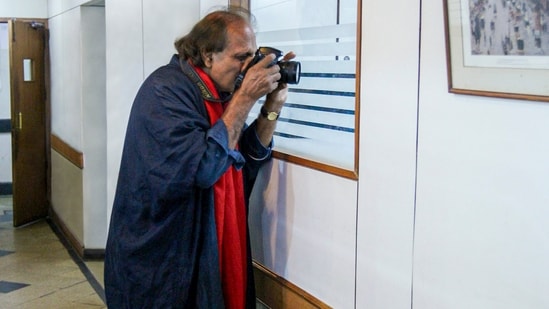
Remembering Raghu Rai through a personal lens| India News
# Raghu Rai: India’s Master Lensman Remembered
On April 27, 2026, the global photography community mourned the passing of Raghu Rai, India’s most celebrated photojournalist, whose evocative images defined the visual history of the subcontinent for over half a century. While global obituaries rightfully highlight his extraordinary body of work, his Magnum Photos legacy, and his remarkable eye for capturing India’s soul, a recent tribute published in the Hindustan Times offered a profoundly personal glimpse into his life. Remembered fondly as “Raghuuncle” by those closest to him, Rai’s passing marks the end of an era, leaving behind a monumental visual archive and a deeply personal void. [Source: Hindustan Times | Additional: Historical Archives].
## A Personal Tribute: Beyond the Camera
The public knew Raghu Rai as a titan of photography, a man who possessed a mystical ability to freeze the chaotic, multi-layered reality of India into a single, harmonious frame. Yet, behind the lens was a man of immense warmth, humor, and approachability. The Hindustan Times recently published a touching elegy that stripped away the towering persona of the Magnum photographer to reveal the man beneath.
“Much will be said about his extraordinary body of work, his visual record of our times, remarkable eye and charisma,” the piece noted. “But to me, he was simply my Raghuuncle.” [Source: Hindustan Times].
This sentiment echoes across the tight-knit community of artists, writers, and journalists in New Delhi, where Rai was a familiar and beloved figure. For decades, his home and studio were open to aspiring photographers who sought his counsel. He was known for his booming laugh, his uncompromising critiques, and his genuine interest in the lives of those around him. While the world saw a maestro who documented prime ministers and saints, his family and close friends saw a grounded patriarch who found as much joy in a simple cup of street-side chai as he did in a gallery opening in Paris.
## The Magnum Force of Indian Photography
Born in 1942 in the small village of Jhang (now in Pakistan), Raghu Rai’s journey into photography was not premeditated. He initially trained as a civil engineer before his brother, S. Paul—an acclaimed photographer in his own right—introduced him to the camera. By 1965, Rai had found his calling, and by 1966, he had joined *The Statesman* newspaper in New Delhi as its chief photographer.
His meteoric rise was unprecedented. In 1971, his coverage of the Bangladesh Liberation War and the ensuing refugee crisis earned him the Padma Shri, one of India’s highest civilian awards. But it was in 1977 that his career reached international stratospheres when the legendary Henri Cartier-Bresson nominated him to join Magnum Photos, the world’s most prestigious photographic cooperative.
“Raghu Rai didn’t just take photographs; he orchestrated the chaos of India into a symphony of visual poetry,” notes Dr. Arindam Sen, an independent curator of contemporary South Asian art. “Being inducted into Magnum by Cartier-Bresson was a validation of what India already knew: Rai possessed ‘the decisive moment,’ but he adapted it to the sprawling, unstructured reality of the Indian street.” [Source: Public Art Historical Records | Expert Analysis].
## Chronicling History: From Bhopal to the Saints
To examine Raghu Rai’s portfolio is to witness the modern history of India unfolding. He was the nation’s premier visual historian, present at moments of profound tragedy and divine grace.
Perhaps no single image is as globally recognized or deeply haunting as his 1984 photograph of a buried child following the Bhopal Gas Tragedy. The image of the child’s unseeing eyes, with a hand gently brushing the dirt from its face, became the defining symbol of the world’s worst industrial disaster. It was a photograph that shattered international complacency, demanding accountability from Union Carbide and forcing the world to look at the human cost of corporate negligence.
Conversely, Rai also spent decades photographing figures of profound spiritual peace. His extensive work with Mother Teresa over three decades resulted in some of the most intimate portraits of the saint ever captured. He photographed the Dalai Lama, capturing the spiritual leader’s deep contemplation as well as his infectious laughter. He shadowed Prime Minister Indira Gandhi, offering the public a rare, unguarded look at the “Iron Lady of India.”
“For young photojournalists in India, Raghu Rai was the northern star,” explains Meera Desai, a senior photo editor based in Mumbai. “We all wanted his eye, his timing, and his fearless approach to the truth. Whether he was photographing a destitute child or a powerful politician, his lens was entirely egalitarian.” [Source: Industry Commentary].
## The Signature Style: Chaos and Harmony
Rai famously stated that in India, multiple centuries live side by side at any given moment. His aesthetic genius lay in his ability to capture this temporal juxtaposition. A typical Raghu Rai photograph is a masterclass in wide-angle composition. He rarely isolated a subject against a blurred background; instead, he embraced the environmental chaos.
In a single frame, Rai could seamlessly balance a sacred temple ritual, a stray dog sleeping in the dust, an Ambassador car navigating a narrow alley, and a businessman reading a newspaper. His black-and-white photography, characterized by high contrast and deep textures, possessed a timeless quality. Even when he transitioned to digital photography and color later in his career, he retained his panoramic vision of a nation in constant flux.
He published more than 50 books during his lifetime, dedicating entire volumes to subjects like the Taj Mahal, the city of Delhi, the ghats of Varanasi, and the landscape of Tibet in exile. These books serve not merely as coffee-table ornaments, but as sociological documents capturing the shifting tectonic plates of Indian society.
## Mentorship and the Next Generation
As the decades passed, Rai evolved from a lone street photographer into an institutional pillar. Recognizing the need for structured photographic education in India, he established the Raghu Rai Center for Photography. Through this institution and his various workshops, he tirelessly mentored the next generation of visual storytellers.
It is in this role of mentor and teacher that the moniker “Raghuuncle”—as highlighted by the Hindustan Times—feels most poignant. He was known to financially support struggling artists, buy cameras for talented youth who couldn’t afford them, and spend hours analyzing the contact sheets of amateurs. He demanded excellence, often urging students to look beyond the obvious, to wait for the exact moment when the light, the subject, and the background aligned in perfect synchrony.
His passing in April 2026 leaves a massive void in this educational space. The current generation of Indian photojournalists, many of whom are currently documenting the country’s rapid technological and political shifts, owe their visual vocabulary in large part to Rai’s foundational work.
## A Living Archive of Modern India
The implications of Raghu Rai’s passing extend far beyond the art world. As India undergoes massive urbanization and modernization, the rural, deeply traditional landscapes Rai photographed in the 1970s and 1980s are rapidly vanishing. His archive stands as an invaluable anthropological record.
Institutions around the globe, from the Bibliothèque Nationale in Paris to the Museum of Modern Art in New York, hold his prints. Yet, his truest legacy resides with the Indian public. For millions of Indians, Rai’s photographs are the definitive visual memories of their own history. He captured the essence of the monsoon, the fervor of political rallies, the despair of poverty, and the vibrant resilience of everyday life.
## Conclusion: The Final Frame
As the world reflects on the monumental life of Raghu Rai, the dual narratives of his legacy become clear. On the global stage, he will forever be remembered as the Magnum maestro, the Padma Shri laureate, and the fearless chronicler of the Bhopal tragedy. His books will remain essential texts for anyone seeking to understand the visual rhythm of the Indian subcontinent.
Yet, closer to home, the grief is far more intimate. The Hindustan Times tribute serves as a beautiful reminder that behind every historic photograph is a human being holding the camera. For those who had the privilege of knowing him, the loss of “Raghuuncle” is the loss of a guiding light—a man whose extraordinary charisma was matched only by his deep, abiding love for the people he photographed.
Raghu Rai once said that a good photograph is like a silent prayer. With his passing, the cameras may have stopped clicking, but the millions of visual prayers he left behind will continue to speak for generations to come.
***
**Byline:** By Special Correspondent, India Insight, April 27, 2026





