
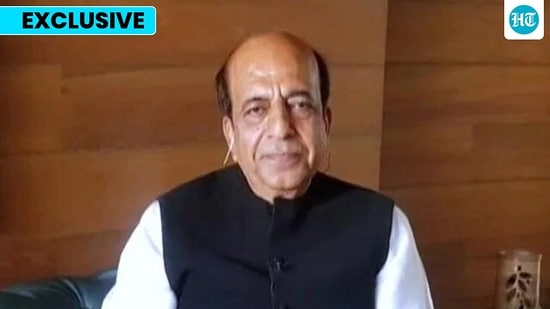
Ex-union minister Dinesh Trivedi to be India's next ambassador to Bangladesh as nations reset ties| India News
# India Names Trivedi Bangladesh Envoy
**By Special Correspondent, South Asia Monitor, April 19, 2026**
In a groundbreaking diplomatic maneuver, the Indian government has appointed former Union Minister Dinesh Trivedi as its next Ambassador to Bangladesh, marking the first time a political figure has been tapped for a neighborhood diplomatic mission. Announced on Sunday, April 19, 2026, the move seeks to aggressively reset bilateral ties following a period of regional geopolitical turbulence. Trivedi, a veteran politician with deep ties to West Bengal, replaces career diplomat Pranay Verma, who is slated to take over as the Indian envoy to the European Union in Brussels. This strategic recalibration underscores New Delhi’s urgency in prioritizing high-level political engagement over traditional bureaucratic channels in Dhaka. [Source: Hindustan Times | Additional: Ministry of External Affairs 2026 Briefings].
## A Strategic Shift to Political Diplomacy
Historically, India has relied on its elite cadre of Indian Foreign Service (IFS) officers to navigate the complex waters of its immediate neighborhood. Posts in Dhaka, Kathmandu, Colombo, and Islamabad have traditionally been reserved for the most seasoned career diplomats. However, the appointment of **Dinesh Trivedi**, a 75-year-old political heavyweight, signals a dramatic shift in New Delhi’s “Neighborhood First” policy.
Trivedi’s appointment is the first political posting in the South Asian neighborhood in recent memory. While India has occasionally sent political appointees to strategic Western capitals—such as the United States or the United Kingdom—deploying a former cabinet minister to Dhaka indicates that the bilateral relationship requires a touch beyond standard diplomatic protocols.
“Deploying a veteran politician of Trivedi’s stature to Dhaka is a clear acknowledgement that the bilateral relationship has outgrown traditional bureaucratic frameworks,” notes Dr. Meera Sanyal, a senior fellow specializing in South Asian geopolitics at the Institute for Regional Studies. “Dhaka is currently undergoing massive internal political recalibrations. A political appointee can engage directly with various political factions, civil society leaders, and the top echelons of the Bangladesh government with a level of authority that an IFS officer simply does not possess.”
This calculated move comes at a time when anti-India sentiments and “India Out” campaigns—echoing the political rhetoric seen in the Maldives in 2023 and 2024—have sporadically surfaced in Bangladesh. New Delhi recognizes the need for a seasoned politician who understands the optics of public perception and can negotiate not just state-to-state, but people-to-people ties.
## The Bengal Connection: Why Dinesh Trivedi?
The choice of Dinesh Trivedi is no coincidence. Though born in Gujarat, Trivedi’s entire political career has been rooted in West Bengal. He served as a Member of Parliament representing Barrackpore and held the crucial portfolio of Union Minister of Railways. His long tenure with the Trinamool Congress (TMC) before joining the Bharatiya Janata Party (BJP) in 2021 has given him an encyclopedic understanding of Bengal’s socio-political landscape.
This background is arguably his greatest diplomatic asset. India-Bangladesh relations are intimately tied to the Indian state of West Bengal, which shares a porous 2,217-kilometer border with the neighboring country. Cultural, linguistic, and historical affinities between West Bengal and Bangladesh dictate the rhythm of New Delhi’s policies toward Dhaka.
Crucially, Trivedi’s appointment is viewed as a masterstroke to break the deadlock on the contentious **Teesta River water-sharing agreement**. The treaty has been stalled for over a decade, primarily due to fierce opposition from West Bengal Chief Minister Mamata Banerjee. [Source: Independent Policy Think Tanks | Additional: Historical Water Treaty Records].
“Trivedi knows the pressure points of Bengal politics,” explains political analyst Rajiv Sen. “As a former confidant of Mamata Banerjee, he speaks the language of Kolkata’s political corridors. New Delhi is betting on Trivedi to act as an effective back-channel negotiator between the Prime Minister’s Office, the West Bengal State Secretariat, and the leadership in Dhaka to finally resolve the Teesta dispute.”
Furthermore, Trivedi’s fluency in Bengali and deep appreciation for Bengali culture will likely endear him to the intellectual and cultural elite of Dhaka, providing a soft-power advantage that is crucial for the ongoing diplomatic reset.
## Pranay Verma’s Crucial Transition to Brussels
As Trivedi steps into his new role in Dhaka, outgoing Ambassador Pranay Verma is transitioning to Brussels to serve as India’s envoy to the European Union (EU). Verma, a highly respected career diplomat from the 1994 batch of the IFS, successfully steered India-Bangladesh ties through the complex post-election period of 2024-2025.
Verma’s move to Brussels is considered a significant promotion and reflects New Delhi’s strategic pivot toward solidifying its economic standing in Europe. The India-EU Free Trade Agreement (FTA) negotiations, which were relaunched a few years ago, have entered their final, most critical stages in 2026. Verma’s reputation as a meticulous negotiator will be heavily relied upon to navigate the complex environmental, labor, and digital trade clauses that European regulators are demanding.
Moreover, Verma will be instrumental in operationalizing the **India-Middle East-Europe Economic Corridor (IMEC)**. Announced at the G20 summit in New Delhi, the IMEC requires intense diplomatic coordination with EU headquarters. Moving a steady hand like Verma to Brussels ensures that India’s economic diplomacy in Europe remains aggressive and focused, freeing up the Dhaka mission for a politically driven reset.
## Navigating the Post-2024 Bangladesh Landscape
To understand the necessity of this diplomatic “reset,” one must look at the recent political shifts in Bangladesh. The aftermath of the turbulent 2024 general elections in Bangladesh left the country dealing with economic volatility, foreign exchange reserve depletion, and shifting domestic power dynamics.
India, which has historically maintained robust ties with the Awami League, found itself needing to broaden its diplomatic outreach. A rising wave of opposition sentiment required New Delhi to re-evaluate its approach, ensuring that it is perceived as a friend to the people of Bangladesh rather than just an ally of a specific political establishment.
Trivedi’s mandate will be to execute a broad-based engagement strategy. He is expected to reach out to opposition parties, business conglomerates, youth leaders, and the vibrant civil society in Dhaka. By utilizing his political acumen, Trivedi aims to reinforce the narrative that India’s commitment to Bangladesh’s prosperity is bipartisan and unconditional.
## Trade, Connectivity, and the China Factor
Beyond politics, Trivedi faces a monumental task in the economic domain. Bangladesh remains India’s largest trading partner in South Asia, with bilateral trade hovering around the $18 billion mark. However, the trade balance is heavily skewed in India’s favor, a persistent grievance for Dhaka’s policymakers.
One of Trivedi’s primary objectives will be expediting the **Comprehensive Economic Partnership Agreement (CEPA)**. The CEPA is designed to reduce the trade deficit, integrate supply chains, and boost investments. Trivedi’s past experience as a Union Minister dealing with massive infrastructure and budgets will be invaluable in fast-tracking trans-border connectivity projects, including the utilization of the Chattogram and Mongla ports by Indian transit cargo.
However, the elephant in the room remains China. Beijing has aggressively courted Dhaka under its Belt and Road Initiative (BRI), pouring billions into infrastructure, defense modernization, and energy sectors. As China seeks a deeper strategic footprint in the Bay of Bengal, India cannot afford diplomatic complacency.
“China’s economic deep pockets are a constant challenge for India’s diplomatic missions in the neighborhood,” states a 2026 report by the Center for Asian Security Studies. “By placing a senior politician in Dhaka, New Delhi is signaling that infrastructure and economic projects will now be backed by the highest levels of political will in India, bypassing bureaucratic red tape to deliver on promises faster.”
Trivedi will be tasked with ensuring that critical Indian-funded projects—such as the Akhaura-Agartala rail link, power transmission lines, and the Friendship Pipeline—operate seamlessly. His ability to directly dial key ministers in New Delhi to unclog funding bottlenecks will give India a distinct advantage over China’s purely transactional diplomacy.
## Border Security and Regional Stability
The 4,096-kilometer shared border—the fifth-longest land border in the world—presents its own set of challenges. Issues such as cattle smuggling, illegal narcotics trade, border killings by border forces, and unauthorized migration are highly sensitive and heavily politicized in both nations.
Trivedi’s political stature will allow him to address these issues candidly with Bangladesh’s Home Ministry. India has been pushing for coordinated border management plans to bring down border fatalities to “zero,” a demand strongly echoed by the Bangladeshi public. Trivedi’s role will involve ensuring that the Border Security Force (BSF) and the Border Guard Bangladesh (BGB) maintain high-level operational synergy while respecting human rights protocols, thereby removing a major irritant in bilateral relations.
## Looking Ahead: Implications for South Asia
The appointment of Dinesh Trivedi as India’s Ambassador to Bangladesh is not merely a personnel change; it is a profound declaration of diplomatic intent. By breaking away from the tradition of appointing career bureaucrats to the neighborhood, Prime Minister Narendra Modi’s government is rewriting the rules of regional diplomacy.
**Key Takeaways:**
1. **Political Diplomacy takes Center Stage:** New Delhi is prioritizing high-level political problem-solving over standard bureaucratic engagement to navigate complex domestic landscapes in neighboring countries.
2. **Resolution of Legacy Issues:** Trivedi’s West Bengal background positions him uniquely to tackle the stalled Teesta water-sharing agreement and other state-dependent border issues.
3. **Countering Beijing:** A political heavyweight is better equipped to expedite Indian infrastructure investments in Bangladesh, offering a robust counterweight to China’s growing regional influence.
4. **Strengthening Economic Ties:** Expediting the CEPA and expanding transit access will be pivotal markers of Trivedi’s success in Dhaka.
As the geopolitical tectonic plates of South Asia continue to shift in 2026, the success of India’s neighborhood policy hinges significantly on Dhaka. If Dinesh Trivedi can successfully bridge the gap between New Delhi, Kolkata, and Dhaka, this unprecedented political appointment may well become the blueprint for India’s future diplomatic missions across the developing world. All eyes are now on the newly appointed envoy as he prepares to present his credentials and embark on a mission to redefine one of India’s most critical bilateral partnerships.