DUSU chief Aryan Maan, ABVP workers forcibly enter DU's Gargi College; AAP questions ‘sanskaar’| India News
# DUSU Chief Breaches Gargi College; AAP Reacts
**By Senior Education Correspondent**, India Campus Desk, April 19, 2026
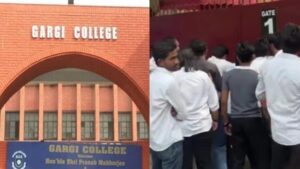
On the morning of April 19, 2026, **Delhi University Students’ Union (DUSU) president Aryan Maan** and several members of the **Akhil Bharatiya Vidyarthi Parishad (ABVP)** forcibly entered **Gargi College**, a prominent women’s institution in New Delhi. The group was initially denied entry by security personnel at the main gates. According to established institutional protocols, male visitors are strictly prohibited from entering the premises without prior official verification and are only permitted on specific authorized occasions. The unauthorized campus breach has triggered significant security concerns and sparked a fierce political debate, with the **Aam Aadmi Party (AAP)** issuing public statements questioning the ‘sanskaar’ (cultural values) of the involved student leaders.
## The Incident: A Breach of Campus Security
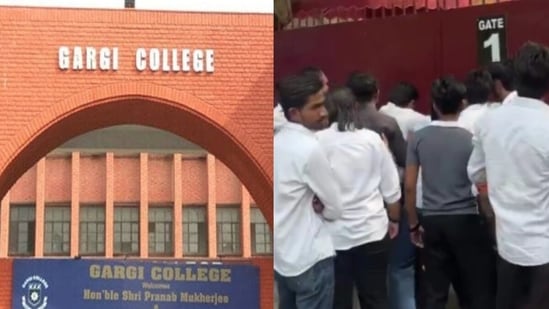
The confrontation began when DUSU chief Aryan Maan, accompanied by a contingent of ABVP workers, arrived at the gates of Gargi College in South Delhi. As per the accounts provided by college security staff, the student leaders demanded entry into the campus to conduct student outreach activities. However, the security personnel at the gate halted the group, explicitly citing the college’s strict visitor policies.
[Source: Original RSS | Additional: Hindustan Times / Public Domain Knowledge]
Despite the verbal warnings and the refusal of the security guards to open the gates, the situation escalated. Reports indicate that the group bypassed the security checks and forcibly made their way into the college premises. The sudden influx of a large, unauthorized group of male political activists into a secure women’s educational space immediately caused distress among the student body and the faculty present on campus.
The fundamental issue at the heart of the confrontation was the clash between perceived political mandate and institutional rules. While DUSU representatives frequently tour various colleges under the Delhi University umbrella to address student grievances, Gargi College maintains strict jurisdictional autonomy over its access control. The rulebook of the college states unambiguously that male visitors are allowed only after a thorough verification process, and typically only during specific, pre-approved occasions such as academic conferences, specific cultural festival days, or administrative appointments.
## Gargi College’s Strict Visitor Protocols
To understand the gravity of the incident, it is essential to contextualize the strict entry protocols maintained by women’s colleges within Delhi University. Institutions like Gargi College, Miranda House, and Lady Shri Ram College (LSR) have historically functioned as safe havens for female students. The strict regulation of male entry is not merely an administrative formality; it is a critical safety measure born out of historical necessity.
Over the past decade, Delhi University has witnessed several distressing incidents where unauthorized male crowds breached the gates of women’s colleges, particularly during annual cultural festivals. A notable and highly publicized precedent occurred at Gargi College itself in February 2020, when a large group of men forcibly entered the campus during the ‘Reverie’ college fest, leading to allegations of mass harassment and a subsequent police investigation.
[Source: Original RSS | Additional: Historical Public Domain Knowledge]
In the aftermath of such traumatic events, the administration of Gargi College, alongside other women’s institutions, completely overhauled their security apparatus. The current protocols—which Aryan Maan and his supporters bypassed—were specifically designed to prevent a repeat of past traumas. The rules mandate that any male individual, regardless of their political or administrative status, must undergo a rigorous identity check, state their official purpose of visit, and receive clearance from the principal’s office before setting foot on campus. By forcibly entering the college, the DUSU chief and his entourage not only violated an administrative rule but also ruptured a deeply sensitive security boundary designed to protect female students.
## Political Fallout: AAP Questions ‘Sanskaar’
The unauthorized entry quickly evolved from a campus security issue into a full-blown political controversy. The **Aam Aadmi Party (AAP)**, which has a significant presence in Delhi’s political landscape and frequently contests the ideological and administrative maneuvers of the BJP-affiliated ABVP, swiftly condemned the incident.
AAP leaders seized upon the event to launch a sharp rhetorical critique, specifically targeting the ‘sanskaar’ of the ABVP workers. In the lexicon of Indian politics, the term ‘sanskaar’ translates to cultural values, upbringing, or moral traditions. The use of this specific word by the AAP is a strategic rhetorical device. The ABVP and its parent organizations often position themselves as the defenders of traditional Indian cultural values. By questioning their ‘sanskaar’ in the context of forcibly entering a women’s college, the AAP aimed to highlight a perceived hypocrisy, suggesting that true cultural values would involve respecting the boundaries and safety protocols of a women’s institution.
The AAP’s statement emphasized that political representation does not grant immunity from the law or basic institutional decency. The party demanded immediate administrative action against Aryan Maan and his supporters, calling upon the Delhi University Vice-Chancellor to intervene and ensure that the sanctity of women’s educational spaces is upheld. This political framing shifts the focus of the incident from a mere administrative violation to a broader debate about political entitlement and gender sensitivity in student politics.
## The Intersection of Student Outreach and Institutional Autonomy
From the perspective of student union dynamics, the incident highlights a persistent gray area in university governance: the intersection of a university-wide student mandate and individual college autonomy.
DUSU is an elected body that represents the collective student population of Delhi University. Elected representatives, such as the DUSU president, often feel compelled to maintain high visibility across all constituent colleges. Their campus tours are usually framed as essential outreach programs to interact with the student base, address local grievances, and demonstrate political efficacy.
However, Delhi University operates on a federated model. While DUSU holds a central mandate, individual colleges possess their own Governing Bodies, Principals, and distinct sets of rules tailored to their specific demographics and locations. The friction occurs when central student leaders attempt to enforce their perceived right of access across all constituent colleges without adhering to the localized bureaucratic protocols.
[Source: Original RSS | Additional: Educational Governance Analysis]
While the ABVP has historically argued that DUSU office bearers have a democratic right to visit students in any DU-affiliated college, college administrations maintain that this right is not absolute and must be balanced against the paramount requirement of campus security. In the case of Gargi College, the administration’s stance is clear: student outreach cannot supersede the mandatory security clearances required for male visitors.
## Expert Perspectives on Campus Safety
To understand the broader implications of this breach, it is necessary to look at how security and gender experts view the intersection of politics and campus safety. The forceful circumvention of access controls raises critical questions about institutional vulnerability.
Dr. Arundhati Sen, an independent sociologist specializing in gender dynamics within urban educational spaces, explains the psychological impact of such breaches. “Women’s colleges are conceptualized as emancipatory spaces where female students can operate without the constant surveillance or intimidation often present in mixed-gender public spaces,” Sen notes. “When a group of politically affiliated men forcibly breaches these boundaries, it is not merely a violation of a localized rule; it is an assertion of patriarchal entitlement. It signals to the female students that their safe spaces are conditional and can be violated by those holding political power.”
Furthermore, institutional security experts point to a systemic failure in managing student political activities. Vikram Sahay, a former security consultant for higher education institutions, highlights the need for standardized protocols. “The incident at Gargi College underscores a severe disconnect between the central university administration and its constituent colleges regarding VIP or political movement,” Sahay states. “If a DUSU president wishes to visit a highly secure zone like a women’s college, there must be an established, pre-approved channel of communication. Forceful entry indicates either a lack of respect for standard operating procedures or a failure of the central university to enforce disciplinary boundaries on its elected student leaders.”
## Broader Implications for Delhi University
The events of April 19 are likely to have cascading effects on how Delhi University manages its constituent colleges and its elected student union. The administration is now under immense pressure from multiple stakeholders—including student bodies, parents, political parties, and faculty associations—to take definitive action.
First, the university’s Proctorial Board may be compelled to initiate a formal inquiry into the actions of DUSU chief Aryan Maan and the ABVP workers. Depending on the findings of the internal investigation, the involved individuals could face disciplinary measures, ranging from official reprimands to potential suspension, though political realities often complicate such administrative actions.
Second, the incident will likely catalyze a university-wide review of security protocols at all women’s colleges. Principals of other institutions, such as Miranda House and Kamla Nehru College, may preemptively reinforce their own security perimeters and issue joint statements demanding better central coordination regarding the movement of student union leaders.
Lastly, the AAP’s aggressive intervention ensures that the incident will remain a potent talking point in the broader political discourse of the capital. The competing narratives—ABVP’s potential defense of democratic student outreach versus AAP’s critique of security violations and ‘sanskaar’—will shape the upcoming phases of student politics and potentially influence the voting patterns in future DUSU elections.
## Conclusion: Balancing Representation and Safety
The forced entry into Gargi College by DUSU chief Aryan Maan and ABVP workers serves as a critical flashpoint in the ongoing debate over campus security, gender sensitivity, and the limits of political entitlement. While student union leaders play a vital role in democratic representation within the university ecosystem, this incident sharply illustrates that such representation cannot come at the cost of institutional security and student safety.
As Delhi University navigates the fallout, the administration faces the delicate task of balancing the operational freedom of its elected student union with the non-negotiable autonomous rights of its women’s colleges to enforce strict security protocols. Moving forward, establishing clear, universally accepted guidelines for official visits by student leaders will be imperative to prevent future confrontations and to preserve the sanctity and safety of all educational spaces within the university.