Century-old ‘Hindi imposition’ debate back ahead of Tamil Nadu assembly elections
# TN Polls 2026: Hindi Imposition Debate Returns
By Senior Political Correspondent, The Daily Dispatch, April 19, 2026
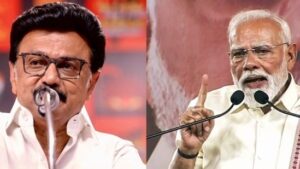
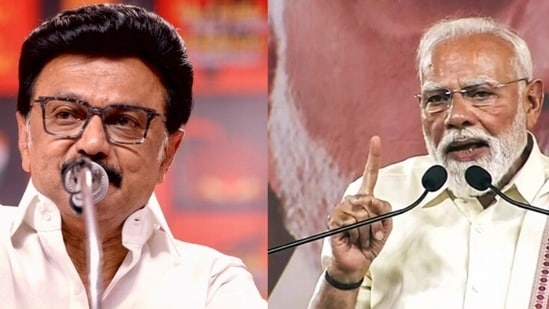
**Chennai, April 19, 2026:** As the high-stakes Tamil Nadu Assembly elections loom, the century-old debate over “Hindi imposition” has forcefully returned to the epicenter of southern politics. The Chief Minister M.K. Stalin-led Dravida Munnetra Kazhagam (DMK) government has drawn an uncompromising battle line against the Union government, officially declaring that the state “will never accept” the National Education Policy’s (NEP) three-language formula. This reignited Centre versus State confrontation goes far beyond mere pedagogy; it encapsulates deep-rooted linguistic pride, an ongoing constitutional struggle over federalism, and a calculated electoral strategy aimed at halting the Bharatiya Janata Party’s (BJP) southern expansion. [Source: Hindustan Times]
## The 2026 Electoral Battlefield
With Tamil Nadu preparing to vote in the coming weeks, the DMK has strategically positioned the language debate as its primary ideological shield. Facing typical anti-incumbency after five years in power, the Stalin administration is reviving the foundational pillars of the Dravidian movement: state autonomy, social justice, and linguistic nationalism.
At a massive pre-election rally in Madurai this past weekend, the DMK leadership reiterated that any attempt to enforce Hindi through federal education mandates would be met with fierce resistance. The party’s manifesto committee has prominently featured the rejection of the NEP, framing the policy as a Trojan horse designed to homogenize India’s diverse linguistic landscape into a monolith controlled by New Delhi.
“The attempt to force a three-language formula on Tamil Nadu is an assault on our identity and our autonomy. The Dravidian heartland has historically bled for its language, and the state will never accept this cultural encroachment,” a senior DMK spokesperson remarked during a recent press briefing. [Source: Original RSS / Hindustan Times]
## Decoding the Three-Language Formula
To understand the current political friction, one must examine the mechanics of the National Education Policy (NEP) 2020 introduced by the BJP-led Union government. The NEP advocates for a **three-language formula** in schools across India. According to the Centre, the formula comprises:
1. The local mother tongue or regional language.
2. English.
3. A “third language” of the student’s choice (which, in non-Hindi speaking states, is predominantly expected to be Hindi, while Hindi-speaking states are encouraged to teach a modern Indian language, often from the South).
However, Tamil Nadu views this framework with profound suspicion. The state has stubbornly adhered to a **two-language policy**—Tamil and English—since a historic legislative resolution was passed in 1968.
**Comparison of Language Policies:**
| Feature | NEP 2020 (Three-Language) | Tamil Nadu Policy (Two-Language) |
| :— | :— | :— |
| **Primary Language** | Mother tongue / Regional | Tamil (Mandatory) |
| **Global Language** | English | English (Mandatory) |
| **Additional Language**| Third Indian language (often Hindi)| None (Optional private study only) |
| **Core Philosophy** | National integration & multilingualism | Global mobility & cultural preservation|
The DMK argues that the Centre’s “choice” is an illusion. Because federal infrastructure and funding inherently favor Hindi, the third language mandate practically translates to compulsory Hindi education for Tamil students, a move they argue offers no economic or social advantage over mastering English. [Additional Source: Public Policy Analysis]
## A Century-Old Resistance
The phrase “Hindi imposition” triggers profound historical resonance in Tamil Nadu. The origins of this conflict predate India’s independence, tracing back to 1937 when the Indian National Congress government, led by C. Rajagopalachari, introduced compulsory Hindi in schools within the Madras Presidency.
This move sparked a massive backlash orchestrated by Periyar E.V. Ramasamy, the ideological father of the Dravidian movement. The ensuing anti-Hindi agitations successfully forced the withdrawal of the mandate.
The issue exploded again in 1965 when the Indian Constitution’s 15-year grace period for the use of English for official Union purposes was set to expire, paving the way for Hindi to become the sole official language. Massive student protests, riots, and self-immolations rocked Tamil Nadu. The resulting political earthquake propelled C.N. Annadurai and the DMK to power in 1967, completely dismantling the Congress party’s grip on the state—a grip it has never recovered to this day.
For the DMK, the anti-Hindi agitation is not just history; it is their origin story. By invoking this century-old debate ahead of the 2026 polls, M.K. Stalin is signaling to the electorate that his party remains the ultimate guardian of Tamil identity.
## Federalism vs. Centralization: The Deeper Rift
Beneath the linguistic rhetoric lies a serious constitutional debate regarding the division of powers between New Delhi and the states. Education was originally a “State Subject” under the Indian Constitution but was moved to the “Concurrent List” during the Emergency in 1976.
The Tamil Nadu government views the NEP and the three-language policy as symptomatic of a broader centralization drive by the Union government.
“The language row is effectively a proxy war for federalism,” notes Dr. K. Rangarajan, a Chennai-based political sociologist. “When the state government says it will ‘never accept’ the three-language policy, it is drawing a line against New Delhi’s tendency to legislate on concurrent subjects without adequate state consensus. For Tamil Nadu, the defense of language is simultaneously the defense of state sovereignty.” [Source: Independent Expert Analysis]
## The BJP’s Counter-Narrative
The BJP, determined to cross the threshold of irrelevance in Tamil Nadu under the aggressive leadership of its state president, has vigorously pushed back against the DMK’s narrative. The national party accuses the DMK of manufacturing a false “bogeyman” to distract voters from administrative failures, corruption allegations, and unfulfilled election promises from the 2021 mandate.
The BJP’s core counter-arguments include:
* **NEP Promotes Tamil:** The BJP highlights that the NEP emphasizes primary education in the mother tongue and has paved the way for professional courses, including engineering and medicine, to be taught in Tamil.
* **Hypocrisy Allegations:** BJP leaders frequently point out that many schools owned or managed by DMK functionaries are affiliated with the CBSE board, where Hindi is taught, arguing that the DMK denies poor students the chance to learn a national link language while securing that advantage for their own elite circles.
* **Economic Integration:** The Centre argues that a basic understanding of Hindi aids working-class youth migrating to other parts of India for employment in the gig economy, logistics, and central government jobs.
Despite these arguments, gaining traction against the deeply entrenched two-language sentiment remains an uphill battle for the BJP in the Cauvery delta and southern districts.
## The Economic Argument: English as the Great Equalizer
In Tamil Nadu, the preference for English over Hindi is fundamentally driven by economics. The state has transformed itself into an industrial and IT powerhouse, boasting one of India’s highest Gross State Domestic Products (GSDP) and gross enrollment ratios in higher education.
Dravidian ideologues argue that English is the true language of global upward mobility. The state’s two-language formula was designed to root students in their cultural heritage (Tamil) while equipping them for the global market (English).
“Why should a student in Tamil Nadu learn a third language that offers no global technological or scientific advantage?” asks a former Vice-Chancellor of Madras University. “Our youth compete for jobs in Silicon Valley, London, and Singapore. The two-language formula has historically enabled this global integration without the cognitive load of a forced third language.”
## Stance of Regional Allies and the AIADMK
The primary opposition party in the state, the All India Anna Dravida Munnetra Kazhagam (AIADMK), finds itself navigating tricky waters. Having officially severed its alliance with the BJP in late 2023, the AIADMK is desperately attempting to reclaim its Dravidian credentials.
Consequently, the AIADMK has echoed the DMK’s opposition to Hindi imposition, though perhaps with less vitriol directed at the Union government. Edappadi K. Palaniswami’s party understands that failing to oppose the three-language formula would amount to political suicide in a state where language is an existential emotion. This creates a rare, unified political wall in Tamil Nadu against the Centre’s education policies, further isolating the BJP’s stance.
## Conclusion: Implications for the 2026 Polls
As Tamil Nadu prepares for the ballot box in 2026, the resurgence of the “Hindi imposition” debate serves as a stark reminder of India’s complex federal tapestry. The MK Stalin-led DMK has successfully resurrected an issue that resonates across demographic lines, from the rural hinterlands to the IT corridors of Chennai. By drawing a hard line—that the state “will never accept” the three-language policy—the DMK is consolidating its Tamil nationalist voter base while painting the BJP as a northern, culturally alien entity. [Source: Hindustan Times]
**Key Takeaways:**
* **Uncompromising Stance:** The DMK government remains steadfast in its 1968 two-language formula (Tamil and English), entirely rejecting the NEP’s three-language proposal.
* **Federal Friction:** The dispute highlights an escalating crisis of federalism, with states increasingly pushing back against perceived homogenization by New Delhi.
* **Election Strategy:** Language will serve as the primary ideological wedge issue in the 2026 Tamil Nadu assembly elections, overshadowing localized anti-incumbency factors.
Whether the BJP can pivot the electoral conversation toward infrastructure, corruption, and development, or whether the DMK’s invocation of Tamil pride will once again sweep the Dravidian heartland, remains the defining question of the 2026 elections. For now, the ghost of 1965 continues to cast a long, inescapable shadow over Tamil Nadu’s political destiny.