
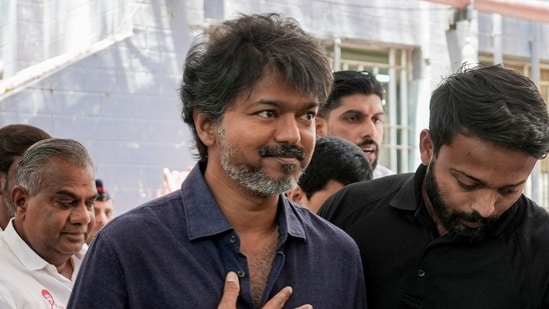
Vijay will form government with over 150 seats in Tamil Nadu, says TVK leader
# TVK Rejects Exit Polls, Eyes 150+ Seats
By Senior Political Correspondent, India Electoral Desk, April 30, 2026
On April 30, 2026, Tamilaga Vettri Kazhagam (TVK) leadership confidently asserted that actor-turned-politician Vijay will form the next government in Tamil Nadu by securing over 150 seats in the 234-member state assembly. Dismissing recent exit polls that suggested a tighter, multi-cornered race heavily influenced by the traditional Dravidian majors, TVK leader Anand Mohan stated that the party relies on its own grassroots intelligence rather than statistical forecasts. As the state eagerly awaits the official counting day following a highly polarized election cycle, this bold projection has intensified the political climate, challenging the long-standing bipolar hegemony of the ruling DMK and the principal opposition AIADMK in southern India. [Source: Hindustan Times | Additional: Regional Election Coverage 2026].
## Dismissal of Exit Polls and TVK’s Internal Math
In the immediate aftermath of the final phase of voting in Tamil Nadu, several national and regional media outlets released exit polls indicating varying degrees of success for the established political alliances. However, TVK’s core leadership has outright rejected these preliminary prognostications. Speaking to the press, TVK leader Anand Mohan made it clear that the party does not attach any significance to exit poll predictions, maintaining an unwavering stance that TVK will comfortably cross the simple majority mark of 118 seats.
“We have our own booth-level data and feedback from our ground workers. The silent revolution that has taken place in the polling booths is not captured by standard exit poll methodologies,” Mohan remarked. “Our founder, Vijay, has struck a chord with the everyday voter, and we are confident of forming the government with a resounding mandate of over 150 seats.” [Source: Hindustan Times].
Exit polls in India, and specifically in Tamil Nadu, have a mixed track record. While they often correctly identify broader voting trends, their ability to accurately predict seat shares in complex, multi-cornered contests has frequently been called into question. Political analysts note that traditional polling agencies sometimes struggle to quantify the “silent voter” phenomenon or fully account for the mobilization capabilities of massive fan-club networks transitioning into political cadres.
## The “Thalapathy” Factor: Grassroots Mobilization
Since officially announcing his entry into politics and unveiling the Tamilaga Vettri Kazhagam in early 2024, Vijay—affectionately known as “Thalapathy” (Commander) by his supporters—has embarked on a systematic campaign to transform his massive cinematic fan base into a structured political organization. Unlike previous actor-turned-politicians who relied primarily on charisma, TVK’s strategy over the past two years has heavily emphasized structural integrity at the district and panchayat levels.
Dr. V. Ramanathan, a Chennai-based political sociologist, observes, “What distinguishes TVK’s 2026 campaign from previous third-front experiments is the sheer micro-management of booth committees. Vijay’s leadership has focused on ideological positioning—centering on social justice, anti-corruption, and youth empowerment—while simultaneously ensuring that his fan clubs evolved into highly disciplined election machinery.” [Source: Independent Political Analysis].
This grassroots mobilization is central to Anand Mohan’s claim of 150 seats. The party believes that by circumventing traditional media narratives and engaging directly in door-to-door campaigning, they have successfully courted undecided voters, first-time voters, and demographics disillusioned with the Dravidian majors.
## Navigating the Entrenched Dravidian Hegemony
To achieve the ambitious target of 150+ seats, TVK must overcome one of the most entrenched political duopolies in the democratic world. For over five decades, power in Tamil Nadu has alternated almost exclusively between the Dravida Munnetra Kazhagam (DMK) and the All India Anna Dravida Munnetra Kazhagam (AIADMK).
The ruling DMK government, led by Chief Minister M.K. Stalin, entered the 2026 elections banking on its extensive welfare schemes, infrastructural development, and strong ideological messaging against the centralization of power by the national government. Meanwhile, the AIADMK, under Edappadi K. Palaniswami, has worked to consolidate its traditional vote banks in the western and southern belts of the state, presenting itself as the primary protector of state rights and administrative efficiency. Furthermore, national parties like the BJP and Congress have established their own strategic alliances to maximize their regional footprints.
For TVK to secure a supermajority, it would require an unprecedented decimation of both these traditional fortresses. Anand Mohan’s assertion implies a belief that an overwhelming anti-incumbency wave, coupled with a deep-seated desire for an alternative political culture, has caused traditional vote banks to collapse in TVK’s favor.
## Historical Context: The Third-Front Challenge
Tamil Nadu’s political history is littered with regional parties that attempted to dismantle the DMK-AIADMK binary but ultimately fell short of forming a government. Understanding this historical context is vital to evaluating the magnitude of TVK’s 150-seat claim.
**Notable Third-Front Attempts in Tamil Nadu:**
* **DMDK (2006 & 2011):** Founded by actor Vijayakanth, the party secured around 8.4% of the vote in its debut 2006 election but won only one seat. In 2011, it allied with AIADMK to win 29 seats, becoming the official opposition, but later lost momentum.
* **MNM (2021):** Actor Kamal Haasan’s Makkal Needhi Maiam garnered significant urban attention but failed to win a single seat in the 2021 assembly elections, securing under 3% of the total vote share.
* **NTK:** Seeman’s Naam Tamilar Katchi has steadily increased its vote share, heavily courting Tamil nationalist sentiments and fielding a 50% female candidate slate, yet the first-past-the-post system has historically prevented them from converting votes into seats.
[Source: Election Commission of India Historical Data].
TVK’s internal calculus suggests they have avoided the pitfalls of these previous movements. By presenting a broader, more inclusive socioeconomic agenda and leveraging Vijay’s universal appeal across caste and regional lines, the party claims to have bridged the gap between a “protest vote” and an “electability mandate.”
## Demographic Dynamics and the Youth Vote
A critical factor underlying TVK’s confidence is the demographic shift in Tamil Nadu’s electorate. In the 2026 assembly elections, millennials and Gen Z voters constitute a highly significant voting bloc. This younger demographic, many of whom have grown up watching Vijay on screen, is perceived by analysts as less rigidly tied to the traditional Dravidian ideological loyalties that defined their parents’ and grandparents’ voting patterns.
Furthermore, TVK has intensely targeted women voters—a demographic historically dominated by the AIADMK under the late J. Jayalalithaa, and more recently courted by the DMK through schemes like the *Kalaignar Magalir Urimai Thittam* (women’s basic income assistance). TVK’s manifesto promised expansive educational and entrepreneurial support for women, aiming to fracture this vital voting block.
“If TVK actually touches the 150-seat mark, it will mean they successfully captured upwards of 60% of the first-time voter demographic, alongside significant cross-voting from traditional DMK and AIADMK households,” states Dr. Meenakshi Sundaram, a data analyst focusing on southern Indian electoral trends. “It would represent a tectonic shift, indicating that the electorate prioritized a new face and new promises over established party loyalties.” [Source: Independent Demographic Analysis].
## Implications for the State’s Political Future
The ramifications of Anand Mohan’s statements are profound. If TVK’s internal assessments hold true and Vijay indeed forms the government with 150+ seats, it will mark the most significant disruption in Tamil Nadu politics since the founding of the AIADMK in 1972. It would validate the hypothesis that a well-structured, cinema-born political movement can still conquer the state, continuing the legacy of M.G. Ramachandran (MGR) and N.T. Rama Rao (NTR) in neighboring Andhra Pradesh, albeit adapted for the 21st century.
Conversely, if the exit polls prove accurate and TVK falls short of its monumental 150-seat claim, the party’s performance will still be closely scrutinized to determine its role as a potential kingmaker or the principal opposition. Even securing a substantial double-digit vote share without winning the majority would cement TVK as a formidable, disruptive force capable of dictating terms in future electoral alliances.
## Conclusion: Awaiting the Official Verdict
As Tamil Nadu edges closer to the official vote counting day, the psychological warfare inherent in election aftermaths is at its peak. TVK’s outright dismissal of external exit polls in favor of its own optimistic seat projections is a classic maneuver designed to maintain cadre morale and project unshakeable confidence.
Anand Mohan’s assertion that Vijay will form the government with over 150 seats has set an incredibly high bar for the nascent party. Whether this claim is a product of accurate on-the-ground intelligence or strategic posturing will only be revealed when the Election Commission of India unseals the Electronic Voting Machines.
Until then, Tamil Nadu remains in a state of suspended animation, caught between the historical gravity of its established Dravidian parties and the disruptive, cinematic allure of Vijay’s Tamilaga Vettri Kazhagam. Regardless of the final outcome, the 2026 assembly elections have already proven to be a watershed moment, highlighting the vibrant, unpredictable, and deeply passionate nature of India’s democratic process.





