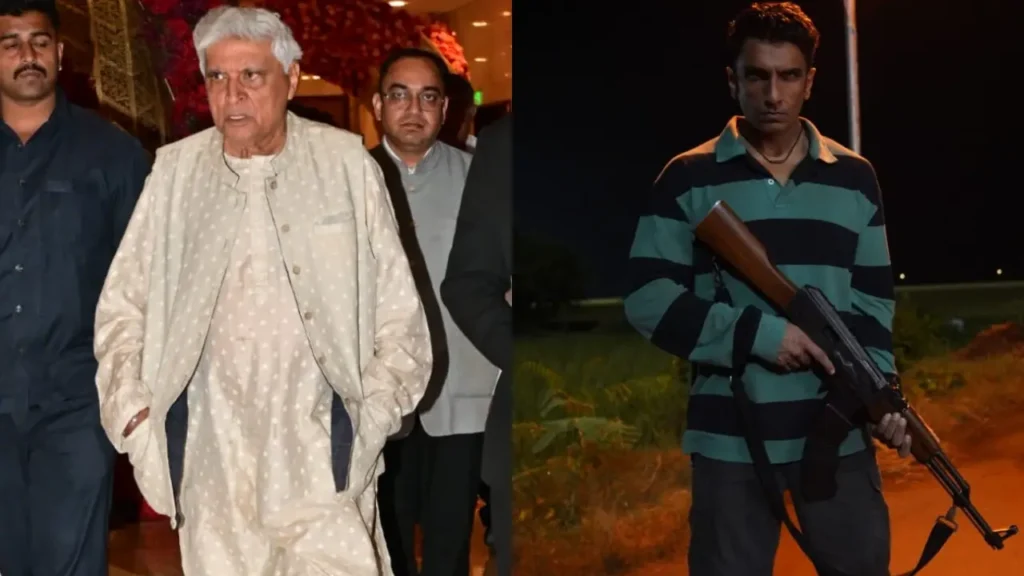
Dhurandhar 2: Javed Akhtar dismisses propaganda claims, calls film excellent
Javed Akhtar on Dhurandhar Debate Upholding Creative Storytelling and Film Ideology
The vibrant landscape of Indian cinema often sparks profound discussions, moving beyond mere entertainment to engage with society’s complex narratives. A recent development that has captured the attention of film enthusiasts and cultural commentators alike revolves around the veteran lyricist and screenwriter Javed Akhtar’s insightful remarks concerning a film named “Dhurandhar.” When the movie faced scrutiny and was branded as “propaganda,” Akhtar eloquently stepped forward, asserting that films should not be swiftly judged for presenting differing perspectives. He underscored a fundamental truth of storytelling: every narrative inherently carries an ideology, and creators possess an undeniable right to express their ideas.
This stance from a figure as revered as Javed Akhtar prompts us to delve deeper into the nature of cinematic expression, the delicate balance between art and message, and the public’s role in interpreting these works. His comments resonate particularly strongly within an industry frequently navigating the thin line between artistic freedom and public perception.
Understanding the Core Argument
At the heart of Akhtar’s argument lies a crucial understanding that cinema is more than just a sequence of moving images; it is a canvas for thought, emotion, and worldview. When a film, like “Dhurandhar” in this instance, is labeled “propaganda,” it often implies a deliberate attempt to sway opinion or promote a particular agenda. However, Akhtar challenges this binary categorization. He suggests that every story, whether it’s a romantic comedy, a thrilling drama, or a historical epic, is conceived from a specific vantage point. This perspective inherently imbues the narrative with a certain ideology, a way of looking at the world.
Think about it this way: even a seemingly simple children’s story teaches values, which are a form of ideology. A tale of friendship promotes camaraderie, while a story of perseverance champions resilience. These aren’t overtly “propaganda” in the negative sense, but they convey ideas. Akhtar is advocating for a similar understanding in cinema, arguing that creators, like any artist, infuse their work with their beliefs, experiences, and observations. To dismiss a film simply because its underlying ideas might not align with one’s own risks stifling genuine artistic dialogue and creative courage.
The Right to Express Ideas
A cornerstone of any democratic and culturally rich society is the freedom of expression. In the realm of cinema, this means filmmakers and storytellers should have the liberty to explore diverse themes, present challenging viewpoints, and question established norms without undue fear of censure or premature judgment. Akhtar’s defense is a potent reminder of this essential right. He champions the creator’s autonomy to craft narratives that reflect their vision, even if that vision is controversial or provocative to some segments of the audience.
This doesn’t mean films are immune to criticism or analysis. Quite the opposite. But Akhtar’s point seems to be that initial labeling as “propaganda” based solely on ideological differences can cut short productive conversations about a film’s artistic merit, its narrative techniques, or the societal issues it aims to address. It can prematurely shut down the interpretive process, replacing nuanced discussion with a simple, often dismissive, tag.
Navigating the “Propaganda” Label in Indian Cinema
The debate around films being labeled propaganda is not new to Indian cinema. Throughout its history, movies have often been seen as powerful tools for social commentary, nation-building, or even subtle political messaging. From classic parallel cinema addressing socio-economic disparities to contemporary blockbusters reflecting nationalistic fervor, films inherently engage with the prevailing cultural and political climate.
Local film critics and film societies, often away from the glare of national headlines, frequently dissect these underlying currents. They discuss how a filmmaker’s background, the societal mood at the time of production, and even the commercial imperatives can shape the narrative. What one person views as a compelling historical account, another might see as a biased retelling. The challenge, as highlighted by Akhtar, is to foster an environment where these differences in perception lead to deeper engagement rather than outright dismissal. For Omni 360 News, understanding these local and nuanced perspectives is key to providing comprehensive coverage.
Creator’s Intent Versus Audience Interpretation
One of the fascinating aspects of art is its subjective nature. A filmmaker creates a story with a certain intent, a message they wish to convey, or a question they want to pose. However, once the film is released, it takes on a life of its own. Audiences, bringing their own experiences, beliefs, and biases, interpret the work in myriad ways. This divergence between intent and reception is where much of the discussion around films like “Dhurandhar” often arises.
Javed Akhtar’s statement serves as a plea for greater intellectual generosity in this process. Instead of immediately assigning a negative label, he encourages a more open-minded approach: to understand *why* a creator chose to tell a particular story, *what* ideology underpins it, and *how* it contributes to the broader tapestry of human thought and expression. This approach enriches the cinematic experience for everyone involved.
Protecting Creative Freedom
Ultimately, Akhtar’s intervention is a powerful voice for the protection of creative freedom. In an era where public discourse can often be polarized and quick to judge, the ability of artists to explore diverse narratives without fear of reprisal is paramount. When films are prematurely labeled or condemned for their ideological leanings, it risks fostering an environment of self-censorship, where creators might shy away from tackling complex or controversial subjects. This, in turn, impoverishes the cultural landscape, limiting the spectrum of stories that get told and the ideas that get debated.
The enduring strength of cinema lies in its capacity to hold a mirror to society, to provoke thought, to challenge perspectives, and to offer new ways of seeing the world. Javed Akhtar’s reasoned perspective reminds us that this vital role can only be fulfilled when we allow creators the space to express their visions, even if those visions differ from our own. As Omni 360 News continues to report on these crucial conversations, the emphasis remains on fostering dialogue rather than stifling it.
Key Takeaways
* Javed Akhtar asserts that all stories, including films, naturally carry an ideology or a worldview.
* He advocates for the fundamental right of creators to express their ideas through their art.
* Films should not be immediately judged or dismissed as “propaganda” simply because they present differing viewpoints.
* The debate highlights the importance of fostering open dialogue and nuanced interpretation in cinema, rather than resorting to reductive labeling.
* Protecting creative freedom is crucial for a rich and diverse cultural landscape, allowing artists to explore complex themes without fear.