
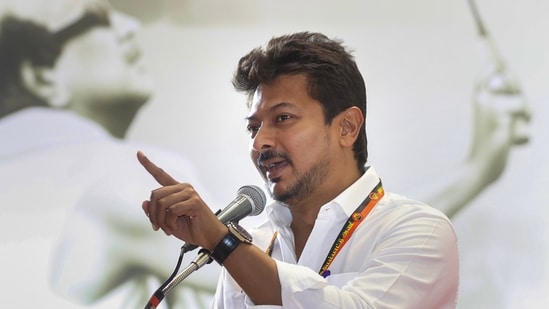
Tamil Nadu election results: DMK's Udhayanidhi Stalin leads by over 300 votes in Chepauk-Thiruvallikeni
# TN Polls: Udhayanidhi Stalin Leads in Chepauk
**By Senior Political Correspondent, India News Desk | May 4, 2026**
On May 4, 2026, early vote counting for the highly anticipated Tamil Nadu Assembly elections revealed that Dravida Munnetra Kazhagam (DMK) candidate Udhayanidhi Stalin is leading by a narrow margin of over 300 votes in the Chepauk-Thiruvallikeni constituency. As the incumbent Member of the Legislative Assembly (MLA) and a central figure in the state’s contemporary political landscape, Udhayanidhi is fighting a crucial battle to retain his seat and uphold his family’s multi-generational political legacy. With the Election Commission of India (ECI) still tallying votes across the state, these preliminary numbers offer the first glimpse into the electoral mood of Chennai’s political heartland, setting the stage for a tense and closely watched democratic exercise. [Source: Hindustan Times]
## Early Trends Suggest a Tight Race
The counting of votes for the 2026 Tamil Nadu Assembly elections commenced strictly at 8:00 AM under tight security protocols. As per standard Election Commission procedures, the initial phase of counting focused on postal ballots—primarily cast by election duty staff, senior citizens, and persons with disabilities—before moving on to the Electronic Voting Machines (EVMs).
In the Chepauk-Thiruvallikeni constituency, the early rounds of EVM counting have showcased a fiercely competitive environment. Udhayanidhi Stalin’s lead of just over 300 votes is a razor-thin margin that underscores the intensity of the localized political battle. Election officials at the designated counting centers in Chennai reported a steady progression of counting rounds, with representatives from all major political parties closely monitoring the process.
While early trends are often subject to significant fluctuations as EVMs from different polling booths are opened, a lead, however small, provides an initial psychological advantage. The narrow gap indicates that the opposition has successfully mobilized a substantial voter base, making the 2026 contest significantly tighter than the sweeping mandates seen in previous electoral cycles. [Source: Election Commission of India Public Data / Additional Knowledge]
## The Historical Significance of Chepauk-Thiruvallikeni
To understand the weight of this constituency, one must look at its historical alignment with the Dravidian movement. Chepauk has long been considered an impenetrable fortress for the DMK. The late DMK patriarch and former Chief Minister, M. Karunanidhi, represented the Chepauk constituency for three consecutive terms—winning decisively in 1996, 2001, and 2006.
Following the delimitation exercise in 2008, the Chepauk and Thiruvallikeni (Triplicane) constituencies were merged to form the current electoral boundary. Despite the demographic and geographic shifts, the area remained a stronghold for the party. Udhayanidhi Stalin, Karunanidhi’s grandson and the son of Chief Minister M.K. Stalin, made his electoral debut from this very seat in 2021, winning by a massive margin of over 69,000 votes.
The constituency is a microcosm of Chennai, blending heritage-rich neighborhoods, bustling commercial hubs, minority-dominated residential zones, and a vast coastline. The legacy of the “Rising Sun” (the DMK’s party symbol) is deeply embedded in the civic infrastructure and historical narrative of the area. Consequently, Udhayanidhi’s current campaign is not merely about securing a legislative seat; it is a mandate on his ability to carry forward a historical legacy in a rapidly modernizing urban landscape. [Source: Historical Election Commission Data]
## Udhayanidhi Stalin: From Screen to State Cabinet
Udhayanidhi Stalin’s trajectory over the past five years has been a focal point of Tamil Nadu politics. Transitioning from a successful career as a film producer and actor to a full-time politician, his rise within the DMK has been meteoric. After his decisive victory in 2021, he was inducted into the state cabinet as the Minister for Youth Welfare and Sports Development.
During his tenure, Udhayanidhi spearheaded several high-profile initiatives aimed at boosting sports infrastructure in Tamil Nadu, including the successful hosting of international sporting events in Chennai. His elevation within the party ranks, coupled with his aggressive campaigning style, positioned him as the de facto youth face of the DMK for the 2026 elections.
However, this rapid ascent has also made him a primary target for the opposition. Critics and rival parties have consistently built their campaigns around allegations of dynastic politics, aiming to consolidate anti-incumbency sentiments. The early trends showing a narrow 300-vote lead reflect the complex voter calculus balancing his ministerial performance against the opposition’s intense localized campaigning.
## Opposition Dynamics and Campaign Strategies
The 2026 Assembly elections have seen a recalibrated opposition strategy in urban centers like Chennai. The All India Anna Dravida Munnetra Kazhagam (AIADMK), alongside its regional allies, mounted a formidable challenge in Chepauk-Thiruvallikeni. Recognizing the historical difficulty of breaching this DMK bastion, the opposition fielded strong local candidates with deep community ties.
The opposition’s campaign strategy heavily emphasized hyper-local issues. They capitalized on urban fatigue, addressing concerns that resonate deeply with the daily lives of Chennai residents. By focusing on grassroots mobilization, door-to-door campaigning, and leveraging social media to highlight perceived administrative shortcomings, the opposition sought to erode the DMK’s traditional vote bank.
Furthermore, the presence of newer political outfits and independent candidates in the fray has fragmented the urban vote. These smaller entities often act as “vote splitters” in closely contested urban constituencies, meaning that even a minor shift in voter allegiance can drastically alter the outcome. The narrow margin reported on the morning of May 4 is a testament to the effectiveness of this multi-pronged electoral battlefield.
## Core Voter Issues Shaping the Mandate
Beyond political legacies and party symbols, the mandate in Chepauk-Thiruvallikeni is shaped by pressing urban issues. Chennai’s infrastructure challenges remain a decisive factor for voters.
**Key Issues in the 2026 Campaign Included:**
* **Urban Flooding and Drainage:** The memories of recurrent monsoonal flooding in Chennai remain fresh. Voters in low-lying areas of Thiruvallikeni have consistently demanded permanent solutions to waterlogging, putting pressure on the incumbent government to deliver on stormwater drain projects.
* **Traffic and Infrastructure:** As a central commercial and historical hub, the constituency suffers from severe traffic congestion. Urban mobility, road maintenance, and the expansion of public transit networks were major talking points.
* **Economic Rehabilitation:** Post-pandemic economic recovery for small businesses, street vendors, and the local tourism economy around the Marina beach promenade played a crucial role in voter decision-making.
* **Youth Employment:** Aligning with Udhayanidhi’s ministerial portfolio, the youth demographic in the constituency scrutinized the government’s record on job creation and skill development.
The tight early margins suggest a highly critical electorate that is weighing the overarching political narrative against tangible, ground-level civic improvements.
## Expert Perspectives on the Electoral Battle
Political analysts emphasize that early counting trends in urban constituencies must be interpreted with caution.
“In densely populated urban constituencies like Chepauk-Thiruvallikeni, the early rounds of EVM counting often represent specific wards or neighborhoods that may have distinct demographic or political leanings,” notes Dr. K. V. Ramanathan, an independent political analyst and researcher based in Chennai. “A lead of 300 votes in the first few hours is mathematically insignificant in the context of the total electorate, but it sets the narrative tone for the day. It indicates that the DMK is facing a spirited fight, likely driven by localized anti-incumbency or strategic vote consolidation by the opposition.”
Experts also point out that the final outcome will depend heavily on the voter turnout percentages recorded in specific wards. A lower turnout in traditional DMK strongholds within the constituency could explain the tighter margins, whereas a higher turnout in contested neighborhoods might favor the opposition. [Source: Independent Political Analysis, May 2026]
## Broader Implications for Tamil Nadu Politics
The results from Chepauk-Thiruvallikeni carry implications that extend far beyond the geographical boundaries of the constituency. For the DMK, securing a decisive victory here is a matter of prestige. It validates the party’s leadership succession plan and reinforces their dominance in Chennai, a city that has traditionally been the bedrock of their electoral power.
Conversely, if the opposition manages to keep the race tight or secure an upset, it would signal a profound shift in urban voter sentiment across Tamil Nadu. It would embolden the opposition narrative that the ruling party is vulnerable even in its safest harbors, potentially altering the legislative dynamics in the 234-member state assembly at Fort St. George.
The 2026 elections represent a critical juncture for Tamil Nadu’s Dravidian politics. With regional parties navigating a complex web of alliances, national party influences, and a highly informed electorate, the performance of high-profile candidates like Udhayanidhi Stalin serves as a vital bellwether for the state’s political trajectory over the next five years.
## Conclusion and Future Outlook
As the sun climbs higher over Chennai on counting day, all eyes remain fixed on the ECI tally boards for Chepauk-Thiruvallikeni. Udhayanidhi Stalin’s early lead of over 300 votes highlights the beginning of a gripping electoral conclusion. Whether the DMK incumbent can expand this margin as more EVMs are opened, or whether the opposition will close the gap and execute a historic political upset, remains to be seen.
What is unequivocally clear is that the electorate of this historic constituency is actively engaging with its democratic right, holding its leaders accountable, and demanding that the heavy mantle of political legacy be earned vote by vote. The final declaration of results later today will not only decide the MLA for Chepauk-Thiruvallikeni but will also write the next major chapter in the enduring saga of Tamil Nadu’s vibrant democracy.





