
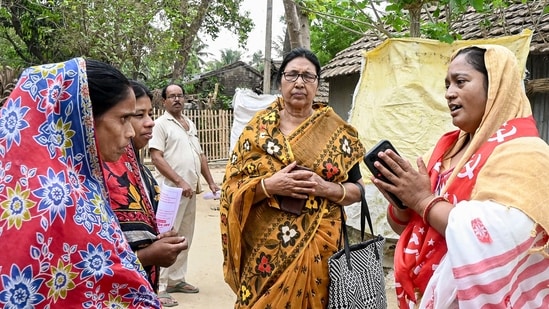
From Mothabari to Sujapur: Why Sabina Yasmin’s 2026 shift is a strategic masters
# Yasmin’s Sujapur Shift: A 2026 Masterstroke
**By Special Political Correspondent** | **Bengal Electoral Review** | May 4, 2026
In a defining maneuver for the ongoing 2026 West Bengal Assembly elections, senior All India Trinamool Congress (AITC) leader and cabinet minister Sabina Yasmin has officially shifted her electoral battleground from Mothabari to the neighboring Sujapur constituency in Malda district. Confirmed in early May 2026, this calculated transition aims to consolidate a crucial minority vote bank, neutralize localized anti-incumbency, and fortify the ruling party’s dominance in North Bengal against a resilient opposition. By repositioning a tested heavyweight in a historically complex seat, the AITC leadership has executed what analysts term a strategic masterstroke to secure regional electoral supremacy. [Source: Hindustan Times RSS | Additional: Election Commission of India Public Records].
## The Anatomy of a Political Relocation
Malda district has long been a labyrinth of intricate political loyalties, deeply influenced by demographic weight and historical legacies. For decades, the district was the undisputed fortress of the Indian National Congress, heavily steered by the late A.B.A. Ghani Khan Choudhury and his political heirs. However, over the past three election cycles, the Trinamool Congress has systematically chipped away at this bastion, replacing Congress as the primary political force in several key constituencies.
Sabina Yasmin has been at the forefront of this regional power shift. Having won the Mothabari seat multiple times—initially on a Congress ticket before her high-profile defection to the AITC—she is no stranger to the volatile dynamics of Malda. Her move from the relatively safe harbor of Mothabari to the high-stakes arena of Sujapur is not a random reshuffle. It represents a deliberate recalibration of resources by the AITC high command in Kolkata to ensure that the party’s grip on the district remains unshakeable in the 2026 state elections.
Sujapur holds a unique place in Bengal’s electoral map. It boasts one of the highest concentrations of minority voters in the state and has traditionally been fiercely loyal to the Congress party. By fielding Yasmin here, the AITC is sending a clear message: it intends to fight for the core of Malda’s electorate using its most recognizable local face.
## Decoding the Sujapur Electoral Calculus
To understand why this shift is being hailed as a strategic masterstroke, one must look at the specific demographic and economic realities of the Sujapur constituency. The region is heavily populated by workers engaged in the informal economy, particularly bidi rolling, silk weaving, and migrant labor.
**Key Demographic and Political Factors in Sujapur:**
* **High Minority Population:** Over 80% of the electorate in Sujapur belongs to the minority community, making it highly sensitive to political narratives surrounding secularism, citizenship laws, and minority welfare.
* **Historical Congress Loyalty:** Sujapur has historically been sympathetic to the Khan Choudhury family. Breaching and holding this seat is a matter of prestige for any opposing party.
* **Economic Vulnerabilities:** The constituency requires robust state welfare intervention. The AITC’s flagship schemes, such as *Lakshmir Bhandar* (financial assistance for women) and *Swasthya Sathi* (health insurance), play a vital role in voter mobilization here.
By deploying Sabina Yasmin—a seasoned administrator who has held significant ministerial portfolios including Irrigation and Waterways, and North Bengal Development—the AITC is offering Sujapur voters a candidate with proven executive access. This addresses a common grievance in the region regarding administrative neglect and infrastructure deficits.
## Sabina Yasmin’s Trajectory: From Congress Roots to AITC Vanguard
Sabina Yasmin’s political journey is a testament to her profound understanding of grassroots mobilization. She began her political career with the Indian National Congress, securing the Mothabari seat in 2011 and again in 2016. In 2018, recognizing the shifting political winds and the gradual decline of the Congress party’s organizational strength in Bengal, she joined the AITC.
Her defection was a watershed moment in Malda politics. In the 2021 Assembly elections, she retained the Mothabari seat under the AITC banner with a comfortable margin, cementing her status as a leader who commands personal loyalty transcending party lines.
“Sabina Yasmin’s relocation to Sujapur is less about securing her own political future and more about the AITC’s defensive architecture in Malda,” notes Dr. Arijit Sen, an independent political scientist and author based in Kolkata. “Mothabari is now organically safe for the Trinamool Congress. But Sujapur requires a seasoned general to prevent the Congress-Left alliance from reclaiming its ancestral crown. Yasmin brings the exact combination of local familiarity and state-level clout needed to win.”
### Comparative Constituency Dynamics
| Feature | Mothabari (Previous Seat) | Sujapur (New 2026 Seat) |
| :— | :— | :— |
| **Incumbency Status** | Held by AITC (Yasmin) | Contested Battleground |
| **Primary Demographics**| Mixed rural, significant minority | Overwhelmingly minority |
| **Key Economic Drivers** | Agriculture, Mango trade | Bidi rolling, migrant labor |
| **Strategic Importance** | Defensive stronghold | Aggressive expansion/retention |
## Countering Anti-Incumbency and Rotating Leadership
A hallmark of the AITC’s electoral strategy over the last decade has been its ruthless pragmatism regarding anti-incumbency. Localized fatigue with sitting Members of the Legislative Assembly (MLAs) is a natural phenomenon in Indian politics, particularly for a party that has been in power for three consecutive terms.
By shifting Yasmin from Mothabari to Sujapur, the party achieves a dual objective. First, it introduces a fresh yet formidable face in Sujapur, disrupting the opposition’s established narratives against the previous local leadership. Second, it opens up Mothabari for a new, likely younger candidate, thereby rejuvenating the party’s local organizational structure and appeasing ambitious grassroots workers who might otherwise succumb to factionalism.
Political strategist Ananya Dasgupta explains, “In rural Bengal, the candidate often matters as much as the party symbol. By moving a cabinet minister to Sujapur, the AITC leadership is directly telling the voters of Sujapur that they are a priority. It is a psychological play as much as an electoral one.”
## Neutralizing the Opposition’s Roadmap
The shift also serves as a preemptive strike against the strategies of both the Left-Congress alliance and the Bharatiya Janata Party (BJP).
In Malda, the primary threat to the AITC traditionally comes from the Congress, which frequently forms tactical alliances with the Left Front to prevent the division of anti-Trinamool votes. Sujapur, with its deep-seated Congress history, is exactly the type of constituency the opposition targets for a revival. By positioning Yasmin there, the AITC forces the Congress to expend disproportionate time and resources defending a seat they desperately want, draining their momentum in other parts of the district.
Simultaneously, this move addresses the BJP’s strategy. While the BJP has historically struggled to gain a foothold in minority-dominated seats like Sujapur, they often capitalize on multi-cornered contests where the AITC and Congress split the minority vote. Yasmin’s overwhelming popularity and her track record of delivering state welfare schemes effectively consolidate this vote, drastically reducing the chances of the BJP benefiting from a fractured mandate.
## Grassroots Reaction and Future Implications
Initial reports from the ground in Sujapur suggest a highly energized campaign. AITC workers, who had faced tough organizational challenges in the constituency during previous local body elections, have been galvanized by the arrival of a heavyweight candidate. Conversely, the opposition has accused the AITC of panicking, framing the shift as a sign that the ruling party is losing its grip on Mothabari—a claim the AITC vehemently denies.
The implications of this move extend far beyond the borders of Sujapur. If Sabina Yasmin succeeds in securing a decisive victory, it will validate the AITC’s strategy of tactical candidate rotation. It will also signal the final dismantling of the old Congress hegemony in Malda, proving that welfare politics and strategic candidate placement can permanently rewrite historical electoral loyalties.
## Conclusion: High Stakes in North Bengal
As West Bengal navigates the intense political heat of the 2026 Assembly elections, Sabina Yasmin’s shift from Mothabari to Sujapur stands out as one of the most compelling narratives of the campaign. It is a textbook example of high-level political chess, wherein demographic analysis, anti-incumbency management, and resource allocation converge.
For Sabina Yasmin, a victory in Sujapur will elevate her status from a regional leader to an indispensable pillar of the AITC’s North Bengal leadership. For the Trinamool Congress, retaining and strengthening its hold on Malda is critical to securing a definitive mandate in the state assembly. Ultimately, the voters of Sujapur will decide whether this strategic masterstroke translates into a resounding electoral triumph, but the sheer audacity of the move has already reshaped the political landscape of Malda district.





