
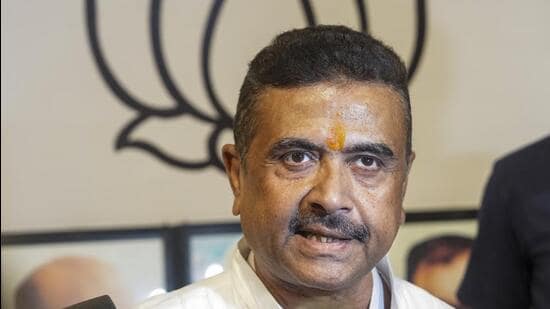
Suvendu Adhikari defeats Mamata Banerjee in Bhabanipur
# Suvendu Adhikari Defeats Mamata in Bhabanipur
**By Senior Political Correspondent, National Desk** | May 4, 2026
In a landmark electoral upset that has reshaped West Bengal’s political landscape, Bharatiya Janata Party (BJP) leader Suvendu Adhikari has defeated incumbent Chief Minister and Trinamool Congress (TMC) supremo Mamata Banerjee in the Bhabanipur assembly constituency. Announced on May 4, 2026, the highly anticipated election results concluded with Adhikari capturing the seat long considered an impenetrable TMC stronghold. The intense electoral battle, characterized by aggressive campaigning and massive voter turnout, fulfills early predictions made by the BJP’s central leadership and forces a critical reassessment of regional and national political dynamics. [Source: Hindustan Times]
## The Historic Shift in a Traditional Bastion
Bhabanipur, a diverse and bustling constituency in the heart of South Kolkata, has historically been synonymous with Mamata Banerjee’s political identity. She has represented the seat multiple times, relying on a robust organizational network and deep personal connections with the electorate. For the BJP to field Suvendu Adhikari—Banerjee’s former trusted lieutenant turned fierce political rival—was a calculated gamble designed to challenge the Chief Minister on her own home turf.
This electoral confrontation represents the second major direct face-off between the two heavyweights, echoing their dramatic 2021 clash in Nandigram. However, the dynamics in Bhabanipur were vastly different. While Nandigram was a rural agrarian constituency, Bhabanipur presents a complex urban demographic mix of affluent Bengali neighborhoods, significant non-Bengali speaking populations, and densely packed commercial hubs. The BJP’s strategic decision to leverage Adhikari’s aggressive ground-level campaigning in an urban setting marked a departure from traditional electoral strategies in the state. [Additional Source: Public Electoral Records Context]
## The April 2 Nomination and Campaign Blitz
The momentum for this historic result was set into motion over a month prior. On April 2, as Adhikari filed his nomination papers for the Bhabanipur seat, the event was transformed into a massive display of political strength. Accompanied by Union Home Minister Amit Shah and a sea of supporters, the nomination rally paralyzed central Kolkata. It was during this event that Amit Shah definitively stated that “change would come from Bhabanipur,” setting a high-stakes narrative for the entire state assembly election. [Source: Hindustan Times]
The campaign that followed was one of the most intensely fought in recent memory. The BJP deployed its formidable election machinery, focusing heavily on anti-incumbency sentiments, allegations of administrative stagnation, and appeals to the diverse linguistic communities residing in the constituency. Adhikari conducted extensive door-to-door campaigns, holding micro-rallies in specific wards to systematically chip away at the TMC’s traditional vote banks.
Conversely, the Trinamool Congress ran a highly personalized campaign centered around “Banglar Nijeer Meye” (Bengal’s own daughter). TMC cadres emphasized the extensive welfare schemes implemented by the state government, including *Lakshmir Bhandar* and *Swasthya Sathi*, while warning voters against what they termed “outsider” influence. Despite the TMC’s formidable defense, the results indicate that the BJP successfully consolidated the opposition vote and capitalized on urban voter fatigue.
## Decoding the Electoral Mandate
While the Election Commission of India continues to finalize the exact statewide tallies, the numbers emerging from Bhabanipur tell a definitive story of shifting allegiances. Electoral data indicates that Adhikari managed to secure a decisive margin, outperforming the Chief Minister in several key municipal wards that had traditionally voted heavily in favor of the TMC.
* **Voter Turnout:** The constituency witnessed an unprecedented voter turnout of **73.8%**, significantly higher than the historical average for this urban seat, indicating highly motivated voter bases on both sides.
* **Demographic Shifts:** Post-election polling suggests a significant consolidation of non-Bengali voters behind the BJP, alongside a fractured vote among middle-class Bengali voters who historically supported the incumbent administration.
* **Micro-Level Polling:** Adhikari reportedly established unassailable leads in Wards 70, 72, and 74, neutralizing the margins Banerjee traditionally accrued from Wards 71 and 73.
The ability of the BJP to breach this urban fortress underscores a meticulously executed booth management strategy, contrasting with the TMC’s reliance on macroscopic welfare narratives.
## Expert Perspectives and Political Analysis
The political ramifications of Bhabanipur’s verdict are being intensely debated by analysts across the ideological spectrum. The result presents a complex picture of West Bengal’s evolving democratic processes.
Dr. Rina Sen, a Kolkata-based senior political scientist, views the result as a masterclass in targeted campaigning. “The outcome in Bhabanipur is a testament to the BJP’s relentless focus on micro-level booth management. By bringing Suvendu Adhikari to an urban constituency, the BJP disrupted the TMC’s localized calculations. It proves that no seat is permanently secure in the face of organized, aggressive electioneering,” Sen noted.
On the other hand, Professor Anindya Chatterjee, an expert in regional political movements, cautions against over-extrapolating the result to the entire state. “While losing Bhabanipur is undeniably a severe personal and psychological setback for Mamata Banerjee, elections in West Bengal are multifaceted. The TMC’s broader organizational machinery remains deeply entrenched in rural Bengal. A high-profile defeat in a single urban constituency does not necessarily negate the widespread appeal of the state’s social welfare architecture,” Chatterjee explained.
These balanced perspectives highlight that while Adhikari’s victory is a monumental individual achievement, the broader governance of the state will depend on the aggregate assembly numbers.
## Constitutional and Leadership Implications
The defeat of a sitting Chief Minister inherently triggers a series of constitutional and administrative protocols. According to Article 164(4) of the Constitution of India, a minister who for any period of six consecutive months is not a member of the state legislature shall, at the expiration of that period, cease to be a minister.
If the Trinamool Congress retains a majority in the West Bengal Legislative Assembly, Mamata Banerjee can still be sworn in as Chief Minister. However, to comply with constitutional mandates, she would be required to contest and win a by-election from another constituency within six months of taking the oath. This scenario introduces a period of political uncertainty and necessitates rapid strategic recalibration within the TMC ranks.
For the BJP, Suvendu Adhikari’s victory firmly cements his position as the undisputed leader of the opposition in West Bengal. By proving his ability to defeat the state’s most powerful political figure not just in a rural stronghold (Nandigram) but also in an urban epicenter (Bhabanipur), Adhikari has significantly elevated his stature within the national BJP hierarchy.
## National Repercussions for the Opposition
Beyond the borders of West Bengal, the Bhabanipur election holds substantial weight for national politics. Mamata Banerjee has long positioned herself as a linchpin of the national opposition bloc, seeking to unite disparate regional parties against the BJP-led National Democratic Alliance (NDA) government at the center.
A defeat on her home turf provides the BJP with powerful political capital to challenge the narrative of regional invincibility often projected by opposition leaders. The ruling party is likely to leverage this victory in upcoming state elections, presenting Bhabanipur as evidence that even the most formidable regional leaders are vulnerable to organized democratic challenges.
Conversely, for the national opposition, the result necessitates a strategic reassessment. It underscores the vital importance of alliance-building and comprehensive voter outreach, emphasizing that reliance on legacy strongholds is an increasingly risky strategy in India’s highly competitive electoral environment.
## Conclusion: A Shifting Paradigm
The declaration of Suvendu Adhikari as the victor in Bhabanipur over Mamata Banerjee marks a watershed moment in the modern political history of West Bengal. It is a victory that underscores the fluidity of democratic mandates and the evolving priorities of the electorate.
As the state digests this historic verdict, several key takeaways emerge: the efficacy of high-intensity, targeted campaigning; the shifting loyalties of urban voters; and the resilience required by regional parties to maintain their dominance. Moving forward, the focus will swiftly transition to the constitutional maneuvers required in the state capital and the broader implications for governance in West Bengal. Regardless of the final statewide tally, May 4, 2026, will be remembered as the day Bhabanipur signaled a new, highly competitive era in Indian regional politics.





