
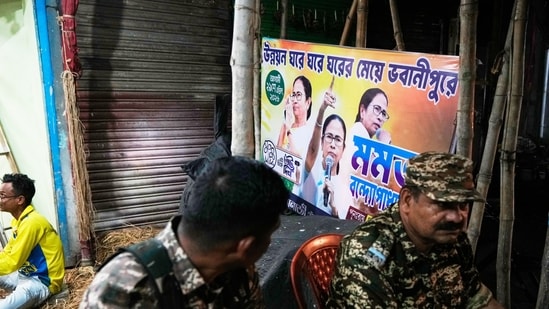
'No important files to be removed or damaged’: Top official as TMC loses Bengal
# TMC Loses Bengal: State Files Ordered Secured
**By Arunava Sen, State Affairs Correspondent | May 5, 2026**
Following the Trinamool Congress’s (TMC) historic electoral defeat in West Bengal on May 4, 2026, the state’s Chief Secretary has initiated critical administrative lockdown protocols. Issuing an urgent, sweeping directive to all department heads, the top official mandated that no important files or documents be removed, damaged, or relocated from government offices. This swift bureaucratic intervention aims to ensure a seamless and transparent transition of power, safeguarding crucial state records against potential tampering or destruction as a new administration prepares to assume control of Kolkata’s Nabanna secretariat. [Source: Hindustan Times].
## The Bureaucratic Firewall: Securing Nabanna
The transition of power in any vibrant democracy is a delicate period, often characterized by anxiety, shifting allegiances, and the urgent need to preserve institutional memory. The West Bengal Chief Secretary’s preemptive order serves as a bureaucratic firewall. The directive explicitly instructed district magistrates, department secretaries, and directorate heads to ensure that “no important paper or any file is removed/damaged or otherwise taken out from the offices.” [Source: Hindustan Times].
This order applies to all levels of the state apparatus, from the highest echelons of the state secretariat in Howrah to the block development offices in rural Bengal. Police personnel stationed at government buildings have reportedly been instructed to monitor the movement of outward-bound materials, ensuring that no unauthorized physical documents leave the premises.
The move, while seemingly dramatic to the public, is a standard operating procedure (SOP) dictated by the highest traditions of the Indian Administrative Service (IAS). During the “lame-duck” period—the window between the declaration of election results and the swearing-in of the new Chief Minister—the executive branch’s primary duty shifts from policy implementation to the preservation of the state’s administrative integrity.
## Echoes of 2011: The History of Regime Change
To understand the gravity of this directive, one must look back at the modern political history of West Bengal. The state has seen relatively few, but highly consequential, shifts in power. The most notable in recent memory was the 2011 assembly election, which saw the Left Front ousted after 34 years of uninterrupted rule by Mamata Banerjee’s Trinamool Congress.
During the 2011 transition, the incoming TMC government frequently alleged that crucial files detailing the financial health of the state, land acquisition deals, and internal departmental communications had gone missing or were deliberately destroyed by departing officials. The current directive by the Chief Secretary appears designed to preempt similar allegations and ensure that the incoming government inherits a transparent and intact bureaucratic ledger. [Additional Source: Historical electoral transition records, Election Commission of India].
“A transition of government is not just a transfer of political power; it is a handover of the state’s operational blueprint,” notes Dr. Amitabha Roy, a Kolkata-based political scientist and former advisor to the state election commission. “When a government that has been in power for over a decade is voted out, there is naturally a vast accumulation of sensitive data. The Chief Secretary’s order is both a legal necessity and a signal to the incoming administration that the civil service remains neutral and protective of the state’s assets.”
## Modernizing the Lockdown: Digital and Physical Records
While the Hindustan Times snippet explicitly mentions “papers and files,” modern administrative lockdowns extend far beyond physical cabinets. In 2026, the West Bengal government’s operations are heavily digitized via platforms like the ‘e-Office’ portal, the ‘Banglarbhumi’ land records system, and various centralized finance databases.
Sources within the state’s Information Technology department indicate that alongside the physical lockdown, digital safeguards have been quietly activated. These measures include:
* **Access Audits:** Freezing administrative rights to delete files on centralized servers.
* **Backup Protocols:** Creating immutable, read-only backups of departmental databases as they stood on the day of the election results.
* **Email Retention:** Ensuring that all internal correspondence using official state email addresses is archived and shielded from manual deletion.
These digital safeguards are particularly crucial. In recent years, numerous national and state-level investigations have relied heavily on digital footprints—from IP address logs to deleted-but-recovered server data—to trace administrative anomalies.
## Departments Under the Microscope
While the directive applies to all state departments, political analysts suggest that files belonging to specific ministries will be of paramount interest to the incoming administration. The TMC’s tenure, particularly in its latter years, faced intense scrutiny and multiple central agency probes.
The incoming government is widely expected to order immediate audits or ‘White Papers’ on several key areas. The preservation of documents in the following departments is therefore critical:
1. **School Education Department:** Following the long-running SSC (School Service Commission) recruitment controversies that plagued the previous administration, all files related to teacher appointments, panel lists, and salary disbursements are highly sensitive.
2. **Urban Development and Municipal Affairs:** Documents detailing civic tenders, municipal job appointments, and urban infrastructure contracts will be closely guarded.
3. **Finance Department:** The new government will need an immediate and accurate picture of the state’s exchequer, outstanding debt, and the financial mechanics of widespread welfare schemes like *Lakshmir Bhandar*.
4. **Home and Hill Affairs:** Intelligence files, police postings, and law-and-order directives issued during the election period will be secured to ensure continuity in state security.
“The first 100 days of the new government will rely entirely on the integrity of the files left behind today,” explains former IAS officer and administrative law expert, Meera Sanyal. “If there are gaps in the paper trail regarding budgetary allocations or major infrastructure tenders, it paralyzes the new ministers. The Chief Secretary is acting as the custodian of the state’s functional capacity.”
## The Legal Framework of Public Records
The directive issued by the West Bengal Chief Secretary is not merely an administrative courtesy; it is deeply rooted in law. The management, preservation, and disposal of government files are governed by strict statutes modeled on the Public Records Act.
Under these rules, government documents are classified by their importance and longevity (e.g., Class A files must be kept indefinitely, while Class C files may be destroyed after a set number of years). However, the destruction of *any* government file requires a formal, documented process, usually involving a review committee.
Destroying, removing, or tampering with government files outside of this legal framework is a criminal offense. It can invite charges under the Indian Penal Code (IPC) related to the destruction of evidence, criminal breach of trust by a public servant, and various sections of the Prevention of Corruption Act, if the destruction is proven to be an attempt to cover up financial irregularities. By issuing this written directive, the Chief Secretary has placed the legal onus squarely on department heads, making them directly accountable for any missing documents within their jurisdictions. [Additional Source: Public Records Act protocols, Indian Penal Code].
## The Role of the Civil Service in a Democracy
This moment underscores the vital, often underappreciated role of the permanent executive—the civil service—in a parliamentary democracy. Politicians campaign, win, and lose, but the administrative machinery must remain constant.
The Chief Secretary, as the highest-ranking civil servant in the state, is constitutionally bound to serve the government of the day. However, during a transition, their allegiance shifts subtly from the outgoing political leadership to the abstract concept of the State itself. They become the bridge between the outgoing and incoming regimes.
The decisive action taken at Nabanna reflects a mature administrative setup attempting to insulate governance from the inevitable volatility of electoral politics. It ensures that when the new Chief Minister walks into their office, the machinery of the state is ready to be operated, free from sabotage or operational blindness.
## Conclusion: Looking Ahead to the New Administration
As West Bengal processes the magnitude of the 2026 election results and the end of the Trinamool Congress’s tenure, the focus will rapidly shift from the ballot box to the boardroom. The Chief Secretary’s prompt lockdown of state files is the first definitive step in a complex transition process.
For the outgoing administration, it marks a sudden halt to executive power. For the incoming government, it guarantees that they will have the necessary data to evaluate the state’s true condition, launch promised investigations, and begin implementing their manifesto.
Ultimately, the strict enforcement of this directive will serve as the foundation for the next chapter of West Bengal’s political and economic journey. By ensuring that “no important paper or any file is removed,” the state’s bureaucracy is protecting the most fundamental right of the electorate: the right to institutional continuity, transparency, and uncompromised governance.





