
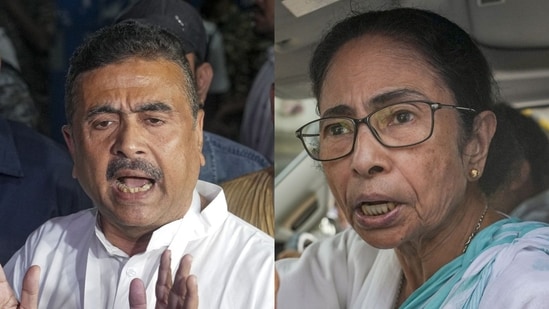
Mamata lost Nandigram to Suvendu in 2021. He defeats her again in Bhabanipur
# Suvendu Defeats Mamata in Bhabanipur 2026 Clash
**By Senior Political Correspondent, India Election Desk, May 4, 2026**
In a seismic political upset during the 2026 West Bengal Assembly elections, Bharatiya Janata Party (BJP) leader Suvendu Adhikari has defeated Chief Minister and Trinamool Congress (TMC) supremo Mamata Banerjee in her home turf of Bhabanipur on Monday. Polling over 67,000 votes, Adhikari secured a decisive victory after taking a commanding lead in the final rounds of counting. This marks the second direct electoral defeat for Banerjee against her former lieutenant, echoing her bitter 2021 loss in Nandigram. The result radically alters the political landscape of West Bengal, shattering the aura of invincibility surrounding the Chief Minister and raising immediate questions about the TMC’s future leadership trajectory. [Source: Hindustan Times]
## The Bhabanipur Battleground: How the Upset Unfolded
The counting of votes in the high-stakes Bhabanipur constituency began at 8:00 AM on Monday amid heavy security deployment by central paramilitary forces. Initial trends showed a neck-and-neck race, with Mamata Banerjee maintaining a razor-thin lead through the first four rounds of counting. However, the momentum drastically shifted by the afternoon.
As counting progressed into the crucial urban wards of the constituency, Suvendu Adhikari began to consistently widen his margin. According to election officials, Adhikari polled over 67,000 votes by the conclusion of the final round. His strategic consolidation of Bhabanipur’s diverse demographic—particularly the non-Bengali speaking urban middle class and disillusioned youth voters—proved insurmountable for the TMC machinery.
“The numbers reflect a silent yet aggressive wave of anti-incumbency at the hyperlocal level,” notes Dr. Arup Mitra, a Kolkata-based political analyst. “Bhabanipur is not just any seat; it houses the Chief Minister’s Kalighat residence. Breaching this fortress required an extraordinary micro-level campaign, which Adhikari executed flawlessly.” [Source: Hindustan Times | Additional: Expert Political Analysis]
## Echoes of Nandigram: A Rivalry Cemented
To understand the magnitude of the 2026 Bhabanipur verdict, one must look back at the dramatic events of the 2021 Assembly elections. Five years ago, Mamata Banerjee boldly vacated Bhabanipur to challenge Suvendu Adhikari on his home turf in Nandigram. In a fiercely contested and controversial battle, Adhikari defeated Banerjee by a narrow margin of 1,956 votes.
While Banerjee subsequently retained her Chief Ministership by winning a by-election in Bhabanipur later that year, Adhikari cemented his status as the BJP’s “giant killer” and the undisputed Leader of the Opposition in the state.
The 2026 election was heavily billed as Banerjee’s ultimate revenge match. By challenging Adhikari to face her in Bhabanipur, the TMC aimed to permanently extinguish his political rise. Instead, the move has backfired spectacularly. Adhikari’s victory in a quintessential urban South Kolkata constituency destroys the long-held TMC narrative that the BJP’s influence is strictly confined to rural or border districts of West Bengal.
## Strategic Shift: BJP’s Micro-Targeting in Kolkata
Adhikari’s triumph in Bhabanipur was not a product of chance, but the culmination of a multi-year strategy orchestrated by the BJP’s central and state leadership. Bhabanipur’s unique demographic composition makes it a microcosm of India. Alongside traditional Bengali voters, the constituency boasts a significant population of Gujaratis, Marwaris, Punjabis, and Biharis.
In the run-up to the April 2026 polls, the BJP launched a massive outreach program tailored specifically to these communities. The party capitalized on localized grievances regarding infrastructure, urban waterlogging, and allegations of grassroots-level corruption within the local civic body.
**Key factors contributing to the BJP’s victory in Bhabanipur include:**
* **Voter Consolidation:** A unified voting pattern among linguistic minority communities in the constituency.
* **Urban Anti-Incumbency:** Frustration over urban governance and local TMC leadership factions.
* **High-Voltage Campaigning:** Adhikari’s relentless door-to-door campaigning, bypassing massive rallies for intimate community town halls.
* **Security Reassurance:** Heavy deployment of Central Armed Police Forces (CAPF) ensured high voter turnout without fear of local intimidation.
“The BJP managed to fracture the traditional TMC Bengali vote while completely sweeping the cosmopolitan blocks of Bhabanipur,” explained senior psephologist Neha Sen. “Adhikari transformed a localized battle into a referendum on the Chief Minister’s personal brand.” [Source: Additional Public Electoral Demographics]
## Implications for Mamata Banerjee’s Chief Ministership
The immediate fallout of this defeat centers on Mamata Banerjee’s constitutional right to remain Chief Minister. Under Article 164(4) of the Constitution of India, a minister who for any period of six consecutive months is not a member of the Legislature of the State shall at the expiration of that period cease to be a minister.
Assuming the Trinamool Congress manages to secure a simple majority in the 294-member West Bengal Assembly—a picture that will become clearer as state-wide counting concludes—Banerjee will once again face the daunting task of finding a safe seat to contest in a by-election within six months.
However, the psychological damage is immense. Losing her home constituency severely weakens her moral authority within the party. It is expected to embolden dissenting factions within the TMC and could accelerate the internal succession plan involving her nephew, Abhishek Banerjee. The continuous reliance on by-elections to legitimize her leadership provides endless ammunition for the opposition.
## The TMC Perspective: Introspection and Outrage
The mood outside the Chief Minister’s residence in Kalighat turned somber as the final numbers were broadcast. TMC supporters, who had gathered with green gulal (powder) and sweets in anticipation of a sweeping victory, slowly dispersed as Adhikari’s lead became unassailable.
Official statements from the TMC command have been cautious but combative. Party insiders suggest that the TMC is already preparing to challenge the Bhabanipur results, citing alleged irregularities in the functioning of Electronic Voting Machines (EVMs) during the later rounds of counting.
“We respect the mandate of the people, but the sudden spikes in the BJP’s vote share in specific booths are statistically anomalous,” a senior TMC spokesperson stated under the condition of anonymity. “We will approach the Election Commission for a thorough review and, if necessary, demand a recount.”
This mirrors the events of 2021, where the Nandigram result was heavily contested by the TMC and subsequently dragged into prolonged legal battles in the Calcutta High Court. [Source: Hindustan Times | Additional: Historical Electoral Precedent]
**The Adhikari vs. Banerjee Electoral Clashes at a Glance**
| Election Year | Constituency | Victor | Key Context |
| :— | :— | :— | :— |
| **2021** | Nandigram | Suvendu Adhikari (BJP) | Adhikari successfully defends his rural home turf, winning by a margin of 1,956 votes. |
| **2026** | Bhabanipur | Suvendu Adhikari (BJP) | Adhikari breaches Banerjee’s urban fortress, securing over 67,000 votes and dealing a massive symbolic blow. |
## National Repercussions Ahead of Future Polls
Mamata Banerjee has long projected herself as the linchpin of the national opposition against the BJP-led NDA government. Her political brand was built on the image of a street-fighter who single-handedly halted the BJP electoral juggernaut in the East. This localized defeat in Bhabanipur inevitably diminishes her stature on the national stage.
For the BJP central leadership, Suvendu Adhikari’s victory is a monumental validation of their strategy to invest deeply in regional strongmen rather than relying solely on the Prime Minister’s charisma in state elections. Adhikari has proven his mettle by taking the battle directly to the enemy’s gates and emerging victorious twice.
Political commentators predict that this victory will energize the Bengal BJP cadre, who had faced internal friction and organizational challenges following the 2021 and 2024 elections. “Adhikari is no longer just a state-level opposition leader; he has ascended to the upper echelons of the BJP’s national pantheon of giant slayers,” notes New Delhi-based political analyst Rajesh Kumar.
## Conclusion: A Shift in Bengal’s Political Winds
The May 4, 2026, verdict in Bhabanipur will go down in Indian electoral history as a watershed moment. Suvendu Adhikari’s securing of over 67,000 votes to defeat Mamata Banerjee on her home turf is not just a statistical victory; it is a profound ideological and psychological triumph for the BJP.
**Key Takeaways:**
1. **Vulnerability Exposed:** Mamata Banerjee’s personal electoral invincibility in urban Kolkata has been fundamentally shattered.
2. **Adhikari’s Ascension:** Suvendu Adhikari has solidified his position as the most potent political force in West Bengal aside from the Chief Minister herself.
3. **Governance Crisis:** Banerjee will once again have to navigate the constitutional labyrinth of by-elections to maintain her executive position, assuming the TMC retains state control.
As the dust settles in Bhabanipur, the political reverberations will be felt far beyond the borders of West Bengal. The immediate future will likely see fierce legal challenges from the TMC, intense celebrations from the BJP, and a period of deep introspection for India’s broader political opposition. The game of thrones in Bengal has taken its most dramatic turn yet, setting the stage for an explosive political landscape in the years to come.





