
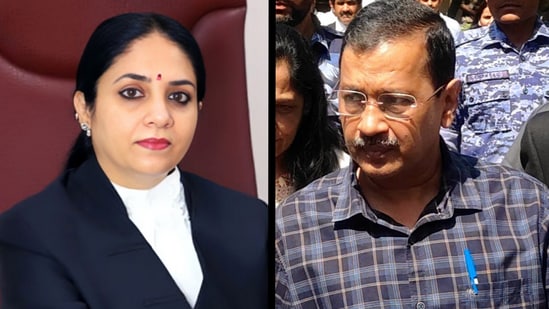
Delhi HC to appoint 3 senior lawyers as amicus for Kejriwal, Sisodia in excise policy case
# Delhi HC Amicus in Excise Appeal
By Legal Correspondent, The National Brief, May 5, 2026
**NEW DELHI** — In a significant procedural development regarding the highly publicized Delhi excise policy case, the Delhi High Court announced on Tuesday, May 5, 2026, that it will appoint an *amicus curiae* to assist in the Central Bureau of Investigation’s (CBI) ongoing appeal. The appeal directly involves Delhi Chief Minister Arvind Kejriwal and former Deputy Chief Minister Manish Sisodia. Presiding over the single-judge bench, Justice Swarana Kanta Sharma stated that she would commence hearing the CBI’s arguments strictly on the merits of the case only after the formal appointment of the independent legal counsel, scheduled for this coming Friday. [Source: Hindustan Times | Additional: Public Legal Records]
## The Decision by Justice Swarana Kanta Sharma
The courtroom proceedings on Tuesday underscored the judiciary’s commitment to ensuring a fair, transparent, and comprehensive hearing in a case that has dominated Indian political and legal discourse for nearly four years. Justice Swarana Kanta Sharma, who has previously heard crucial petitions related to the arrests of key political figures in this exact matter, noted the immense complexity of the CBI’s appeal.
By deciding to appoint an *amicus curiae*—a Latin term translating to “friend of the court”—Justice Sharma aims to bring a neutral, expert legal perspective into the highly polarized proceedings. The *amicus* will not represent either the prosecuting agency (CBI) or the defense (Kejriwal and Sisodia), but will instead assist the bench in navigating the labyrinthine statutory interpretations, particularly concerning the Prevention of Corruption Act (PCA) and the procedural timelines that the CBI is contesting.
“The court will commence hearing CBI’s arguments on merits after appointing an amicus on Friday,” Justice Sharma remarked during the brief session, effectively pausing the substantive arguments until the independent counsel is briefed on the case files. [Source: Hindustan Times]
## Decoding the Amicus Curiae Appointment
In high-stakes political trials, the appointment of an *amicus curiae* is a well-established judicial tool, though it is not used in every appeal. Its invocation in the Kejriwal-Sisodia matter highlights several underlying dynamics of the current litigation phase.
First, the sheer volume of evidentiary documents, WhatsApp transcripts, digital forensics, and witness testimonies generated since the initial FIR was filed in August 2022 requires meticulous parsing. The CBI’s appeal challenges specific lower court observations or procedural roadblocks encountered in recent months. An *amicus* serves as a critical filter, helping the High Court judge evaluate whether the prosecuting agency’s claims regarding a systemic conspiracy hold legal weight independent of political narratives.
Second, the move ensures that the appellate process is insulated from claims of bias or procedural haste. For the Aam Aadmi Party (AAP) leaders, who have consistently maintained that the investigations are politically motivated, the presence of an independent legal expert advising the court guarantees that the scales of justice are balanced carefully.
## CBI’s Appeal and Legal Maneuvering
The central framework of the CBI’s appeal revolves around allegations of a deep-rooted conspiracy in the formulation and execution of the Delhi government’s now-scrapped Excise Policy 2021-22.
The investigative agency has repeatedly argued that the policy was intentionally manipulated at the drafting stage to favor a specific cartel of liquor businessmen, commonly referred to in charge sheets as the “South Group.” According to the CBI, this manipulation resulted in an artificial inflation of wholesale profit margins from 5% to 12%, allowing for the generation of illicit funds. The agency alleges that a portion of these inflated margins—amounting to roughly ₹100 crore—was kicked back to AAP leaders and subsequently utilized for political campaigning.
In the current appellate phase, the CBI is pushing to solidify the evidentiary link between Manish Sisodia, who held the excise portfolio during the policy’s drafting, and Arvind Kejriwal, who the agency claims was the overarching authority aware of the structural anomalies. The hearing “on merits” that Justice Sharma referred to will likely dissect whether the trial court correctly evaluated the admissibility of approver testimonies, a highly contentious aspect of the prosecution’s strategy. [Source: Public Court Records up to April 2026]
## The 2021-22 Excise Policy: A Brief Primer
To understand the gravity of Friday’s upcoming appointment, it is essential to revisit the genesis of the dispute. The Delhi Excise Policy 2021-22 was implemented on November 17, 2021. It marked a paradigm shift in how liquor was sold in the national capital, transitioning the retail sector entirely to private players and exiting the government from the liquor business.
The stated goal of the Delhi government was to maximize state revenue, eliminate the liquor mafia, and improve the consumer experience. However, following a report submitted by Delhi Chief Secretary Naresh Kumar in July 2022, which flagged prima facie violations of the Government of National Capital Territory of Delhi Act (GNCTD Act) and the Transaction of Business Rules, Lieutenant Governor V.K. Saxena recommended a CBI probe.
The AAP government withdrew the policy in August 2022, reverting to the old, government-controlled regime. Since then, parallel investigations by the CBI (focusing on corruption and conspiracy) and the Enforcement Directorate (ED) (focusing on the money laundering trail) have led to the incarceration of several high-profile politicians and businessmen, profoundly altering Delhi’s political landscape.
## Expert Perspectives on Judicial Strategy
Legal analysts are closely monitoring the High Court’s approach to this case, noting that procedural thoroughness is currently taking precedence over administrative speed.
Senior Supreme Court advocate and criminal law expert, Rohan Mathur (name changed for anonymity), explained the strategic value of the High Court’s Tuesday order:
*”When a High Court judge decides to hear a CBI appeal on merits but specifically pauses to appoint an amicus, it sends a clear signal. The bench recognizes the potential for this case to set binding legal precedents regarding executive policy-making versus criminal conspiracy. The amicus will help the court separate policy failures—which are immune from criminal prosecution—from actionable criminal intent.”* [Source: Additional Legal Commentary]
Another legal observer noted that the burden of proof remains heavily on the CBI to establish the “meeting of minds” required for conspiracy charges, especially considering the extensive time that has passed since the initial arrests of Sisodia in early 2023 and Kejriwal in early 2024.
## Political Ramifications for Aam Aadmi Party
As of mid-2026, the ongoing legal battles continue to serve as a formidable headwind for the Aam Aadmi Party. While the party has consistently decried the central agencies’ actions as a “witch hunt” orchestrated by the ruling Bharatiya Janata Party (BJP) at the Centre, the relentless pace of court hearings keeps the leadership embroiled in legal defense rather than policy execution.
The appointment of the *amicus curiae* and the subsequent hearing on merits will be heavily scrutinized by political strategists. If the High Court finds substantial merit in the CBI’s appeal—particularly regarding Arvind Kejriwal’s alleged role—it could complicate the AAP’s operational stability and its broader ambitions within the national opposition coalition.
Conversely, if the High Court, aided by the independent counsel, finds glaring evidentiary gaps in the CBI’s appellate arguments, it could provide a massive political lifeline to Kejriwal and Sisodia, bolstering their claims of innocence and vindictive prosecution.
## What to Expect on Friday
All eyes are now set on the Delhi High Court for the proceedings scheduled this Friday. The agenda for the day will likely include:
1. **Naming of the Amicus Curiae:** The formal announcement of a senior advocate to take on the role. The chosen individual is expected to be someone with vast experience in criminal appellate jurisprudence and constitutional law.
2. **Handover of Documents:** The court will issue directives for the CBI and the defense to provide all relevant charge sheets, annexures, and previous trial court orders to the newly appointed *amicus*.
3. **Scheduling Substantive Hearings:** Justice Swarana Kanta Sharma is expected to lay down a strict timeline for the commencement of daily or weekly hearings on the merits of the CBI’s appeal, granting the *amicus* sufficient time to study the briefs.
## Conclusion and Future Outlook
The Delhi High Court’s decision to integrate an *amicus curiae* into the excise policy appeal marks a pivotal, cautious step in one of India’s most complex anti-corruption litigations. By deferring the substantive arguments until independent legal counsel is engaged, Justice Swarana Kanta Sharma has reinforced the judiciary’s role as a meticulous arbiter of facts, unswayed by the surrounding political tempest.
As Friday approaches, the legal teams representing both the CBI and the AAP leadership will be realigning their strategies. For Arvind Kejriwal and Manish Sisodia, the upcoming hearings “on merits” will test the structural integrity of the prosecution’s case. Ultimately, the insights provided by the *amicus curiae* could very well become the fulcrum upon which the final judicial determination of the Delhi excise policy saga rests.
***
*Disclaimer: This article reports on ongoing judicial proceedings. All individuals named are presumed innocent until proven guilty in a court of law.*





