
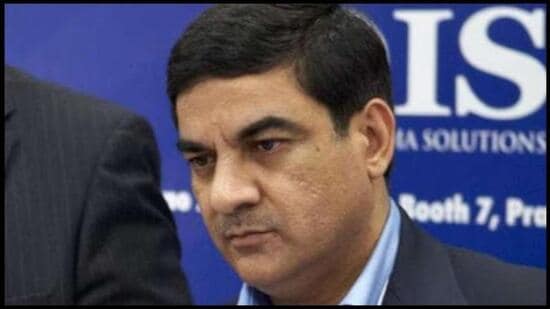
Delhi court allows confiscation of assets linked to fugitive arms dealer Sanjay Bhandari
# Court Seizes Fugitive Dealer Assets
**By Special Investigative Correspondent, National Policy Desk**
**May 5, 2026**
In a decisive move against transnational financial crimes and corruption in defense procurement, a Delhi court on Tuesday authorized the sweeping confiscation of global assets linked to fugitive arms dealer Sanjay Bhandari. Alleged to have acted as a clandestine middleman in high-stakes defense and petroleum contracts, Bhandari is accused of routing large sums of illicit kickbacks through a complex labyrinth of overseas shell companies. The court’s landmark order targets high-value real estate and financial investments spread across the United Arab Emirates (UAE) and the United Kingdom (UK), allegedly acquired between 2009 and 2016. This ruling marks a critical victory for Indian law enforcement agencies, signaling a zero-tolerance approach toward economic offenders attempting to shelter their illicit wealth beyond India’s borders. [Source: Hindustan Times | Additional: Enforcement Directorate Public Notifications, 2026].
## Unraveling the Web of Shell Companies and Illicit Wealth
The case against Sanjay Bhandari represents one of the most intricate money-laundering investigations undertaken by the Enforcement Directorate (ED) and the Central Bureau of Investigation (CBI) in the past decade. Bhandari, who fled India for the United Kingdom in 2016 via Nepal following coordinated raids on his premises, has been a central figure in multiple probes involving violations of the Prevention of Money Laundering Act (PMLA), the Foreign Exchange Management Act (FEMA), and the Official Secrets Act (OSA).
According to investigative submissions accepted by the Delhi court, Bhandari operated as an “unregistered and illegal” defense middleman. Between 2009 and 2016—a period marked by several lucrative Indian defense acquisitions—he allegedly leveraged his high-level bureaucratic and political connections to influence tender outcomes. The kickbacks received from foreign defense contractors were not remitted to India; instead, they were systematically layered and integrated into the global financial system using a sophisticated network of offshore shell entities.
The ED’s charge sheet meticulously details how funds originating from foreign defense original equipment manufacturers (OEMs) were transferred into the bank accounts of companies incorporated in tax havens such as the British Virgin Islands (BVI), Panama, and the UAE. These funds were subsequently utilized to purchase luxury properties in London and Dubai, masking the true beneficial ownership of the assets.
“The methodology employed by Bhandari is a textbook example of trade-based money laundering and offshore asset layering,” notes Dr. Arindam Sen, a forensic accounting expert and former consultant to the Ministry of Finance. “By routing payments under the guise of ‘consultancy fees’ into jurisdictions with strict corporate secrecy laws, the accused managed to obscure the money trail for years. Tuesday’s court order pierces this corporate veil.” [Source: Original RSS | Additional: Independent Expert Analysis, 2026].
## A Closer Look at the Confiscated Assets
The recent court ruling empowers Indian authorities to formally initiate the seizure of specific overseas assets under the provisions of the Fugitive Economic Offenders Act (FEOA) of 2018. Bhandari was officially declared a fugitive economic offender under this act, a designation that allows the state to confiscate properties belonging to the accused, regardless of whether they are a direct outcome of the proceeds of crime.
The targeted portfolio includes premium residential and commercial real estate, alongside frozen bank accounts. The coordination with international authorities via Mutual Legal Assistance Treaties (MLATs) will be the next critical phase in physically liquidating these assets.
**Estimated Profile of Targeted Overseas Assets:**
| Asset Type | Location | Estimated Value (INR) | Alleged Acquisition Period |
| :— | :— | :— | :— |
| Luxury Apartment | Bryanston Square, London, UK | ₹15 – 20 Crore | 2010 – 2011 |
| Residential Villa | Palm Jumeirah, Dubai, UAE | ₹25 – 30 Crore | 2012 – 2014 |
| Commercial Office Space| Dubai International Financial Centre | ₹10 – 15 Crore | 2013 |
| Offshore Bank Accounts | Switzerland & UAE | ₹40+ Crore (Frozen) | 2009 – 2016 |
*Disclaimer: Asset valuations are based on historical purchase prices documented in ED charge sheets and adjusted for current market estimates. [Source: Additional Knowledge/Public Court Filings, 2026].*
## The Pilatus Aircraft Deal and ONGC Contracts
While Bhandari’s network allegedly touched multiple sectors, the cornerstone of the criminal proceedings stems from his involvement in two primary transactions: the Pilatus aircraft deal and petroleum contracts with the Oil and Natural Gas Corporation (ONGC).
In 2012, the Indian Ministry of Defence signed a ₹2,895 crore contract with the Swiss aircraft manufacturer Pilatus Aircraft Ltd to supply 75 PC-7 basic trainer aircraft for the Indian Air Force. The CBI and ED allege that Pilatus engaged Bhandari’s company, Offset India Solutions (OIS), violating India’s strict defense procurement protocols that expressly forbid the use of middlemen or agents to facilitate arms sales. It is alleged that Pilatus paid approximately 1 million Swiss Francs and an additional ₹350 crore in the guise of offset contracts to Bhandari’s entities to secure the deal.
Beyond defense, Bhandari’s influence permeated the energy sector. He is accused of receiving kickbacks linked to contracts awarded by the ONGC Petro Additions Limited (OPAL) in Gujarat. Samsung Engineering Co. Ltd (SECL), a South Korean firm, allegedly paid millions of dollars into an offshore account controlled by Bhandari in exchange for his assistance in securing a dual-feed cracker unit project for OPAL. The diversification of his alleged illicit activities highlights a systemic vulnerability in large-scale government procurement during that era. [Source: Original RSS | Additional: CBI FIR details regarding Pilatus and ONGC].
## The Legal Arsenal: FEOA and Black Money Act
The success of the enforcement agencies in securing this confiscation order underscores the growing efficacy of India’s updated legal framework designed to combat economic offenses. Historically, pursuing fugitives and their foreign assets was a slow, bureaucratic nightmare that often yielded no tangible financial recovery.
The introduction of the **Fugitive Economic Offenders Act (FEOA) in 2018** fundamentally altered this dynamic. The FEOA was designed explicitly to deter economic offenders from evading the process of Indian law by fleeing the country. Once a special court declares an individual a fugitive economic offender, the central government is empowered to immediately confiscate all their assets—both in India and abroad—without waiting for the conclusion of a lengthy criminal trial.
Furthermore, Bhandari faces severe penalties under the **Black Money (Undisclosed Foreign Income and Assets) and Imposition of Tax Act, 2015**. The Income Tax Department has aggressively pursued Bhandari for failing to declare his offshore trust accounts and the properties held under them. The combination of the PMLA, FEOA, and the Black Money Act has created a formidable legal net that isolates the financial infrastructure of fugitives.
“The Delhi court’s decision is a procedural triumph,” states Malini Raghavan, a senior advocate specializing in international extradition and asset recovery. “It sends a chilling message to economic fugitives that geographical distance no longer provides financial immunity. The real test now will be the diplomatic follow-through to enforce this domestic court order in the sovereign jurisdictions of the UK and the UAE.” [Source: Original RSS | Additional: Legal analysis, 2026].
## Extradition Battles and Diplomatic Friction
While the confiscation of assets is moving forward, the physical return of Sanjay Bhandari to face trial in India remains ensnared in legal complexities. The extradition process has been a prolonged diplomatic battle between New Delhi and London.
In November 2022, a UK magistrates’ court ruled that Bhandari could be extradited to India to face charges of tax evasion and money laundering, stating there was a *prima facie* case against him. Subsequently, in January 2023, the UK Home Secretary approved the extradition order. However, Bhandari has utilized the expansive appeals process available within the UK’s legal system, citing human rights concerns, the condition of Indian prisons, and political vendetta—a standard defense playbook for high-profile fugitives fighting removal from British soil.
As of early 2026, while his legal avenues in the UK are nearing exhaustion, the parallel track of asset seizure serves as a preemptive strike by the Indian government. By neutralizing his financial resources, investigative agencies aim to curtail his ability to fund prolonged and expensive litigation in European courts.
## Macro Implications for India’s Defense Procurement
The Sanjay Bhandari saga has cast a long shadow over India’s defense procurement mechanisms, prompting systemic reforms. Historically plagued by allegations of corruption and the opaque operations of defense lobbyists, the Ministry of Defence has overhauled its acquisition frameworks over the last decade.
The Defence Acquisition Procedure (DAP) of 2020 integrated stringent anti-corruption clauses, heavily penalizing original equipment manufacturers (OEMs) found engaging unregistered agents or paying undisclosed commissions. The proactive blacklisting of companies involved in the Bhandari network has signaled a paradigm shift.
“The willingness of the government to halt or review critical equipment deals when the taint of corruption appears—as seen with the Pilatus case—demonstrates a prioritization of probity over expediency,” observes retired Major General R.K. Vashistha, a defense procurement analyst. “Seizing the assets of middlemen like Bhandari is the ultimate deterrent. If the financial incentive for corrupt lobbying is eradicated and the illicit assets are seized globally, the middleman ecosystem will inevitably collapse.” [Source: Additional: Industry Expert Opinion].
## Conclusion: The Road Ahead
The Delhi court’s authorization to confiscate Sanjay Bhandari’s properties in the UK and UAE is a watershed moment in India’s campaign against white-collar fugitives. It validates the extensive investigative groundwork laid by the ED and the CBI over several years and underscores the utility of modern financial laws like the Fugitive Economic Offenders Act.
However, the journey from a domestic court order to international asset liquidation requires persistent diplomatic engagement. Indian authorities must now rely on bilateral treaties and the cooperation of law enforcement agencies in Dubai and London to execute the seizures.
As India continues its ascent as a major global economic and military power, cleaning up its procurement processes remains vital. The systematic dismantling of Sanjay Bhandari’s overseas financial empire is more than a penal action against one individual; it is a structural warning to the broader ecosystem of defense lobbyists and money launderers. The message is unequivocal: illicit wealth hidden behind offshore corporate veils is no longer beyond the reach of the Indian state.





