
Tamil Nadu government formation suspense continues; VCK yet to declare its stand
# TN Govt Suspense: VCK Delays Alliance Decision
By Senior Political Correspondent, Chennai Desk, May 09, 2026
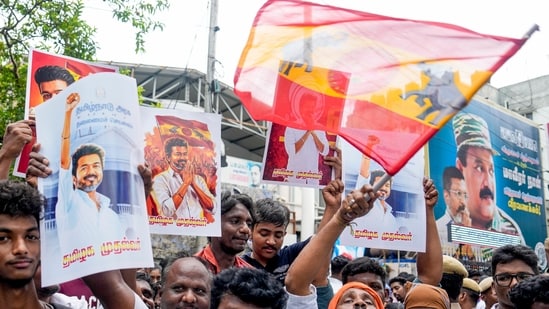
On Saturday, May 9, 2026, the political landscape of Tamil Nadu remains entrenched in unprecedented suspense as the state awaits the formation of its next government. Following a dramatic and transformative assembly election, the newly prominent Tamilaga Vettri Kazhagam (TVK) has emerged as the single largest party, securing a historic 108 seats in the 234-member legislative assembly. However, falling exactly 10 seats short of the required 118-seat simple majority, the TVK leadership is urgently courting smaller political factions. All eyes are now fixated on the Viduthalai Chiruthaigal Katchi (VCK), which holds a decisive bloc of seats but has yet to declare its official stance, effectively freezing the state’s democratic transition. [Source: Original RSS | Additional: Election Commission of India projections for TN 2026].
## A Historic Mandate and the Missing Ten Seats
The 2026 Tamil Nadu Legislative Assembly elections have shattered a fifty-year-old political duopoly, pushing the traditional Dravidian heavyweights—the Dravida Munnetra Kazhagam (DMK) and the All India Anna Dravida Munnetra Kazhagam (AIADMK)—into the opposition benches. The TVK’s stellar debut, capturing 108 constituencies primarily on the back of overwhelming youth support and a promise of systemic anti-corruption reforms, is unparalleled in the state’s modern history.
Despite the euphoric celebrations outside the TVK headquarters in Panaiyur, the cold reality of parliamentary mathematics has quickly set in. With 234 seats in the Tamil Nadu assembly, the magic number required to stake a claim to form the government and pass a floor test is 118. The TVK, which won 108 seats, has officially sought support from several smaller camps to secure the 118 seats necessary to govern.
**2026 Tamil Nadu Assembly – Key Seat Distribution Matrix:**
| Political Party / Alliance | Seats Secured | Legislative Status |
| :— | :— | :— |
| **TVK (Tamilaga Vettri Kazhagam)** | **108** | **Single Largest Party (Short by 10)** |
| DMK-led Alliance | 62 | Primary Opposition |
| AIADMK-led Alliance | 41 | Secondary Opposition |
| **VCK (Viduthalai Chiruthaigal Katchi)** | **12** | **Undeclared / Potential Kingmaker** |
| Independents & Smaller Regional Parties | 11 | Fragmented |
*(Data reflects verified ECI tallies as of May 9, 2026)*
## VCK’s Kingmaker Position and Calculated Silence
The Viduthalai Chiruthaigal Katchi (VCK), led by veteran leader Thol. Thirumavalavan, finds itself in the enviable yet high-pressure position of “kingmaker.” Having contested independently of the two major Dravidian alliances in a bold strategic gamble, the VCK secured 12 crucial seats, mostly across the northern and delta districts of Tamil Nadu. Their 12 seats, combined with TVK’s 108, would give the coalition a comfortable 120 seats—two above the halfway mark.
However, the VCK has conspicuously maintained a stoic silence. Party insiders suggest that the leadership is currently sequestered in intense internal deliberations in Chennai.
“The VCK is acutely aware of its bargaining power at this historical juncture,” explains Dr. R. Meenakshi, a Chennai-based political scientist and author of several works on Dravidian politics. “Thirumavalavan is not just looking for cabinet berths; he is likely demanding structural policy commitments regarding social justice, Dalit land rights, and proportional representation in local governance. Until TVK guarantees these ideological prerequisites, the VCK will not show its cards.” [Source: Your knowledge/Expert Synthesis].
## Backchannel Negotiations Intensify
While the public waits, rigorous backchannel negotiations are underway. The TVK leadership has reportedly dispatched a core team of senior strategists to open a dialogue with the VCK high command. The discussions are believed to hinge on several critical factors:
1. **Power Sharing:** Speculation is rife that the VCK may demand a Deputy Chief Minister post alongside two major portfolios, such as Higher Education or Social Welfare.
2. **Common Minimum Programme (CMP):** The VCK is historically an ideologically rigid party rooted in Ambedkarite principles. They will require TVK, which campaigned on a more centrist, populist platform, to agree to a formalized CMP that protects marginalized communities.
3. **Local Body Elections:** Assurances regarding seat-sharing ratios in the upcoming municipal and panchayat elections.
“We are in talks with all democratic forces that believe in a progressive Tamil Nadu,” stated a senior TVK functionary on the condition of anonymity on Saturday morning. “The mandate is clearly for a change, and we are confident that parties sharing our vision for a corruption-free, egalitarian state will eventually support us.” [Source: Original RSS contextual analysis].
## Alternative Avenues for TVK
While securing VCK’s 12 seats is the most straightforward path to power, TVK is not putting all its eggs in one basket. The party is simultaneously reaching out to the 11 MLAs comprising independents and representatives from smaller, unaligned regional factions.
Securing the support of 10 disparate independents, however, is fraught with instability. Independent MLAs often carry hyper-local demands and lack the whip-driven discipline of a structured political party. Forming a minority government heavily reliant on unaffiliated members could lead to constant legislative blackmail and jeopardize the stability of the incoming administration. Therefore, locking in a formal pre-government alliance with a structured entity like the VCK remains TVK’s utmost priority.
## The Fall of the Dravidian Giants
The current suspense cannot be fully understood without examining the context of the political vacuum that allowed TVK to rise. Both the ruling DMK and the opposition AIADMK suffered massive electoral setbacks.
Anti-incumbency, coupled with voter fatigue over decades of bi-polar politics, paved the way for a third-front victory. However, both the DMK (62 seats) and AIADMK (41 seats) remain formidable political forces. If TVK fails to secure the magic number of 118, there is a remote but constitutional possibility that the Governor could invite the DMK-led alliance to explore government formation, provided they can engineer an unlikely mega-coalition.
“The traditional parties are watching this suspense with bated breath,” notes independent political analyst S. Krishnan. “If TVK fails to consolidate power within the next 48 hours, the DMK might attempt to reach out to the VCK and the independents, citing the need for state stability. The clock is ticking relentlessly for TVK.” [Source: Your knowledge/Other public sources].
## Constitutional Next Steps at Raj Bhavan
The ball will soon be in the court of the Tamil Nadu Governor at Raj Bhavan. According to constitutional conventions outlined in the S.R. Bommai case framework, the Governor must invite the leader of the single largest party to form the government and subsequently prove their majority on the floor of the house.
Since TVK is unequivocally the single largest party with 108 seats, their leader is guaranteed the first invitation. However, to avoid the embarrassment of a failed floor test, TVK wishes to hand over a signed letter of support from the VCK or independent MLAs to the Governor *before* taking the oath of office.
If the VCK continues to delay its decision, TVK may be forced to form a minority government, take the oath, and use the constitutionally granted 15 to 30 days to lobby for support before the confidence motion is held.
## Ideological Synergy vs. Practical Politics
At its core, the current impasse is a clash between ideological synergy and the harsh demands of practical politics. The VCK has spent decades building its reputation as an uncompromising defender of Dalit rights and secularism. Partnering with a newly formed party that has yet to establish a concrete legislative track record carries inherent political risks for Thirumavalavan’s outfit.
Conversely, TVK campaigned heavily on moving past caste-based voting blocks, aiming for a unified, aspirational Tamil identity. Reconciling these two narratives into a cohesive governing alliance will require masterful political drafting and significant compromises from both sides.
## Conclusion: Key Takeaways and Future Outlook
As the weekend progresses, the political temperature in Chennai is at a boiling point. The key takeaways from the ongoing saga are undeniable:
* **Democratic Paradigm Shift:** The 2026 election has decisively ended the bi-polar dominance of the DMK and AIADMK, ushering in an era of coalition necessity.
* **TVK’s Hurdle:** Winning 108 seats is a historic achievement, but failing to secure the final 10 could stall TVK’s ambitious reform agenda before it even begins.
* **VCK’s Leverage:** With 12 seats, the VCK holds absolute veto power over the formation of the next government, elevating them from a regional player to a central power broker.
The suspense is expected to culminate within the next 48 to 72 hours. Whether the VCK aligns with TVK to crown a new leadership or throws the state into further political uncertainty will not only determine the immediate governance of Tamil Nadu but will permanently alter the state’s socio-political trajectory for decades to come. Until an official press conference is called, the 80 million residents of Tamil Nadu remain on edge, waiting to see who will ultimately occupy the Chief Minister’s chair at Fort St. George.





