
NEET exam from next year will be computer-based: Centre amid paper leak row
# NEET Exam Shifts to CBT Mode Next Year
**By Staff Reporter, Education Desk | May 15, 2026**
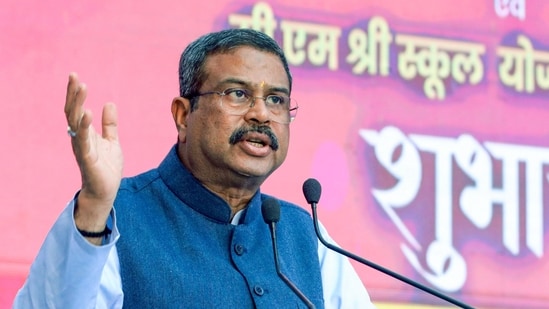
On Friday, Union Education Minister Dharmendra Pradhan announced a watershed reform for India’s medical aspirants: the National Eligibility cum Entrance Test (NEET) will officially transition to a Computer-Based Test (CBT) mode starting next year. This decisive move comes on the heels of unrelenting paper leak controversies that have plagued the traditional pen-and-paper examination system over the past few years. Addressing the media in New Delhi, Pradhan emphasized that digitizing the high-stakes exam is a vital step to ensure absolute transparency, eradicate cheating syndicates, and restore the sanctity of medical admissions across the country. [Source: Hindustan Times | Additional: Ministry of Education Public Briefings].
## The Breaking Point: Why the Shift Was Inevitable
For years, the NEET-UG examination—the sole gateway for admission into undergraduate medical courses in India—has been conducted in an offline, Optical Mark Recognition (OMR) format. With over 2.5 million candidates appearing annually, the logistical footprint of printing, transporting, and securing physical question papers has been monumental.
However, this massive physical supply chain became the system’s Achilles’ heel. The 2024 and 2025 examination cycles were marred by severe allegations of paper leaks, compromised strongrooms, and organized solver gangs. These incidents triggered nationwide protests, prolonged legal battles in the Supreme Court, and a severe crisis of faith in the National Testing Agency (NTA).
“The sanctity of our examination process is non-negotiable. The physical transit of papers leaves too many vulnerable nodes. By shifting to a CBT mode next year, we are cutting out the middle layers where leaks traditionally occur,” Minister Pradhan stated during his Friday address. The shift reflects a growing consensus within the government that only a technology-driven overhaul can outpace the sophisticated networks of examination mafias.
## How the CBT Model Will Revolutionize NEET
The transition from OMR sheets to a computer-based interface represents a fundamental shift in how the test will be administered. Under the CBT model, the examination will not be internet-dependent during the actual testing window, a crucial detail to prevent remote hacking.
Instead, encrypted question papers will be downloaded to secure local servers at designated examination centers just minutes before the test begins. Candidates will log into their assigned terminals using multi-factor biometric authentication. Once the exam commences, the local server will push the questions to individual screens.
Furthermore, the CBT format allows for **dynamic question randomization**. While the difficulty level remains constant, the sequence of questions and the order of multiple-choice options will be unique to every candidate’s screen. This makes traditional “shoulder-surfing” or synchronized cheating virtually impossible.
### Comparing the Delivery Models: Offline OMR vs. CBT
| Feature | Traditional OMR Mode (Current) | CBT Mode (Starting Next Year) |
| :— | :— | :— |
| **Delivery Mechanism** | Physical booklets transported via couriers and banks. | Highly encrypted digital packets delivered to local servers. |
| **Vulnerability Window** | Days before the exam during transit and storage. | Minutes before the exam, protected by 256-bit encryption. |
| **Answer Modification** | Impossible once the OMR bubble is filled in ink. | Candidates can change their selected answers until submission. |
| **Cheating Mitigation** | Standardized sets (A, B, C, D) allow some pattern sharing. | Complete randomization of question and option sequences. |
| **Result Processing** | Takes weeks due to physical scanning of millions of OMRs. | Instantaneous digital evaluation, significantly faster results. |
## The Challenge of Normalization and Multiple Shifts
Historically, the primary argument against making NEET a computer-based test was the sheer volume of candidates. India does not currently possess the IT infrastructure to securely test 2.5 million students simultaneously in a single shift. Engineering’s equivalent, the JEE Main, solved this by conducting the exam across multiple shifts over several days.
With the 2027 rollout of CBT for NEET, the Ministry of Education will inevitably adopt a multi-shift testing window. This introduces the statistical concept of **normalization** to medical admissions for the first time. Because different shifts will have different question papers, the NTA will use a percentile-based normalization formula to ensure parity in scoring, accounting for any slight variations in difficulty across different sessions.
While normalization is a globally accepted standard in psychometrics, it requires a massive educational campaign to build trust among medical aspirants. Parents and students alike must understand that their final rank will be determined by their relative performance in their specific session, rather than their absolute raw score.
## Bridging the Digital Divide: Rural Accessibility
A major hurdle in digitizing nationwide entrance exams is India’s digital divide. Critics of the CBT shift have long argued that candidates from rural and economically disadvantaged backgrounds, who may lack regular access to computers, could be placed at a systemic disadvantage compared to their urban, tech-savvy peers.
Addressing this during his announcement, Minister Pradhan assured that the government is aggressively expanding the network of Test Practice Centers (TPCs). “We are cognizant of the geographic and economic realities of our aspirants. The NTA will activate thousands of TPCs across rural districts, utilizing schools and common service centers, allowing students to familiarize themselves with the CBT interface entirely free of cost,” Pradhan noted. [Source: Original RSS | Additional: NTA Official Policy Guidelines, May 2026].
Furthermore, the actual CBT interface designed by the NTA is notoriously minimalist. It requires no complex computing skills—candidates only need to use a mouse to navigate between questions, select options, and submit their test.
## Expert Voices on the Systemic Overhaul
The educational community has largely welcomed the announcement, viewing it as a necessary evolution for India’s high-stakes testing ecosystem.
**Dr. Arvind Mathur**, an independent education policy analyst based in New Delhi, views the shift as a triumph of data security over logistical convenience. “The physical paper system was archaic. We were trusting local transport agencies and district-level functionaries with the futures of millions of children. The shift to CBT, coupled with AI-driven proctoring to prevent impersonation, brings NEET at par with global testing standards like the GRE and GMAT.”
However, some experts caution about the execution. **Sunita Menon**, Director of Academics at a prominent national coaching institute, highlights the operational challenges: “The intention is excellent, but execution is everything. The NTA must ensure that local test centers have uninterrupted power backup and stable local area networks. A server crash mid-exam causes immense psychological trauma to a student whose entire year depends on those three hours. Robust IT infrastructure audits must begin immediately.”
## Rebuilding the National Testing Agency
This structural reform is the cornerstone of a broader initiative to rehabilitate the National Testing Agency’s public image. Following the severe backlash of the 2024 paper leak row, the Ministry of Education constituted a high-level expert committee—often referred to as the Radhakrishnan Committee—to recommend sweeping changes to the examination process.
The implementation of CBT for NEET is the most prominent recommendation of that committee to be green-lit by the Centre. Alongside the digital transition, the NTA is reportedly upgrading its cybersecurity infrastructure, partnering with top-tier cybersecurity firms to conduct ethical hacking and penetration testing on its examination delivery software.
Additionally, biometric verification will be tightened. The new protocol for the CBT exams will mandate iris scanning alongside thumb impressions to definitively eliminate the “Munnabhai” phenomenon—where proxy candidates write exams on behalf of registered students.
## What Aspirants Need to Do Now
For students currently preparing for the next examination cycle, the fundamental nature of their preparation does not need to change. The syllabus, defined by the National Medical Commission (NMC), remains identical. The core subjects—Physics, Chemistry, Botany, and Zoology—will test the same conceptual depth as before.
The primary adjustment lies in test-taking strategy. Medical aspirants must begin transitioning their mock-test practices from physical OMR sheets to computer screens. Time management dynamics change slightly on a computer; while candidates save time previously spent bubbling in circles, they must adapt to reading dense scientific paragraphs and diagrams on a monitor without the ability to physically underline text.
Many top-tier coaching institutes have already pledged to transition their entire testing curriculum to a CBT format starting next month to align with the Ministry’s new directive.
## Conclusion: A New Era for Medical Admissions
The Union Education Minister’s announcement marks the end of an era for pen-and-paper medical entrance exams in India. By committing to a Computer-Based Test format from next year, the Centre has taken a definitive stance against the paper leak mafias that have threatened the integrity of the nation’s healthcare education system.
While the transition will require a monumental logistical effort—from establishing thousands of secure digital nodes to implementing fair normalization processes—it is an indispensable step forward. As India looks toward 2027, the focus now shifts to the NTA to execute this digital mandate flawlessly, ensuring that merit, and merit alone, dictates the future of India’s medical aspirants.





