
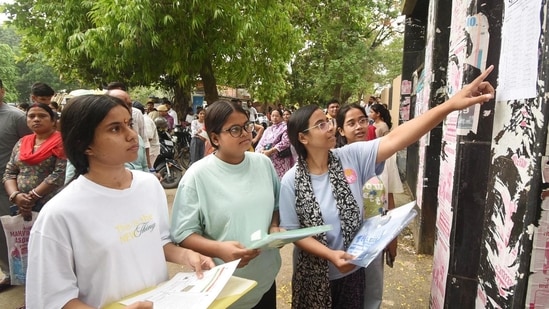
After NEET paper leak, Karnataka CM seeks return of state-controlled medical entrance tests
# NEET Leak: Karnataka Seeks State Medical Exams
By Special Education Correspondent, National Desk, May 15, 2026
Karnataka Chief Minister Siddaramaiah on Friday demanded that the Union government abolish the centralized National Eligibility cum Entrance Test (NEET) and restore the state’s authority to conduct independent medical entrance examinations. Addressing the public and media in Bengaluru on May 15, 2026, the Chief Minister pointed to recent, widespread NEET paper leak scandals that have severely compromised the integrity of India’s medical admission process. Siddaramaiah asserted that the National Testing Agency’s (NTA) repeated administrative failures disproportionately harm honest, hardworking students. By pushing to reclaim state legislative power over educational testing, Karnataka aims to protect rural aspirants and ensure a transparent, corruption-free admission system. [Source: Hindustan Times].
## The Breaking Point: The 2026 NEET Paper Leak
The demand from the Karnataka state government comes on the heels of one of the most severe educational controversies in recent Indian history. During the spring 2026 testing cycle, reports of widespread paper leaks, systemic irregularities, and proxy test-taking syndicates surfaced across multiple examination centers in northern and western India. These breaches have cast a long, dark shadow over the National Testing Agency (NTA), the body tasked with managing the highly competitive exam.
For millions of students who dedicate years to rigorous preparation, the realization that the examination’s integrity was fundamentally compromised sparked outrage. Protests erupted in several major cities, with student unions and parents demanding immediate accountability and a re-evaluation of the entire centralized testing paradigm.
“The centralized model of NEET was sold to the nation on the promise of meritocracy and uniformity,” Chief Minister Siddaramaiah stated during his address. “Instead, what we are witnessing is a centralized monopoly on incompetence. When a paper leaks in one corner of the country, it jeopardizes the future of an honest student in Karnataka. We are insisting that powers to conduct such entrance examinations should be restored to the states.” [Source: Hindustan Times].
## Karnataka’s Blueprint for Decentralized Education
Karnataka has a storied history of efficiently managing its own professional educational exams. Prior to the Supreme Court mandate that enforced NEET nationwide, the state successfully utilized the Common Entrance Test (CET), administered by the Karnataka Examination Authority (KEA). The CET was widely regarded as a robust, transparent, and student-friendly model that aligned closely with the state’s pre-university (PUC) board syllabus.
The current state administration argues that returning to a state-controlled model is not merely a reactionary measure to the recent leaks, but a necessary step to restore educational equity. Centralized exams heavily favor students enrolled in the Central Board of Secondary Education (CBSE) curriculum, inadvertently marginalizing students from state boards, particularly those residing in rural and semi-urban districts.
**Key arguments presented by the Karnataka government include:**
* **Curriculum Alignment:** State exams would be based on the state board syllabus, leveling the playing field for local students.
* **Language Accessibility:** Enhanced support for students writing exams in Kannada and regional dialects without the translational errors frequently reported in NEET.
* **Curbing the Coaching Mafia:** Centralized exams have spawned a multi-billion-rupee coaching industry that prices out economically disadvantaged students. State exams historically required less specialized, high-cost coaching.
* **Administrative Security:** Decentralized exams limit the geographical blast radius of any potential malpractice. A localized issue can be addressed swiftly without canceling the exam for the entire nation. [Source: Hindustan Times | Additional: Public Policy Analysis of Indian Education].
## Federalism and the Constitutional Debate
The pushback against NEET is rapidly evolving into a broader constitutional debate regarding federalism and states’ rights. Under the Indian Constitution, “Education” falls under the Concurrent List (Schedule VII), meaning both the Union and State governments have the power to legislate on the subject. However, in cases of conflict, central laws typically override state laws unless the state law receives Presidential assent.
Legal experts suggest that Karnataka’s move is a strategic assertion of state autonomy. “What we are seeing is a constitutional pushback against the over-centralization of governance in India,” explains Dr. Vikram Nambiar, an expert in Constitutional Law and Federalism at the National Law School. “States are arguing that education is deeply tied to local socio-economic realities. A one-size-fits-all approach like NEET ignores the linguistic, cultural, and economic diversity of the states. Karnataka’s demand, catalyzed by the NTA’s failure, has strong constitutional merit if argued on the grounds of protecting marginalized students.” [Source: Independent Legal Analysis].
## A Growing National Coalition Against NEET
Karnataka is not alone in its battle against the central medical entrance exam. The state of Tamil Nadu has been historically opposed to NEET, citing that the exam heavily biases against rural students and state board curriculums. Tamil Nadu has already passed legislation seeking an exemption from NEET, a bill that has been caught in a protracted legal and political standoff with the central government.
Following the devastating leaks of 2026, other states, including Maharashtra and West Bengal, have begun to echo Karnataka and Tamil Nadu’s sentiments. Education ministers from these states have reportedly initiated informal dialogues to form a unified coalition. This coalition intends to pressure the central government to amend the National Medical Commission (NMC) Act and allow states to opt out of the NEET mandate.
By joining forces, non-BJP ruled states are transforming a logistical examination issue into a major political platform ahead of upcoming legislative sessions. The unified demand is simple: if the center cannot guarantee the sanctity of the exam, it must relinquish control back to the states.
### Comparative Analysis: State CET vs. Central NEET
| Parameter | Pre-2016 State CET Model | Current NEET Model |
| :— | :— | :— |
| **Syllabus Alignment** | Strictly adhered to State Board Curriculum. | Heavily skewed towards Central Board (CBSE) Syllabus. |
| **Coaching Dependency** | Moderate; self-study and school preparation often sufficed. | Extremely high; necessitates expensive, specialized coaching institutes. |
| **Leak Impact** | Localized; manageable through regional re-tests. | National crisis; delays the academic calendar for millions globally. |
| **Rural Representation** | High; state exams favored local demographics. | Decreased; rural students often lack access to elite coaching hubs. |
[Source: Historical Data from KEA and NTA Annual Reports, up to 2026].
## The Psychological and Financial Toll on Aspirants
Beyond politics and administrative logistics, the human cost of the NEET paper leaks is staggering. Medical aspirants in India routinely spend between two to four years preparing for this single, high-stakes examination. Families frequently exhaust their life savings or take out high-interest loans to afford private coaching centers in hubs like Kota, Hyderabad, and Bengaluru.
When a paper leaks, the psychological trauma inflicted on legitimate candidates is profound. “The anxiety levels we are seeing in students right now are unprecedented,” notes Meena Sharma, a prominent youth psychologist and student counselor based in Bengaluru. “These young adults have sacrificed their teenage years for a single day of testing. To be told that their hard work is nullified because someone else bought the question paper for a few lakhs destroys their faith in the system. The uncertainty of re-tests only compounds this mental health crisis.” [Source: Independent Expert Commentary].
Furthermore, the delay in the admission process disrupts the entire academic calendar. Medical colleges are forced to compress their first-year curriculums, placing an even heavier burden on students once they finally secure admission.
## Transitioning Back: Is Karnataka Ready?
Critics of decentralization argue that returning to state-led exams could reignite the era of capitation fees and multi-exam stress, where students had to travel across the country writing a dozen different exams to secure a seat. The initial introduction of NEET was specifically designed to eliminate these malpractices and provide a single window for medical admissions.
However, the Karnataka government maintains that modern administrative technology can easily solve these past issues. The Karnataka Examination Authority (KEA) is currently one of the most technologically advanced testing bodies in the country, successfully conducting entrance exams for engineering, agriculture, and pharmacy courses with impeccable security records.
To prevent the resurgence of capitation fee scandals, state officials propose a stringent, digitized counseling process managed entirely through transparent, blockchain-verified databases. Siddaramaiah’s administration believes that state accountability is vastly superior to central anonymity. If a state body fails, local voters hold the government directly responsible—a democratic feedback loop that the NTA currently lacks.
## Conclusion: The Road Ahead for Medical Admissions
The call by Karnataka Chief Minister Siddaramaiah to scrap NEET and return medical testing powers to the state represents a critical turning point in India’s education policy discourse. Driven by the catastrophic paper leaks of early 2026, this demand highlights the inherent vulnerabilities of an over-centralized testing system serving a country of 1.4 billion people.
**Key Takeaways:**
* **Trust Deficit:** The NTA has suffered a severe loss of credibility following the 2026 paper leaks, prompting state-level revolts against centralized testing.
* **Push for Equity:** Karnataka’s demand is rooted in leveling the playing field for state-board and rural students who are disadvantaged by the CBSE-centric NEET.
* **Federal Realignment:** The movement is gaining traction among other states, potentially leading to a major Supreme Court showdown over the interpretation of the Concurrent List regarding educational authority.
As the Union Government and the NTA scramble for damage control—promising tighter security protocols and high-level investigative committees—the underlying sentiment in states like Karnataka remains resolute. For true educational justice and administrative security, the future of India’s medical entrance exams may very well lie in a return to its decentralized past. Until a lasting resolution is reached by the parliament or the apex court, millions of aspiring doctors remain caught in the crossfire between cooperative federalism and centralized control.





