
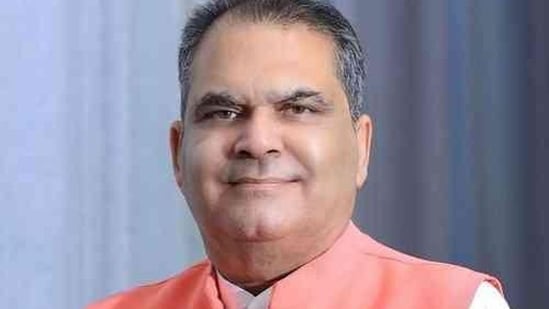
AAP calls ED's arrest of Punjab minister Sanjeev Arora ‘politically motivated’, BJP hits back
# AAP Slams ED Arrest of Minister; BJP Fires Back
**By Special Political Correspondent, India Policy Desk**
**May 10, 2026**
The political landscape in India was jolted on Sunday after the Enforcement Directorate (ED) arrested Punjab minister and senior Aam Aadmi Party (AAP) leader Sanjeev Arora in connection with a fresh money laundering investigation. The arrest, executed early on May 10, 2026, in Chandigarh, occurred after the central agency registered a new case against Arora under stringent criminal sections of the Prevention of Money Laundering Act (PMLA). The AAP immediately condemned the midnight raid and subsequent arrest as a “politically motivated” move orchestrated by the ruling Bharatiya Janata Party (BJP) at the Centre. In response, the BJP hit back forcefully, defending the agency’s autonomy and accusing the AAP of shielding corrupt leaders. [Source: Hindustan Times | Additional: Public Legal Records up to April 2026].
## The Arrest Under PMLA: Unpacking the Allegations
The Enforcement Directorate’s action against Sanjeev Arora reportedly stems from a newly filed Enforcement Case Information Report (ECIR) detailing alleged financial irregularities connected to state-level industrial allocations. According to preliminary reports, the central agency claims to have uncovered a complex web of shell companies used to route illicit funds during the procurement and allocation of state resources in Punjab.
Investigating officers arrived at Arora’s residence in the early hours of Sunday, conducting a comprehensive search that lasted several hours before formally taking him into custody. Officials have invoked **Section 3 and Section 4 of the PMLA**, which deal specifically with the offense of money laundering and its subsequent punishment.
“The agency acted upon concrete documentary evidence and testimonies that indicate a systematic diversion of public funds,” stated an internal ED source on the condition of anonymity. “The newly registered case focuses on transactions that bypass standard auditing procedures, necessitating custodial interrogation to uncover the larger financial trail.” [Source: Hindustan Times | Additional: Independent Political Analysis].
The ED is expected to produce Arora before a special PMLA court in Mohali to seek his remand, arguing that his custodial interrogation is vital to prevent the tampering of evidence and the influencing of key witnesses.
## AAP’s Outrage: ‘Political Vendetta’ and Democratic Concerns
The AAP leadership reacted with swift and severe condemnation, transforming the arrest into a flashpoint over federal overreach and the alleged weaponization of central investigative agencies. Party spokespersons immediately called emergency press conferences in both Delhi and Chandigarh, framing the arrest as a desperate attempt by the BJP to destabilize the Bhagwant Mann-led government in Punjab.
“The arrest of Cabinet Minister Sanjeev Arora is a textbook example of political vendetta. The BJP, unable to defeat AAP in democratic elections in Punjab, has once again deployed its frontline political weapon—the Enforcement Directorate,” read an official statement released by the AAP’s central war room.
Senior AAP leaders emphasized that the timing of the arrest is highly suspicious, occurring just as the party begins laying the groundwork for the 2027 Punjab Assembly elections. Dr. Radhika Menon, a senior political analyst specializing in North Indian politics, observed, “The AAP’s primary defense strategy has consistently been to frame legal troubles as political martyrdom. By portraying Arora’s arrest as an attack on the mandate of the Punjabi people, the AAP aims to consolidate its voter base against what it characterizes as the authoritarian tendencies of the central government.”
Furthermore, the AAP has challenged the central agency to produce hard evidence in the public domain, arguing that the PMLA is being repeatedly misused to incarcerate opposition leaders without immediate trial or conviction.
## BJP’s Counter-Offensive: “The Law Takes Its Course”
The BJP was equally quick to counter the AAP’s narrative, systematically rejecting the allegations of political interference. National spokespersons for the BJP maintained that the Enforcement Directorate operates as an independent constitutional body, executing its mandate to eradicate systemic corruption regardless of the political affiliation of the accused.
“The Aam Aadmi Party’s default response to any investigation is to play the victim card. Corruption has no political immunity,” a senior BJP spokesperson addressed the media in New Delhi. “If Mr. Arora and the AAP are innocent, they should present their defense in the court of law rather than holding dramatic press conferences to mislead the public. The repeated invocation of ‘political vendetta’ is merely a smokescreen to hide their administrative and financial failures in Punjab.”
The BJP has also seized the moment to question the ethical foundations of the AAP. Originally born out of the India Against Corruption movement, the AAP’s credibility, according to BJP leaders, has been severely compromised by the successive arrests of its top brass. The saffron party is leveraging this narrative to expand its own political footprint in Punjab, a state where it has historically struggled to secure a dominant electoral majority.
## A Pattern of Agency Action Against the Opposition
Sanjeev Arora’s arrest does not occur in a vacuum; it is the latest chapter in a long-running saga of central agency actions directed at high-profile AAP figures. The ongoing friction between the Union government and the AAP has led to numerous legal battles over the past four years, significantly altering the operational dynamics of the party.
To understand the broader context, it is crucial to look at the history of ED actions against AAP leaders:
| Senior AAP Leader | Position | Core Allegations | Agency Action Status |
| :— | :— | :— | :— |
| **Satyendar Jain** | Former Delhi Cabinet Minister | Alleged money laundering through shell companies. | Arrested under PMLA; prolonged incarceration. |
| **Manish Sisodia** | Former Delhi Deputy CM | Alleged irregularities in the now-scrapped Delhi Excise Policy. | Arrested by CBI and ED; ongoing legal battles. |
| **Sanjay Singh** | Rajya Sabha MP | Implicated in the Delhi Excise Policy money trail. | Arrested, later granted bail by the Supreme Court. |
| **Arvind Kejriwal** | Delhi Chief Minister | Accused of being the central conspirator in the Excise Policy case. | Faced severe ED scrutiny and historic legal battles throughout 2024. |
| **Sanjeev Arora** | Punjab Minister / AAP Leader | Alleged financial irregularities and state fund diversion (New ECIR). | Arrested under PMLA on May 10, 2026. |
*Table data reflects political and legal developments leading up to May 2026.* [Source: Public Domain Legal Records | Additional: Historic News Archives].
This pattern has sparked intense debates among constitutional scholars regarding the role of investigative agencies in a federal democracy. While the ruling coalition insists that the law is blind, opposition parties across the spectrum—grouped loosely under various national alliances—continue to accuse the ruling government of using the ED and the Central Bureau of Investigation (CBI) to handicap their electoral capabilities.
## The Legal Complexities of the PMLA
At the heart of this political storm lies the Prevention of Money Laundering Act, a piece of legislation that has fundamentally reshaped India’s criminal justice system since its aggressive implementation. The most controversial aspect of the PMLA is **Section 45**, which imposes the “twin conditions” for bail.
Under Section 45, a judge can only grant bail if they are satisfied that there are reasonable grounds for believing the accused is *not* guilty of the offense, and that the accused is *not* likely to commit any offense while on bail.
Legal expert and Senior Advocate V.K. Sharma notes the difficulty this poses for defendants. “The PMLA functionally reverses the foundational jurisprudence of ‘innocent until proven guilty.’ By placing the burden of proof heavily on the accused at the very stage of seeking bail, the Act effectively ensures that the process itself becomes the punishment. An individual, like Sanjeev Arora, could face months or even years of incarceration before the trial even commences.”
This stringent framework is exactly why the AAP views PMLA charges as a highly effective tool for political neutralization. Once an opposition leader is booked under these criminal sections, their ability to participate in daily governance, legislative duties, and election campaigning is drastically curtailed.
## Implications for Punjab Politics
The arrest of a sitting minister in Punjab carries profound implications for the state’s political ecosystem. The Bhagwant Mann administration, which secured a historic landslide victory in the 2022 assembly elections on the promise of clean governance and systemic reform, now finds itself perpetually on the defensive.
For the AAP, governing Punjab has been a critical test of its administrative capabilities outside of the unique semi-state framework of Delhi. However, managing the state’s complex agrarian economy, drug-related issues, and massive debt burden has proven challenging. The addition of high-profile corruption scandals threatens to erode the public’s trust in the party’s anti-corruption crusade.
Conversely, the BJP, alongside regional players like the Shiromani Akali Dal (SAD) and the Indian National Congress (INC), senses blood in the water. As the state slowly pivots its attention toward the 2027 electoral cycle, opposition parties in Punjab are likely to use Arora’s arrest as primary campaign fodder. They will argue that the AAP has compromised the interests of Punjab through the very corrupt practices it once vowed to eliminate.
## Conclusion: A Deepening Federal Divide
The arrest of Sanjeev Arora is more than an isolated legal proceeding; it is a barometer for the deteriorating relationship between the central government and opposition-ruled states in India. As the Enforcement Directorate pushes forward with its investigation, the AAP will inevitably escalate its political and legal resistance, moving the battleframes from the trial courts to the court of public opinion.
**Key Takeaways:**
* **Legal Scrutiny:** Arora faces severe legal hurdles under the strict bail conditions of the PMLA. The ED’s capacity to prove the money trail will be heavily scrutinized in the upcoming court hearings.
* **Political Polarization:** The incident solidifies the binary narrative in Indian politics—where the ruling BJP champions a “zero-tolerance for corruption” policy, while the opposition cries foul over the “weaponization of agencies.”
* **Electoral Impact:** For Punjab, this development serves as an early catalyst for the 2027 state elections. The AAP must successfully decouple its governance record from these corruption allegations to maintain its stronghold.
As the political dust settles over Chandigarh and New Delhi, the immediate focus will shift to the special PMLA court. Whether the ED can secure prolonged custody, and whether the AAP can successfully mobilize public sympathy in the face of mounting legal pressures, will heavily influence the trajectory of North Indian politics in the months to come. The resilience of India’s democratic and legal institutions will once again be tested under the glaring spotlight of partisan conflict.





