
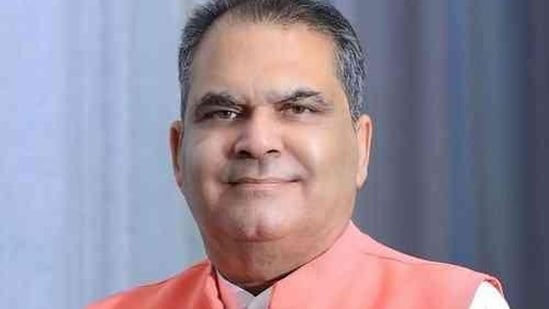
AAP calls ED's arrest of Punjab minister Sanjeev Arora ‘politically motivated’, BJP hits back
# AAP Slams BJP Over Arora’s ED Arrest
**By Staff Reporter, The National Desk, May 10, 2026**
The Aam Aadmi Party (AAP) and the Bharatiya Janata Party (BJP) are locked in a fierce political showdown following the arrest of Punjab Minister Sanjeev Arora by the Enforcement Directorate (ED) early Sunday morning. Arrested under the stringent criminal sections of the Prevention of Money Laundering Act (PMLA) on May 10, 2026, Arora faces allegations stemming from a newly registered central agency case. AAP leadership immediately condemned the move as a “politically motivated” witch-hunt orchestrated by the BJP-led central government to destabilize their Punjab administration. Conversely, the BJP hit back swiftly, dismissing the victimhood narrative and asserting that the law is merely taking its independent course against deep-rooted corruption [Source: Hindustan Times].
## The Midnight Raids and PMLA Charges
The arrest of Sanjeev Arora did not occur in a vacuum. It was the culmination of a series of coordinated dawn raids conducted by the Enforcement Directorate across multiple locations in Punjab and New Delhi. According to official disclosures, the central agency registered a fresh Enforcement Case Information Report (ECIR)—the ED’s equivalent of a police FIR—late last week. This new case targets alleged financial irregularities, encompassing suspected kickbacks routed through a complex web of shell companies.
Arora was taken into custody under Section 19 of the Prevention of Money Laundering Act, which grants the ED the power to arrest individuals based on material evidence suggesting their involvement in money laundering activities. Sources within the directorate indicate that investigators reportedly uncovered a money trail linking the minister’s associates to unaccounted wealth, prompting the immediate custodial interrogation.
**Key Facts of the Arrest:**
* **Time and Date:** Custody formalized at approximately 8:00 AM IST on Sunday, May 10, 2026.
* **Legislation:** Criminal sections of the Prevention of Money Laundering Act (PMLA), 2002.
* **Core Allegation:** Generation and concealment of proceeds of crime through illicit administrative approvals.
## AAP’s Fierce Pushback: “Democracy Under Siege”
Within hours of the arrest, the Aam Aadmi Party mobilized its top brass, convening an emergency press conference in New Delhi. The party unequivocally rejected the charges, framing the ED’s actions as a desperate geopolitical maneuver by the BJP ahead of the upcoming electoral cycles. AAP spokespersons argued that the central government is systematically weaponizing investigative agencies to decimate political opposition.
“This is not about corruption; this is about crushing the opposition. The arrest of Sanjeev Arora is entirely politically motivated and reeks of vindictive politics,” an AAP senior spokesperson stated during the televised briefing. The party leadership argued that whenever the BJP fails to defeat them at the ballot box, particularly in strongholds like Punjab, it resorts to “backdoor intimidation” using the ED and the Central Bureau of Investigation (CBI).
AAP has also announced plans for state-wide protests across Punjab, calling upon citizens to recognize what they describe as an “undeclared emergency.” They argue that the continuous targeting of their ministers severely hampers the daily governance and welfare schemes operating in the state [Source: Hindustan Times | Additional: Public statements by AAP leadership].
## BJP Retaliates: “The Law is Blind to Political Affiliation”
The Bharatiya Janata Party was quick to counter AAP’s offensive, categorically denying any involvement in the Enforcement Directorate’s operational decisions. BJP leaders accused the Aam Aadmi Party of hiding behind a shield of victimhood to mask institutionalized corruption within the Punjab government.
“The Aam Aadmi Party was born out of an anti-corruption movement, yet today they stand exposed as the most corrupt political entity in the country,” a senior BJP national spokesperson remarked. “Whenever their leaders are caught red-handed with undeniable paper trails, they cry foul and blame the central government. The ED operates on evidence, not on election schedules.”
The BJP has challenged AAP to prove their innocence in a court of law rather than “conducting trials in television studios.” State-level BJP leaders in Punjab have also demanded the immediate resignation of Chief Minister Bhagwant Mann, arguing that his cabinet has lost the moral authority to govern amid a mounting pile of financial scandals.
## The Broader Political Landscape in Punjab
The political climate in Punjab has been increasingly volatile leading up to May 2026. The AAP government, which swept to power with a massive mandate, has been under intense scrutiny from both the opposition and central authorities. The arrest of Sanjeev Arora marks another high-profile AAP leader entangled in central investigations, following previous detentions of key figures in the Delhi liquor policy case and other regional controversies.
This continuous friction between the state and the center has created a polarizing atmosphere. Political analysts suggest that these arrests serve a dual purpose in the public narrative.
“For the BJP, these arrests validate their claim of a ‘zero-tolerance’ policy towards corruption. However, for AAP, it provides fodder for their narrative of central overreach and martyrdom,” explains Dr. Meenakshi Sharma, a New Delhi-based political analyst. “The battleground is not just the courtroom, but the court of public opinion. The real question is how the electorate in Punjab will interpret these actions—as legitimate anti-corruption drives or as federal bullying.”
## Legal Complexities: The Stringent Nature of PMLA
The legal hurdles facing Sanjeev Arora are monumental due to the specific legislation under which he was arrested. The Prevention of Money Laundering Act (PMLA) is notoriously stringent, particularly regarding bail provisions. Under Section 45 of the PMLA, the “twin conditions” for bail require the accused to prove, prima facie, that they are not guilty of the offense and that they are not likely to commit any offense while on bail.
Rajesh Khanna, a senior advocate practicing at the Supreme Court of India, elaborates on the legal uphill battle: “The PMLA shifts the burden of proof heavily onto the accused. Unlike standard criminal law where one is innocent until proven guilty, the bail jurisprudence under PMLA essentially demands the accused to prove their innocence at the preliminary stage. This makes prolonged incarceration highly likely, which in turn severely damages a politician’s active career.”
This strict legal framework is precisely why opposition parties argue that the PMLA is the preferred tool for political vendettas. However, central investigative bodies maintain that such stringent laws are necessary to tackle sophisticated white-collar crimes that threaten the economic stability of the nation [Source: Legal analysis of PMLA Framework, 2026].
## Economic and Governance Implications for Punjab
Beyond the immediate political theater, Arora’s arrest has tangible implications for the administration of Punjab. Constant leadership reshuffles and the hovering threat of federal investigations have created an environment of administrative paralysis. Bureaucrats are reportedly becoming increasingly hesitant to sign off on major infrastructure projects or policy reforms, fearing future scrutiny.
Furthermore, economic experts warn that the persistent political instability could deter domestic and foreign investments in the state. Punjab, which has been trying to revitalize its industrial sector and manage a significant debt burden, requires a stable governance environment to attract capital.
“Investors crave predictability,” notes a senior economist at a leading public policy think tank. “When cabinet ministers are frequently subjected to raids and arrests, it sends a negative signal to the market. The state’s economic revival plans are inevitably the collateral damage in this ongoing political warfare between the center and the state.”
## Next Steps in the Legal Proceedings
Sanjeev Arora is expected to be produced before a designated PMLA court within 24 hours of his arrest, where the Enforcement Directorate will likely seek an extended period of custodial remand. The agency will argue that sustained interrogation is necessary to unearth the broader conspiracy, confront the minister with digital evidence seized during the raids, and identify other potential beneficiaries of the alleged money laundering network.
Arora’s legal team is concurrently preparing to move an urgent bail application, likely challenging the grounds of the arrest and the legality of the new ECIR. They are expected to argue that the arrest is arbitrary, lacks foundational evidence, and violates fundamental rights.
As the legal drama unfolds in the courtroom, the political protests on the streets of Punjab are anticipated to intensify. The AAP has directed its cadre to mobilize across all districts, setting the stage for significant disruptions in the coming week.
## Conclusion
The arrest of Punjab Minister Sanjeev Arora under the Prevention of Money Laundering Act marks yet another explosive chapter in the ongoing confrontation between the Aam Aadmi Party and the Bharatiya Janata Party. As AAP doubles down on its accusations of political vendetta and democratic subversion, the BJP stands firm on its mandate of eradicating systemic corruption, backed by the formidable powers of central agencies.
**Key Takeaways:**
1. **Arrest Under PMLA:** Sanjeev Arora faces severe legal challenges due to the strict bail conditions of the PMLA.
2. **Political Polarization:** The incident further deepens the rift between the AAP-led state government and the BJP-led central government.
3. **Governance Impact:** The ongoing investigations threaten to stall administrative functioning and economic development initiatives in Punjab.
As India navigates this complex intersection of law and politics, the true test lies in the transparency of the judicial process. The courts will ultimately decide the merit of the ED’s charges, but the political ramifications of Arora’s arrest will undoubtedly echo through Punjab’s electoral landscape for years to come.





