
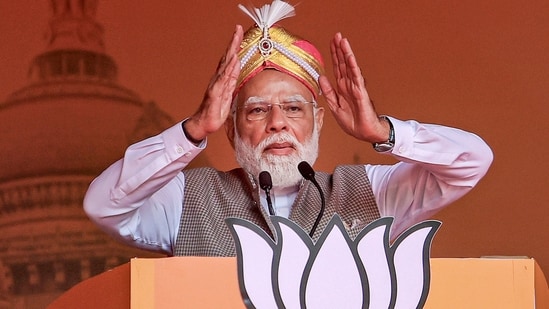
‘Parasitic Congress’: PM Modi's sharp attack as Rahul Gandhi attends Vijay's swearing-in
# Modi Slams ‘Parasitic’ Congress Over TN Shift
By Political Desk, May 10, 2026
Prime Minister Narendra Modi launched a scathing attack on the Congress party on Sunday, labeling it “parasitic” following its abrupt departure from its long-standing alliance with the Dravida Munnetra Kazhagam (DMK) in Tamil Nadu. The prime minister’s remarks arrived just as Congress leader Rahul Gandhi attended the historic swearing-in ceremony of actor-turned-politician Vijay, whose party recently secured a massive electoral mandate in the state assembly elections. Speaking at a public rally, Modi accused the Congress of opportunistically abandoning regional partners once they lose utility, signaling a dramatic realignment in South Indian politics that could reshape the national opposition landscape. [Source: Hindustan Times]
## The Swearing-In That Shifted Alliances
The political epicenter of India shifted momentarily to Chennai this weekend as Thalapathy Vijay, the Tamil cinema icon who launched his political outfit, Tamilaga Vettri Kazhagam (TVK), in early 2024, was sworn in as the Chief Minister of Tamil Nadu. The ceremony, attended by millions of supporters and several high-profile national leaders, marked the culmination of a deeply disruptive 2026 assembly election campaign that broke the traditional DMK-AIADMK duopoly.
Rahul Gandhi’s prominent presence at the swearing-in ceremony effectively confirmed the dawn of a new political partnership in the southern state. For months, political analysts had speculated about back-channel negotiations between the Congress high command and TVK leadership. By sharing the stage with Vijay, Gandhi signaled that the Congress is willing to recalibrate its regional alliances to align with emerging power centers, even if it means alienating established allies.
This optics of unity between the century-old national party and the nascent regional force offered a stark contrast to the bitter public divorce between the Congress and the DMK. Gandhi’s attendance was not merely ceremonial; it was a calculated projection of national endorsement for Vijay’s government and a clear message to former partners that the Congress is pursuing aggressive expansion strategies in the south. [Source: Hindustan Times | Additional: Public records on TVK formation]
## PM Modi’s ‘Parasitic’ Jibe Explained
Reacting sharply to these realignments, Prime Minister Narendra Modi did not mince words during a public address. He deployed the term “parasitic” to describe the Congress party’s operational strategy with regional allies. According to the Prime Minister, the national party attaches itself to strong regional outfits to survive electoral droughts, only to discard them when a seemingly better alternative arises.
“The Congress party has repeatedly proven that it is a parasitic entity in our democratic ecosystem,” PM Modi stated. “For years, they rode on the coattails of the DMK in Tamil Nadu, extracting seats and political mileage. Now, sensing a shift in the wind, they have ruthlessly turned on their own partners. This is a warning to all regional parties across the country: the Congress is loyal only to its dynasty, never to its allies.” [Source: Hindustan Times]
The Bharatiya Janata Party (BJP) has long sought to exploit fissures within opposition alliances, and Modi’s rhetoric underscores a broader strategy to isolate the Congress from regional powerhouses. By characterizing the Congress as an untrustworthy coalition partner, the BJP aims to sow doubt among other parties in the national opposition bloc. The timing of the attack—perfectly synchronized with Gandhi’s appearance in Chennai—ensured maximum visibility for the BJP’s narrative of Congress opportunism.
## The End of the Congress-DMK Era
To understand the weight of PM Modi’s accusations, one must look at the historical depth of the Congress-DMK partnership. The alliance has been one of the most enduring and electorally successful coalitions in modern Indian politics. Together, they swept the 2004 and 2009 Lok Sabha elections in the state, forming the bedrock of the Congress-led United Progressive Alliance (UPA) government at the center. Even during the BJP’s national surges in 2014, 2019, and 2024, the DMK-Congress combine managed to maintain a formidable fortress in Tamil Nadu.
However, cracks began to appear in the lead-up to the 2026 assembly elections. The friction reportedly centered around seat-sharing arrangements and local governance issues. Congress state leaders increasingly voiced frustrations over being treated as a “junior partner” with limited say in administrative matters. Meanwhile, the DMK leadership felt that the Congress was demanding a disproportionate number of seats relative to its on-the-ground organizational strength.
When Vijay’s TVK began drawing massive crowds, promising a fresh alternative to Dravidian majoritarianism, the Congress saw an opening. The ultimate rupture with the DMK was messy, marked by public recriminations and sudden resignations, providing ample ammunition for rivals like the BJP to highlight the fragility of opposition unities. [Source: Hindustan Times | Additional: Historical electoral data of Tamil Nadu]
## Strategic Calculations Behind the Move
Political experts view the Congress’s pivot from the DMK to TVK as a high-risk, high-reward gamble. Dr. R. Meenakshi, a Chennai-based political analyst, notes that the Congress is attempting to shed its reliance on traditional vote banks.
“The Congress realized that under the DMK’s vast shadow, it could never rebuild its own grassroots cadre in Tamil Nadu—a state it hasn’t ruled since 1967,” Dr. Meenakshi explains. “By aligning with Vijay, who represents youth aspiration and anti-incumbency sentiment, the Congress hopes to capture a new demographic of voters. It is a long-term play to regain primary relevance in the state.”
For Rahul Gandhi, the alliance with Vijay also serves a national purpose. Gandhi has been heavily focused on reinforcing the Congress’s footprint in southern India, capitalizing on the party’s recent electoral successes in Karnataka and Telangana. Having a friendly, highly popular Chief Minister in Tamil Nadu provides the Congress with crucial logistical and political capital heading into future national contests. However, the move has undoubtedly strained Gandhi’s relationships with other veteran regional leaders who now view the Congress with heightened suspicion. [Source: Additional Expert Political Analysis]
## BJP’s Foothold and Counter-Strategy
While PM Modi’s speech focused heavily on Congress’s betrayal of the DMK, the subtext of his address revealed the BJP’s own strategic anxieties and ambitions in Tamil Nadu. The saffron party has aggressively tried to expand its footprint in the Dravidian heartland, employing vigorous state leadership and frequent prime ministerial visits. Yet, breaking through the entrenched regional identities has proven challenging.
The emergence of Vijay’s TVK and the subsequent fracturing of the DMK-Congress alliance presents a complex scenario for the BJP. On one hand, a divided opposition could theoretically lower the threshold for BJP victories in multi-cornered contests. On the other hand, the rise of a massive new regional force under Vijay threatens to consume the anti-incumbency space that the BJP had hoped to occupy against the DMK.
By painting the Congress as “parasitic” and untrustworthy, Modi is simultaneously making a pitch to Tamil voters that national parties should be judged on their governance models—which he champions as the “Gujarat model” or double-engine growth—rather than opportunistic political marriages. The BJP hopes to attract disillusioned DMK voters who might feel abandoned by the Congress, as well as nationalist voters who are skeptical of Vijay’s untested governance capabilities.
## Regional Power Dynamics Repositioned
The immediate fallout of the TN assembly elections and the swearing-in ceremony extends far beyond the state’s borders. The Congress-DMK split forces a reevaluation of the broader national coalition dynamics. Several regional chieftains from West Bengal to Maharashtra are reportedly observing the Tamil Nadu developments closely.
If the Congress can successfully leverage its new alliance with TVK to secure a stronger bargaining position nationally, it may embolden the party to take tougher stances in seat-sharing negotiations in other states. Conversely, if PM Modi’s narrative sticks and regional parties begin to view the Congress as a liability that might cannibalize their base or jump ship when convenient, the grand national opposition front could face internal fragmentation.
Furthermore, Vijay’s entry into the chief ministerial office brings an unpredictable variable into South Indian politics. Unlike traditional Dravidian leaders, Vijay’s pan-India cinematic appeal and carefully crafted political rhetoric cross traditional caste and linguistic barriers. How his government interacts with the BJP-led central government will be a critical storyline in the coming months, dictating the flow of federal funds and political stability in the region. [Source: Additional General Political Knowledge]
## Conclusion and Future Outlook
Prime Minister Narendra Modi’s blistering characterization of the Congress as a “parasitic” entity highlights the intense, high-stakes nature of modern Indian political warfare. As Rahul Gandhi smiled alongside an ascendant Thalapathy Vijay in Chennai, the definitive end of the decades-old DMK-Congress alliance was sealed, ushering in an era of unprecedented unpredictability in Tamil Nadu.
**Key Takeaways:**
* **Alliance Realignment:** Congress has officially swapped its traditional alliance with the DMK for a new partnership with Vijay’s TVK, seeking to tap into anti-incumbency and youth votes.
* **BJP’s Strategic Narrative:** PM Modi is utilizing the split to brand Congress as an opportunistic and untrustworthy ally, attempting to sow discord among remaining opposition coalition partners nationwide.
* **Tamil Nadu’s New Era:** The successful transition of Thalapathy Vijay from cinema to the Chief Minister’s office disrupts the long-standing DMK-AIADMK bipolarity, creating a new power center in the south.
Looking ahead to the national political calendar, all eyes will be on how effectively the Congress and TVK translate their new partnership into actionable governance. Concurrently, the DMK will be forced into deep introspection, likely reorganizing its ranks to counter both the new state government and an aggressive BJP. Ultimately, the shifting sands of Tamil Nadu’s political landscape serve as a stark reminder that in politics, permanent interests always supersede permanent alliances.





