
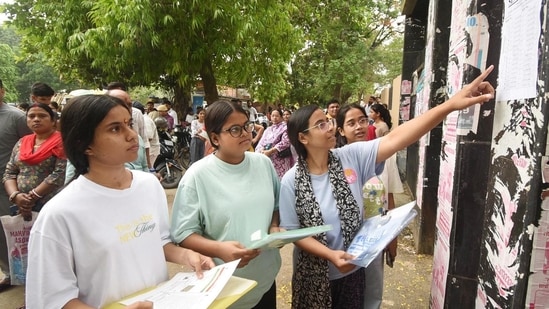
After NEET paper leak, Karnataka CM seeks return of state-controlled medical entrance tests
# Karnataka Seeks State Exams Post NEET Leak
By Vikram Sethi, National Education Desk, May 15, 2026
On Friday, Karnataka Chief Minister Siddaramaiah urged the Central Government to abolish the centralized National Eligibility cum Entrance Test (NEET) and restore the state’s power to conduct its own medical entrance examinations. The demand follows a highly publicized NEET paper leak that has jeopardized the academic futures of millions of aspiring doctors nationwide. Citing severe systemic failures by the National Testing Agency (NTA), the Karnataka government is advocating for a return to the state-regulated Common Entrance Test (CET) to ensure transparency, protect local students’ interests, and safeguard the integrity of India’s medical education system. [Source: Hindustan Times].
## A System Under Siege: The Catalyst for Change
The structural integrity of India’s medical admission process has once again been thrust into the national spotlight following allegations of a widespread paper leak in the latest iteration of NEET. For the **more than 2.4 million candidates** who appeared for the highly competitive exam, the breach has resulted in widespread panic, frustration, and uncertainty.
Reports of the leaked question paper circulating on encrypted messaging platforms hours before the exam have triggered nationwide protests. While the National Testing Agency (NTA) is currently conducting an internal probe, the damage to the institution’s credibility has already been done. This incident is not an isolated one; it follows a string of controversies over the past few years, including the highly debated 2024 grace marks fiasco and repeated allegations of proxy candidates.
Against this backdrop of eroding public trust, Karnataka Chief Minister Siddaramaiah delivered a resolute statement. He asserted that the centralization of the exam has stripped states of their administrative autonomy and failed to deliver the promised “one nation, one exam” efficiency. “The Karnataka government is insisting that powers to conduct such entrance examinations should be restored to states,” the Chief Minister stated, highlighting the urgent need to protect the academic interests of local students who are disproportionately affected by national-level systemic failures [Source: Hindustan Times].
## The Pre-NEET Era: Examining Karnataka’s CET Legacy
Before NEET became mandatory in 2016 following a Supreme Court directive, Karnataka utilized its own Common Entrance Test (CET) for admissions into government and private medical colleges. The CET was widely regarded as one of the most robust, transparent, and student-friendly examination systems in the country.
By demanding a return to this state-controlled mechanism, the Karnataka government is implicitly criticizing the fundamental premise of NEET. The CET was tailored to the state board syllabus, which naturally leveled the playing field for students hailing from rural and economically disadvantaged backgrounds. Currently, NEET is heavily skewed toward the Central Board of Secondary Education (CBSE) curriculum.
“The shift to a centralized system essentially created a single point of failure,” explains Dr. Arvind Menon, a New Delhi-based education policy analyst. “When a state conducts its own exam, a leak or administrative error is localized and can be rectified swiftly with re-examinations. When a national exam leaks, it compromises the entire country’s medical admission calendar, causing massive logistical and psychological distress.” [Source: Independent Expert Analysis].
## Expanding the Southern Bloc Against NEET
Karnataka’s renewed opposition to NEET marks a significant political shift, effectively strengthening a southern bloc of states that have long voiced grievances against the centralized exam. Tamil Nadu has been the most vocal opponent, having previously passed a legislative bill seeking an exemption from NEET. The state’s Justice A.K. Rajan Committee report highlighted that NEET inherently favors affluent students who can afford exorbitant private coaching, thereby sidelining marginalized rural youth.
With Karnataka formally joining the chorus, the pressure on the Union Ministry of Health and Family Welfare and the NTA is mounting. Political analysts note that Kerala and Telangana have also expressed reservations regarding the NTA’s operational transparency in recent months. A unified front among these states could force the central government to re-evaluate the rigid framework of the National Medical Commission (NMC) Act.
The argument from these states is rooted in constitutional principles. Education falls under the **Concurrent List** (Entry 25) of the Indian Constitution, meaning both the Centre and states have legislative jurisdiction. However, in cases of conflict, central law prevails unless a state amendment receives the President’s assent. The political push by Siddaramaiah is as much a fight for cooperative federalism as it is for educational reform.
## The Human Cost: Mental and Financial Toll on Aspirants
Beyond the political and legal debates, the immediate victims of the NEET paper leak are the students. Preparing for NEET is a grueling process that often spans two to three years of high-pressure study, with families frequently taking on substantial debt to finance coaching classes in hubs like Kota, Hyderabad, and Bengaluru.
When an exam is compromised, the mental health toll is devastating. “You study for 14 hours a day, sacrifice your entire social life, and then find out the paper was sold on Telegram for a few lakhs,” shares Nandini R., a 19-year-old NEET aspirant from Hubballi, Karnataka. “If the state conducted the exam, at least the syllabus would match what we learned in school, and the authorities would be directly accountable to us.”
Child psychologists and student counselors have noted a sharp spike in anxiety and depression among adolescents following the news of the leak. The uncertainty regarding whether the NTA will cancel the entire exam, conduct a re-test for specific regions, or delay the academic year entirely leaves students in agonizing limbo. By advocating for state-run exams, Karnataka aims to shield its students from this recurring national trauma.
## Centralization vs. Decentralization: The Policy Dilemma
The original rationale for introducing NEET was noble: to eliminate the menace of capitation fees in private medical colleges, spare students the burden of writing multiple entrance exams across different states, and establish a uniform standard of medical aptitude.
However, a decade of implementation has revealed glaring flaws in execution.
**Arguments for Centralization (NEET):**
* **Uniformity:** Ensures all future doctors meet a baseline standard of scientific knowledge.
* **Convenience:** Prevents the logistical nightmare of students traveling across the country to write dozens of different state and university exams.
* **Anti-Corruption:** Designed to curb the unregulated sale of management quota seats by creating a single, merit-based rank list.
**Arguments for Decentralization (State Exams):**
* **Curriculum Alignment:** State exams reflect the syllabus taught in state-run public schools, aiding low-income students.
* **Risk Mitigation:** Decentralized testing limits the fallout of administrative failures or paper leaks.
* **Federal Rights:** Allows states to tailor medical admissions to address local healthcare shortages by favoring local rural students who are more likely to serve in local Primary Health Centres (PHCs).
“The reality is that a ‘one size fits all’ approach neglects the deep socioeconomic and educational disparities across India’s states,” notes Dr. Sunita Rao, a professor of public policy. “The NTA has proven incapable of securing a test of this magnitude. Returning the mandate to competent state bodies like the Karnataka Examination Authority (KEA) is not a step backward; it is a necessary course correction.” [Source: Independent Expert Analysis].
## Legal Hurdles and the Path Forward
Despite the Karnataka Chief Minister’s strong demands, dismantling NEET in the state will require navigating a complex legal labyrinth. The Supreme Court of India has previously upheld the constitutional validity of NEET, ruling that it serves the larger public interest by bringing transparency to medical admissions.
To bypass NEET, the Karnataka Legislative Assembly would need to pass a special bill—similar to Tamil Nadu’s anti-NEET bill—and subsequently secure the assent of the President of India under Article 254(2) of the Constitution. Given the current political dynamics between the Centre and the opposition-ruled states, securing this assent is highly improbable.
However, Siddaramaiah’s demand serves a critical strategic purpose. It forces the Central Government to the negotiating table. If reverting entirely to state exams is legally unfeasible in the short term, states may push for major structural reforms within the NEET framework. These could include:
1. **Transitioning to a Computer-Based Test (CBT):** Moving away from the easily compromised pen-and-paper OMR format.
2. **Multiple Exam Windows:** Allowing students to take the exam multiple times a year, similar to the JEE Mains, to reduce the high-stakes pressure of a single day.
3. **State-Specific Papers:** Offering question papers that are normalized and weighted according to respective state board curricula.
## Conclusion: A Turning Point for Medical Education
The recent NEET paper leak has shattered the illusion of an infallible centralized examination system. Karnataka Chief Minister Siddaramaiah’s demand for the restoration of state-controlled medical entrance tests is more than a reactionary political statement; it is a reflection of widespread disillusionment among educators, parents, and students.
As investigations into the NTA’s recent failures continue, the central government faces a critical juncture. It must either enact sweeping, technologically bulletproof reforms to restore faith in NEET or heed the growing chorus of states demanding the return of their educational autonomy.
Ultimately, the goal of any medical entrance process must be to select the most capable, dedicated students fairly and transparently. If the centralized system continues to compromise the sanctity of this process, the push for state autonomy will only evolve from a demand into an undeniable necessity. The academic fate of India’s future healthcare professionals hangs in the balance.





