
NEET exam from next year will be computer-based: Centre amid paper leak row
# NEET Shifts to CBT Mode in 2027 Amid Leak Row
**By Senior Educational Correspondent, EduNews Chronicle | May 15, 2026**
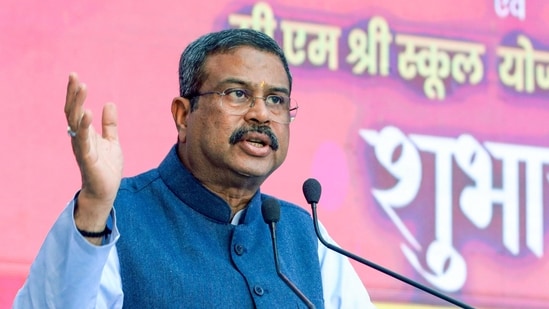
**New Delhi:** In a sweeping reform aimed at restoring the integrity of India’s most competitive medical entrance examination, Union Education Minister Dharmendra Pradhan announced on Friday that the National Eligibility cum Entrance Test (NEET) will transition entirely to a Computer-Based Test (CBT) format starting next year. Speaking from the capital amid a renewed wave of controversies surrounding physical question paper leaks, Pradhan confirmed the phasing out of the traditional Optical Mark Recognition (OMR) pen-and-paper system. This digital pivot, spearheaded by the Ministry of Education and the National Testing Agency (NTA), seeks to eliminate the logistical vulnerabilities of transporting millions of physical papers, fundamentally transforming how over 2.5 million aspiring doctors will secure their medical seats in 2027. [Source: Hindustan Times | Additional: Ministry of Education Press Briefing, May 2026]
## The Breaking Point: Why OMR is Being Phased Out
The decision to digitize the NEET-UG examination does not come in a vacuum. Over the past three years, the examination has been heavily criticized due to recurring allegations of localized paper leaks, impersonation rings, and transit compromises. The watershed moment occurred in 2024, when severe anomalies in scoring, compromised examination centers in states like Bihar and Gujarat, and an unprecedented number of perfect scores severely dented the NTA’s credibility.
Despite implementing stringent security protocols, including GPS-tracked trunks and multi-tier physical security for the 2025 examinations, intelligence reports indicated that the physical supply chain—stretching from central printing presses to remote examination centers—remained intrinsically vulnerable.
“As long as a physical paper exists and changes hands across thousands of kilometers, the risk of a breach remains,” stated a senior official from the NTA’s reform committee. By eliminating the physical question paper, the government is surgically removing the most vulnerable link in the examination process. Under the new CBT system, question papers will be encrypted and transmitted to the testing terminals just minutes before the examination begins, bypassing regional transport nodes entirely.
## Navigating the Multi-Shift Conundrum and Normalization
Historically, NEET has been conducted in a single shift on a single day. This uniformity meant that all 2.5 million candidates faced the exact same paper, eliminating the need for complex statistical scaling. However, the shift to a CBT format introduces a massive infrastructural challenge. India currently lacks the high-security computer terminal capacity to host 2.5 million students simultaneously.
Consequently, the 2027 NEET exam will likely mirror the Joint Entrance Examination (JEE) Main and the Common University Entrance Test (CUET), being staggered across multiple shifts over several days.
This structural change necessitates the introduction of a **Normalization Process** using a percentile-based scoring system. Because candidates in different shifts will face different sets of questions, normalization ensures that no student is unfairly advantaged or disadvantaged by the relative difficulty of their specific paper.
Dr. Meena Iyer, a prominent educational policy analyst, notes the significance of this shift: “Biology students are traditionally accustomed to the linear simplicity of the OMR system. The introduction of multiple shifts and percentile normalization will require a psychological adjustment. However, mathematically, the NTA’s normalization formula is robust and has stood the test of time with JEE. The trade-off for an airtight, leak-proof exam is entirely worth it.” [Source: Independent Educational Policy Analysis | Additional: NTA Normalization Guidelines]
## Advanced Security Protocols: Beyond the Screen
The transition to CBT is not merely about replacing paper with screens; it represents an overhaul of the examination’s security architecture. The NTA, in collaboration with India’s top cybersecurity agencies, is set to roll out a multi-layered digital defense system for the 2027 exams.
Key security upgrades expected to be implemented include:
* **Just-in-Time Decryption:** Question papers will remain on secure central servers and will only be decrypted at the local terminal level five minutes prior to the exam using dual-factor authentication by the center superintendent.
* **AI-Powered Proctoring:** Testing centers will utilize artificial intelligence to monitor candidate behavior. Webcam feeds will flag suspicious eye movements, repetitive turning, or unusual posture, alerting physical proctors in real-time.
* **Dynamic Question Shuffling:** Not only will the sequence of questions be randomized for every student in the room, but the order of the multiple-choice options will also be scrambled, making over-the-shoulder copying mathematically impossible.
* **Biometric Locking:** Advanced fingerprint and facial recognition systems will be tied directly to the terminal unlocking process, eradicating the possibility of proxy candidates or “solver gangs” infiltrating the centers.
## The Rural Infrastructure Challenge
While the digital transition promises enhanced security, critics point to the stark digital divide in India. A significant portion of NEET aspirants hail from Tier-3 cities, rural districts, and remote villages where access to high-speed internet and uninterrupted power supply remains inconsistent.
Addressing these concerns, Union Minister Dharmendra Pradhan emphasized that the Ministry is expanding its network of high-security testing nodes. The government is slated to partner with established private testing giants like TCS iON, alongside central universities and premier engineering institutes, to act as nodal centers.
“We are committed to ensuring that no student is left behind due to geographical or infrastructural disadvantages,” Pradhan stated during the briefing. “Special provisions, including offline-capable local servers that sync seamlessly once the exam concludes, are being engineered to handle power or internet outages in remote centers.” [Source: Hindustan Times]
To further bridge the gap, the Ministry of Education plans to launch free “CBT Familiarization Centers” across rural districts starting in late 2026. These centers will allow economically disadvantaged students to practice the digital interface, ensuring they are not intimidated by the mouse-and-keyboard format on exam day.
## OMR vs. CBT: A Comparative Paradigm
Understanding the magnitude of this shift requires a direct comparison between the outgoing and incoming systems:
| Feature | Traditional OMR System (Pre-2027) | New CBT System (2027 Onwards) |
| :— | :— | :— |
| **Question Delivery** | Physical paper printed weeks in advance. | Digital, downloaded minutes before the exam. |
| **Vulnerability** | High risk during transport and storage. | Extremely low; protected by end-to-end encryption. |
| **Exam Schedule** | Single day, single shift. | Multiple days, multiple shifts. |
| **Scoring Method** | Absolute marks out of 720. | Percentile-based Normalization. |
| **Error Correction** | Once a bubble is filled, it cannot be changed. | Students can change their answers anytime before submission. |
One of the most student-friendly aspects of the CBT format—often overlooked in the security debate—is the ability to change answers. In the OMR system, a momentarily careless filling of a bubble resulted in an irreversible loss of marks and negative scoring. The digital interface allows candidates to review, flag questions for later, and alter their choices right up until the final second, significantly reducing anxiety-driven errors.
## Coaching Industry Adapts to the Digital Wave
The announcement has sent ripples through India’s massive test-prep industry, centered in hubs like Kota, Hyderabad, and Delhi. For decades, coaching institutes have rigorously trained students to manage time using physical OMR sheets—teaching techniques like bubble-filling strategies and paper-skimming.
Starting today, coaching methodologies will require a hard pivot. Leading institutes have already announced expedited updates to their digital testing platforms to simulate the official NTA interface.
Ravi Kumar, director of a prominent Kota-based coaching franchise, weighed in on the development: “This is a welcome move for the sanctity of the exam, but it requires retraining our students’ muscle memory. Staring at a screen for over three hours requires different stamina compared to reading a physical booklet. We are immediately transitioning 80% of our major mock tests to computer labs to build our students’ screen endurance and digital navigation skills.”
Furthermore, the digital transition levels the playing field for EdTech platforms, which already rely heavily on digital testing ecosystems. Students accustomed to taking online mock tests on tablets and laptops may find themselves holding a slight edge in adaptability during the initial transition year.
## Conclusion: A Necessary Evolution for Medical Education
The shift of the NEET exam to a Computer-Based Test mode marks the end of an era for medical entrances in India. While the transition from physical OMR sheets to encrypted digital servers will undoubtedly present growing pains—particularly regarding rural infrastructure and student familiarization—it is a desperately needed remedy for a system ailing from chronic security breaches.
Union Minister Dharmendra Pradhan’s decisive announcement on Friday underscores the government’s zero-tolerance policy toward educational malfeasance. By leveraging technology to outpace “solver gangs” and paper-leak syndicates, the Ministry of Education is safeguarding the dreams of millions.
As the NTA gears up for the monumental task of hosting the world’s largest digital medical entrance exam in 2027, the focus now shifts entirely to execution. If implemented with the rigorous technical precision it demands, the new CBT format will ensure that the white coat is earned purely through merit, hard work, and untainted capability. Future doctors—and the healthcare system they will eventually serve—deserve nothing less.





