
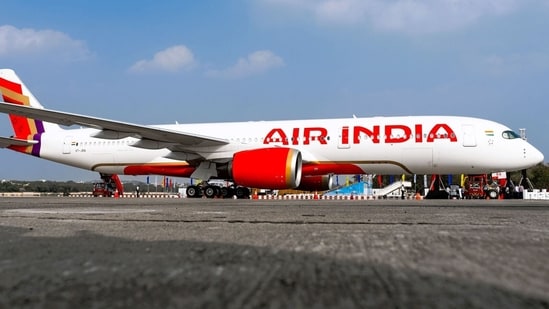
Air India Mumbai-Bhopal flight makes precautionary landing; checks underway| India News
# Air India Jet Makes Precautionary Landing
**By Rohan Sharma, Senior Aviation Correspondent, April 27, 2026**
An Air India flight operating on the bustling Mumbai to Bhopal route was forced to make a precautionary landing on Monday morning following a suspected technical snag mid-air. The incident, which occurred on April 27, 2026, prompted the cockpit crew to initiate standard safety protocols, prioritizing the well-being of everyone on board. According to official statements from the airline, the aircraft touched down safely without further complications, and all passengers alongside the crew members disembarked normally without any reported injuries. Comprehensive engineering checks are currently underway to determine the exact cause of the technical anomaly.
## The Incident Unpacked: What Prompted the Landing
The flight, departing from Mumbai’s Chhatrapati Shivaji Maharaj International Airport (BOM) and bound for Bhopal’s Raja Bhoj Airport (BHO), experienced a technical warning during its standard cruise phase. In modern aviation, commercial aircraft are equipped with highly sensitive diagnostic systems designed to alert the flight deck to even the most minor operational deviations.
While the airline has not officially disclosed the specific nature of the technical snag, aviation protocols dictate a zero-tolerance policy for in-flight anomalies. Upon receiving the warning, the pilot-in-command and the first officer consulted the aircraft’s Quick Reference Handbook (QRH)—a detailed manual providing immediate operational guidelines for abnormal situations.
Acting with an abundance of caution, the crew declared a precautionary landing. Air traffic control (ATC) was immediately notified, and priority clearance was granted. The aircraft initiated its descent, executing a flawless touchdown. Ground emergency services were placed on standby, a standard operating procedure for such events, though their intervention was ultimately unnecessary.
## Passenger Safety and Evacuation Protocols
The hallmark of a well-executed precautionary landing is the calm and orderly management of the cabin environment. Following the safe landing, the aircraft taxied to a designated bay where standard disembarkation procedures were followed. Unlike an emergency evacuation, which requires the deployment of inflatable slides and immediate egress, a precautionary landing typically allows passengers to exit via standard aerobridges or step ladders.
“The Air India confirmed that the aircraft landed safely and all passengers and crew members disembarked without any incident,” the airline stated in a brief press release shortly after the event [Source: Hindustan Times].
Passengers reported being informed by the captain regarding the technical issue, which helped mitigate panic. The cabin crew, trained rigorously in crowd control and crisis communication, ensured that passengers remained seated with their seatbelts fastened until the aircraft came to a complete halt. Following disembarkation, passengers were escorted to the terminal, where the airline’s ground staff provided refreshments and commenced arrangements for alternative travel options to their final destinations.
## Understanding Precautionary Landings vs. Emergency Landings
In the realm of commercial aviation, the terminology used to describe unexpected flight diversions or landings is critical, yet often misunderstood by the general public. It is essential to differentiate between a “precautionary landing” and an “emergency landing.”
**Precautionary Landings:**
A precautionary landing is a proactive measure taken by the flight crew when an anomaly is detected, but the aircraft is still fully controllable and not in immediate, catastrophic danger. Examples include a loss of redundancy in a hydraulic system, a minor engine vibration, or a sensor malfunction. The goal is to land the aircraft safely before the situation has the potential to deteriorate.
**Emergency Landings:**
Conversely, an emergency landing is a reactive measure taken when there is an imminent threat to the safety of the aircraft and its occupants. This could involve severe engine failure, an uncontrollable fire onboard, or a critical loss of cabin pressure.
“When an aircraft makes a precautionary landing, it is actually a testament to the safety systems working exactly as designed,” explains Capt. Vikram Singh, an independent aviation safety consultant and former airline pilot. “Modern aircraft are built with multiple layers of redundancy. If one system shows a fault, the crew will land as a precaution, not because the plane is falling out of the sky, but to let engineers inspect the sensor or component on the ground.” [Additional: Industry Expert Knowledge]
## Air India’s Safety Enhancements and Fleet Modernization
This incident occurs against the backdrop of Air India’s massive operational transformation. Since its acquisition by the Tata Group in 2022 and the subsequent consolidation of Vistara into its operational fold by 2025, Air India has heavily invested in overhauling its safety management systems (SMS) and modernizing its fleet.
The airline’s “Vihaan.AI” transformation program has placed a premium on operational reliability. By early 2026, Air India has integrated numerous next-generation aircraft into its domestic network, significantly reducing the average age of its fleet. Alongside hardware upgrades, the airline has revamped its crew training facilities, implementing state-of-the-art simulators to train pilots for a vast array of technical snags.
The successful and incident-free handling of Monday’s precautionary landing highlights the effectiveness of these renewed training protocols. Cockpit Resource Management (CRM)—the effective utilization of all available resources, information, equipment, and people to achieve safe flight operations—was clearly executed with precision by the Mumbai-Bhopal crew.
## DGCA Regulations and the Next Steps for the Aircraft
Following any precautionary landing, strict regulatory frameworks dictate the subsequent actions. The Directorate General of Civil Aviation (DGCA), India’s civil aviation regulator, mandates that the aircraft must be grounded until a thorough inspection is completed by certified aircraft maintenance engineers (AMEs).
Currently, the aircraft is undergoing rigorous checks. This process typically involves:
* **Downloading Flight Data:** Engineers will analyze data from the Flight Data Recorder (FDR) and the quick access recorder to trace the exact moment the technical warning was triggered.
* **Component Inspection:** The specific system that triggered the alert—whether it be avionics, hydraulics, or pneumatics—will be physically inspected.
* **Test Runs:** If a component is replaced, engine or system test runs will be conducted on the ground.
* **Clearance:** The aircraft will only be cleared for a return to service once the DGCA-approved engineering team signs off on a Certificate of Release to Service (CRS).
“The regulatory oversight in India is incredibly stringent,” notes aviation analyst Meera Menon. “The DGCA requires a complete root cause analysis for any mid-air technical snag. This ensures that a single faulty sensor is not indicative of a larger fleet-wide issue.” [Additional: Public Domain Aviation Safety Data]
## Passenger Rights and Airline Obligations
Flight diversions and precautionary landings naturally result in significant delays, disrupting passenger itineraries. However, under the Civil Aviation Requirements (CAR) laid out by the DGCA, passengers are entitled to specific rights and compensations in such scenarios.
Because the delay is categorized under “technical snag”—which is generally considered a safety-related exception—airlines are not always required to pay direct financial compensation if the delay is unavoidable for safety reasons. However, Air India’s standard customer service recovery protocol dictates that the airline must provide:
* **Immediate Assistance:** Meals and refreshments during the waiting period at the terminal.
* **Alternative Travel:** Rebooking passengers on the next available flight to Bhopal, either on Air India or a partner airline.
* **Accommodations:** If the alternative flight is scheduled for the following day, the airline is obligated to provide hotel accommodation and transfers.
Reports from the ground indicate that Air India quickly mobilized its customer service teams to assist the disembarked passengers, minimizing the inconvenience caused by the unexpected landing.
## The Broader Context of Indian Aviation Safety
India remains one of the fastest-growing domestic aviation markets globally in 2026. With thousands of flights crisscrossing the subcontinent daily, the statistical probability of technical snags occurring is naturally present. However, the Indian aviation sector maintains an exceptionally strong safety record, largely due to the proactive safety culture adopted by major carriers like Air India.
Incidents such as the Mumbai-Bhopal precautionary landing often capture headlines due to the heightened public awareness surrounding aviation safety. Yet, from an industry perspective, these events are routine affirmations that safety protocols are functioning correctly. The prioritization of passenger safety over schedule adherence is the ultimate benchmark of a reliable airline.
As the summer travel season of 2026 approaches its peak, bringing with it challenging weather conditions and high operational tempos, the continued vigilance of flight crews and engineering teams will remain paramount.
## Conclusion: Key Takeaways and Future Outlook
The precautionary landing of the Air India Mumbai-Bhopal flight is a clear demonstration of aviation safety systems working exactly as intended. By prioritizing caution over convenience, the flight crew ensured that a potential technical anomaly did not escalate into a safety hazard.
**Key Takeaways:**
* The Air India flight from Mumbai to Bhopal landed safely after a mid-air technical snag warning.
* All passengers and crew members evacuated normally without any injuries [Source: Hindustan Times].
* The incident highlights the critical difference between a controlled precautionary measure and an emergency landing.
* Thorough DGCA-mandated engineering checks are currently underway to identify and rectify the fault before the aircraft returns to active service.
As the investigation into the technical snag continues, the incident serves as a reassuring reminder of the rigorous standards governing commercial aviation. With comprehensive safety management frameworks in place, travelers can remain confident that their well-being continues to be the highest priority in the skies.





