Amid the din, a dare to reserve PM's post for women: TMC MP Kalyan Banerjee calls for 50% of current 543 seats| India News
# TMC MP Demands 50% Women Quota, Female PM Post
By Staff Reporter, The National Standard, April 18, 2026
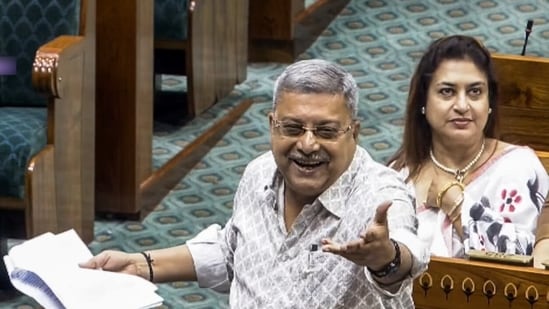
On Saturday, Trinamool Congress (TMC) MP Kalyan Banerjee launched a blistering critique of the Union Government, demanding an immediate 50% reservation for women across the current 543 Lok Sabha seats and daring the ruling Bharatiya Janata Party (BJP) to permanently reserve the Prime Minister’s post for a woman. Speaking amidst a raucous parliamentary session, Banerjee dismissed the highly anticipated national delimitation exercise as a mere “political gimmick” engineered to delay the implementation of gender quotas. This aggressive posture highlights the intensifying political friction in West Bengal and reignites the national debate over the prolonged delay of the landmark 2023 Women’s Reservation Act. [Source: Hindustan Times].
## The Core Demand: 50% of Current Seats and a Reserved Premier
The discourse surrounding women’s representation in Indian politics took an explosive turn as Kalyan Banerjee challenged the foundational timeline established by the central government. While the Nari Shakti Vandan Adhiniyam (Women’s Reservation Bill) passed in late 2023 mandated a 33% quota for women in the lower house of Parliament and state legislative assemblies, Banerjee’s demands escalate the parameters significantly. He argued that true gender parity requires exactly half of the legislative representation, pushing for a 50% allocation.
More provocatively, Banerjee issued a direct dare to the BJP leadership to reserve the highest executive office—the Prime Minister’s post—for a female candidate. **”You don’t have the intention to give a quota to women,”** Banerjee stated during his address, asserting that if the ruling coalition truly championed women-led development, they would not hesitate to guarantee the nation’s top job for a woman.
While reserving the Prime Minister’s office is constitutionally unprecedented and practically complex in a parliamentary democracy where the premier is the leader of the majority party, Banerjee’s rhetoric served its primary purpose: placing the government on the defensive regarding its commitment to female political empowerment. By calling for the immediate carve-out of seats within the existing 543-member Lok Sabha, the TMC is attempting to bypass the labyrinthine procedural delays currently bottlenecking the quota’s implementation.
## Delimitation Denounced as a “Political Gimmick”
The crux of Banerjee’s argument rests on his outright rejection of the delimitation prerequisite. The 2023 legislation explicitly tied the implementation of the women’s quota to the next official census and the subsequent delimitation exercise—a process that redraws electoral boundaries based on updated population data. With the 2021 census indefinitely delayed and the constitutional freeze on delimitation set to expire in 2026, the actual enforcement of the women’s quota has been pushed into an ambiguous future, likely beyond 2029.
Banerjee categorized this entire structural dependency as a **”political gimmick.”** His argument reflects a broader opposition consensus that the central government orchestrated the legislative victory of the Women’s Reservation Bill for immediate electoral optics, without intending to face the disruptive reality of unseating incumbent male politicians in the near term. [Source: Original RSS | Additional: 2023 Legislative Records].
“Why must the fundamental rights of women’s representation be held hostage by bureaucratic exercises like the census and boundary redrawing?” Banerjee questioned. The TMC’s stance is that the Election Commission could easily apply a randomized roster system to the existing 543 constituencies to reserve seats for women immediately, an argument that resonates deeply with civil rights groups advocating for swift gender justice.
## The Bengal Political Battlefield
To understand the ferocity of Banerjee’s statements, one must look at the fierce political battlefield of West Bengal. The state remains ground zero for one of the most intense, protracted electoral rivalries in modern Indian history between the regional powerhouse TMC and the national juggernaut BJP.
Under the leadership of Mamata Banerjee—India’s only incumbent female Chief Minister—the TMC has consistently weaponized its record on gender representation to counter the BJP’s national narrative. The TMC has historically distributed a significant percentage of its electoral tickets to female candidates, notably hitting the 40% mark during the 2019 general elections. Furthermore, sweeping state-level welfare initiatives targeted explicitly at female financial autonomy, such as the *Lakshmir Bhandar* scheme, have cemented women as the TMC’s most formidable vote bank.
By daring the central government to enforce a 50% quota and reserve the Prime Ministership, Kalyan Banerjee is drawing a sharp contrast between the TMC’s tangible actions in Bengal and the BJP’s delayed national promises. The remarks are calibrated to portray the ruling national party as patriarchal and hesitant, while positioning the TMC as the authentic vanguard of women’s political liberation.
## Expert Perspectives on the Impracticability and Impact
Political analysts view Banerjee’s explosive parliamentary intervention as a masterclass in political framing, even if the specific demands are legally unfeasible.
Dr. Sunita Rao, a Senior Fellow of Political Sociology at the Centre for Policy and Democratic Studies in New Delhi, explains the strategy: “Kalyan Banerjee knows that reserving the Prime Minister’s post is a constitutional absurdity in our Westminster-style parliamentary system. However, the dare is not meant to result in legislation; it is designed to expose what the opposition perceives as the BJP’s hypocrisy. By demanding 50% immediately, the TMC highlights the inadequacy of a delayed 33%.”
Constitutional scholars also point out the inherent difficulties of applying the quota to current seats. “The linkage between the Women’s Reservation Act and delimitation was theoretically established to prevent massive disruptions in existing constituencies,” notes Dr. Vikram Mehta, an expert in Indian constitutional law. “Redrawing the map allows for the creation of new seats, softening the blow for male incumbents who would otherwise lose their constituencies. Banerjee’s demand to enforce the quota on the existing 543 seats would require displacing hundreds of sitting MPs overnight—a political earthquake that no ruling party wants to trigger voluntarily.” [Source: Independent Expert Analysis, April 2026].
## Regional Anxieties Surrounding Delimitation
Banerjee’s dismissal of delimitation taps into a much deeper, more volatile anxiety shared by non-Hindi-speaking states. The impending post-2026 delimitation exercise threatens to radically alter the balance of power in the Lok Sabha. Because the redrawing of electoral boundaries will be tied to population figures, southern and eastern states—which have successfully controlled their population growth over the past four decades—fear they will lose proportional representation to heavily populated northern states.
By attacking the delimitation process as a “gimmick” in the context of women’s reservation, the TMC is strategically marrying two massive opposition grievances. They are telling female voters that their rights are being delayed, while simultaneously signaling to regional allies in the south and east that the mechanism causing this delay (delimitation) is inherently flawed and politically manipulated. It is a dual-pronged attack meant to coalesce regional parties against the central government’s electoral roadmap.
## Implications for the Upcoming Electoral Cycle
The TMC’s aggressive posturing indicates that gender representation will not simply be a background issue in the upcoming state and national electoral contests, but rather a primary wedge issue. The female electorate in India has undergone a profound transformation. Voter turnout among women now frequently surpasses that of men, and their voting patterns increasingly show an independent block unswayed by the patriarchal dictates of their households.
Both the BJP and the opposition INDIA bloc (of which TMC is a complex, sometimes reluctant partner) recognize that whoever successfully captures the imagination and trust of the female voter will secure a massive advantage. While the BJP points to the historic passage of the Nari Shakti Vandan Adhiniyam and vast welfare delivery systems (like subsidized cooking gas and housing schemes) as proof of their commitment, the opposition’s counter-narrative focuses heavily on delayed implementation, rising inflation affecting household budgets, and issues of women’s safety.
Banerjee’s dare effectively arms TMC cadres with a potent talking point for the grassroots level: *We wanted half the seats and a female PM right now; they gave you a 33% promise for a decade later.*
## Conclusion and Future Outlook
Kalyan Banerjee’s fiery demand for a 50% immediate women’s quota and a reserved Prime Ministerial post is far more than mere parliamentary din; it is a calculated political maneuver rooted in the high-stakes battleground of West Bengal. By labeling the prerequisite delimitation exercise a “political gimmick,” the TMC has sought to strip away the procedural excuses shielding the delayed implementation of the Women’s Reservation Act.
As India inches closer to the expiration of the delimitation freeze, the intertwining issues of gender quotas, census data, and regional representation are set to create unprecedented legislative turbulence. While a reserved female Prime Minister and an immediate 50% quota remain highly unlikely outcomes, the relentless pressure from regional heavyweights like the TMC ensures that the central government will face mounting scrutiny. Moving forward, the ruling coalition will likely be forced to accelerate its timeline or provide a much more robust justification for why the women of the world’s largest democracy must wait for demographic mapping to claim their promised seats at the table.