
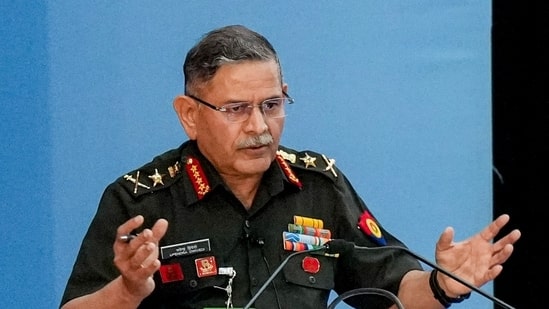
Army Chief Gen Dwivedi inducted into US Army Pacific academic engagements, reviews defence cooperation| India News
# Gen Dwivedi Boosts Indo-US Pacific Defense Ties
By Staff Reporter, Defense & Strategy Desk, April 24, 2026
On April 21, 2026, Indian Chief of Army Staff General Upendra Dwivedi was accorded a prestigious Guard of Honour at Fort Shafter, Hawaii, marking a significant milestone in bilateral military relations. During his high-profile visit to the United States Army Pacific (USARPAC) headquarters, Gen. Dwivedi was formally inducted into specialized academic engagements and led a comprehensive review of India-US defense cooperation. This strategic exchange underscores the deepening partnership between New Delhi and Washington, aiming to bolster military interoperability, secure a free and open Indo-Pacific, and advance joint multidomain operational readiness amidst evolving global security paradigms. [Source: Hindustan Times]
## A Historic Reception at Fort Shafter
The ceremonial reception of General Upendra Dwivedi at Fort Shafter—the oldest military post on Oahu and the nerve center for US Army operations across the Indo-Pacific—was steeped in both military tradition and modern strategic messaging. The Guard of Honour presented to the Indian Army Chief reflects the elevated status of the “Major Defense Partner” designation that the United States accorded to India a decade ago, a relationship that has only accelerated in subsequent years.
Military diplomacy often relies on visual and ceremonial cues to broadcast diplomatic intent. The seamless execution of the honor guard by USARPAC personnel, attended by top brass from the US Indo-Pacific Command (INDOPACOM), visually cemented the mutual trust that has been meticulously built over years of joint exercises, high-level dialogues, and shared geopolitical objectives. Beyond the pomp, the Fort Shafter meeting sets the stage for critical closed-door discussions regarding real-time intelligence sharing, logistical synchronization, and the alignment of standard operating procedures (SOPs) between two of the world’s largest standing armies. [Source: Hindustan Times | Additional: US Department of Defense Public Affairs]
## Expanding Horizons: The Significance of Academic Engagements
One of the most consequential aspects of General Dwivedi’s visit is his induction into USARPAC’s academic engagements. While hardware procurement and field exercises frequently dominate headlines, the intellectual and doctrinal cross-pollination between militaries is the true bedrock of sustained interoperability.
Professional Military Education (PME) initiatives between the US and India have expanded rapidly. Gen. Dwivedi’s participation in these academic forums signals a shift from purely tactical cooperation to deep, strategic alignment. These engagements typically involve the exchange of military instructors, joint research fellowships at institutions like the US Army War College and India’s National Defence College, and collaborative wargaming scenarios.
“Integrating military leadership through academic and doctrinal channels is the foundational step for any modern alliance,” notes Dr. Vikram Mehta, a senior fellow specializing in South Asian security dynamics at the Center for Land Warfare Studies. “When Indian and American colonels and generals analyze the same geopolitical case studies, debate the same tactical dilemmas, and study each other’s command philosophies, their respective field armies are far more equipped to operate as a cohesive coalition in times of crisis.”
These academic reviews in 2026 are heavily focused on the integration of emerging technologies. Discussions on how to deploy Artificial Intelligence (AI) in battlefield logistics, manage cyber-electronic warfare, and sustain operations in contested environments are at the forefront of the curriculum.
## Reviewing the Bedrock of Defense Cooperation
Following the academic inductions, Gen. Dwivedi and his US counterparts undertook a meticulous review of the broader Indo-US defense cooperation framework. The bilateral defense trade, which stood at a mere near-zero in 2008, has ballooned into a multi-billion-dollar ecosystem characterized by co-production and joint technological development.
During the Fort Shafter dialogues, several key pillars of this cooperation were evaluated:
* **INDUS-X and Defense Innovation:** The India-US Defense Acceleration Ecosystem (INDUS-X) has bridged the gap between private defense startups in Silicon Valley and Bengaluru. Gen. Dwivedi’s review assessed the operational deployment of several dual-use technologies, particularly in drone swarming and secure tactical communications, birthed from this initiative.
* **Foundational Agreements:** The operationalization of the four foundational pacts—LEMOA, COMCASA, BECA, and GSOMIA—was scrutinized to ensure seamless logistical and geospatial intelligence sharing. The emphasis has now shifted to lowering bureaucratic barriers to make these agreements function at the speed of modern combat.
* **Hardware and Co-production:** The ongoing negotiations and implementation of joint hardware projects, including the co-production of infantry combat vehicles and the integration of US-origin Apache and Chinook fleets within the Indian Army’s aviation corps, were critical agenda items. [Source: Original RSS | Additional: Global Defense Chronicle Archives]
## The Strategic Gravity of the Indo-Pacific
The geographic location of these meetings—Hawaii—is deeply symbolic. The Indo-Pacific remains the economic and strategic center of gravity for the 21st century, encompassing over half the global population and 60% of the world’s GDP. It is also the theater of intense geopolitical friction, marked by overlapping maritime claims, concerns over freedom of navigation, and the rapid modernization of regional armed forces.
While New Delhi maintains its stance of strategic autonomy, its “Act East” policy has increasingly converged with Washington’s “Free and Open Indo-Pacific” strategy. The US Army Pacific, managing an area of operations that spans half the globe, views the Indian Army—with its extensive experience in high-altitude warfare, counter-insurgency, and massive troop mobilization—as an indispensable stabilizing force in the region.
Sarah Hemphill, director of Indo-Pacific security at a Washington-based think tank, provides context on the US perspective: “General Dwivedi’s presence at USARPAC is a powerful deterrent signal. While naval forces and the Quad dialogue handle the maritime and diplomatic dimensions of regional security, the land domain cannot be ignored. The army-to-army component ensures that any potential territorial coercion in the region is met with a unified, highly capable deterrent posture.”
## From ‘Yudh Abhyas’ to Multi-Domain Operations
A major focus of the defense review at Fort Shafter was the evolution of joint military exercises. The flagship bilateral army exercise, *Yudh Abhyas*, has transformed radically over the past two decades. What began as basic platoon-level counter-terrorism drills has escalated into complex, division-level, multi-domain wargames involving mechanized infantry, high-altitude mountain warfare, and integrated air-land battle scenarios.
Furthermore, the expansion of tri-service exercises like *Tiger Triumph* highlights a shift toward holistic military synchronization. Under Gen. Dwivedi’s leadership, the Indian Army has heavily prioritized “technology absorption” and theaterization—concepts that align perfectly with the US Army’s multi-domain task force structures.
At USARPAC, discussions reportedly revolved around incorporating space and cyber elements into future iterations of *Yudh Abhyas*, ensuring that both forces can operate seamlessly even if satellite communications are jammed or GPS is denied. This capability-building is crucial for Humanitarian Assistance and Disaster Relief (HADR) missions, as well as conventional deterrence across the diverse topography of the Indo-Pacific.
## Conclusion and Future Outlook
General Upendra Dwivedi’s visit to Fort Shafter and his induction into US Army Pacific’s academic frameworks represent a maturation of the India-US defense relationship. The transition from transactional defense purchases to deeply intertwined doctrinal and strategic planning illustrates a shared commitment to long-term regional stability.
As the geopolitical landscape of 2026 continues to present complex, multi-layered challenges, the synergy between the Indian Army and the US Army Pacific will act as a critical anchor. By investing heavily in joint professional military education, seamless technological integration, and robust logistical frameworks, New Delhi and Washington are ensuring that their forces are not just prepared to react to future crises, but are actively shaping a secure, rules-based order across the Indo-Pacific. The dividends of this April meeting will likely manifest in increasingly sophisticated joint operations and defense technology breakthroughs in the years to come.





