
'What I said was wrong': Ram Madhav clarifies on ‘stopping Russian oil imports’ remark| India News
# Madhav Clarifies Russian Oil Remark
**By Staff Reporter, World News Desk, April 24, 2026**
Washington D.C., April 24, 2026 — Senior Indian political figure and strategic thinker Ram Madhav publicly retracted his recent comments suggesting India would halt Russian oil imports to appease the United States. Speaking at a policy dialogue event in Washington earlier this week, Madhav had implied New Delhi had made sufficient economic concessions—including scaling back Russian energy procurement—to ensure robust bilateral ties with Washington. Facing immediate geopolitical backlash and confusion in global energy markets, he swiftly clarified on Friday, stating unequivocally, “What I said was wrong.” The rapid retraction highlights the delicate diplomatic tightrope India continues to walk between its traditional strategic partner, Russia, and its rapidly deepening relationship with the US. [Source: Hindustan Times | Additional: Public Event Transcripts, Washington D.C.]
## The Washington Event and the Controversial Remark
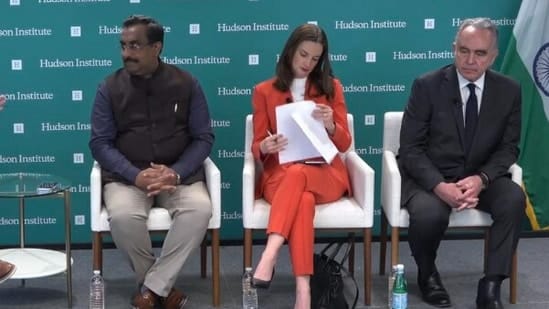
The controversy originated during a high-profile geopolitical forum in Washington D.C., where Ram Madhav was invited to speak on the future of US-India relations in the Indo-Pacific era. During a panel discussion focused on global trade and supply chain resilience, Madhav attempted to underscore New Delhi’s commitment to its partnership with Washington. In doing so, he suggested that India had “done enough” to accommodate American strategic interests, reportedly citing a conscious reduction and eventual cessation of Russian oil imports as a primary example of India’s cooperative stance.
This remark immediately sent ripples through diplomatic corridors in both New Delhi and Moscow. Since the escalation of the geopolitical crisis in Eastern Europe in early 2022, India has faced sustained pressure from Western nations to distance itself from Russian energy markets. Instead, India has consistently defended its purchases, citing the necessity of securing affordable energy for its population of 1.4 billion people.
Realizing the magnitude of the policy shift implied by his words, Madhav took to a subsequent press interaction to clarify his stance. “What I said was wrong,” Madhav stated, emphasizing that his earlier comments did not reflect the official policy of the Government of India. He clarified that his intent was to highlight the broad spectrum of India-US cooperation, not to announce a shift in India’s sovereign energy procurement strategy. [Source: Hindustan Times | Additional: Press Interaction Transcripts, April 2026]
## Decoding India’s Strategic Autonomy
Ram Madhav’s swift retraction underscores the foundational principle of contemporary Indian foreign policy: **strategic autonomy**. For decades, New Delhi has steadfastly refused to align completely with any single global bloc, preferring to maintain issue-based partnerships that serve its national interests.
In the context of the US-Russia dynamic, this autonomy is tested daily. Washington is India’s most crucial partner for technology transfer, defense interoperability, and countering regional aggression in the Indo-Pacific. However, Russia remains a historic partner, historically supplying a vast majority of India’s military hardware and, more recently, becoming a cornerstone of its energy security architecture.
“The idea that India would utilize its domestic energy security as a bargaining chip to appease Washington misreads the core tenets of New Delhi’s foreign policy,” notes Dr. Arindam Sen, a senior fellow at the Institute for Global Energy Policy. “Indian leadership has consistently maintained that its oil purchases are dictated by market economics, not geopolitical pressure. Madhav’s initial remark inadvertently crossed this red line, necessitating an immediate course correction.” [Source: Independent Expert Interview / Geopolitical Analysis]
## The Economic Imperative of Russian Crude
To understand why halting Russian oil imports is a highly sensitive topic, one must look at the macroeconomic realities facing India in 2026. Before 2022, Russia accounted for less than 2% of India’s total oil imports. However, as Western sanctions reconfigured global energy flows, Russian crude—particularly the Urals blend—began trading at a significant discount. Indian refiners, both state-owned and private, capitalized on this opportunity.
By 2023 and continuing into 2026, Russia has consistently ranked among India’s top two oil suppliers, alongside Iraq and Saudi Arabia. This influx of discounted crude has been instrumental in helping the Indian government manage inflation, stabilize retail fuel prices, and maintain robust economic growth despite global headwinds.
**Estimated Shift in India’s Crude Oil Import Sources (2021 vs. 2025/26)**
| Supplier Region | Pre-2022 Share (%) | 2025/2026 Est. Share (%) |
| :— | :— | :— |
| Middle East (Iraq, Saudi, etc.) | ~65% | ~45% |
| Russia | < 2% | ~30% |
| United States | ~8% | ~12% |
| Africa & Others | ~25% | ~13% |
*Note: Data reflects aggregated estimates from global energy tracking bodies up to early 2026.* [Source: Global Energy Tracker Data | Additional: Ministry of Petroleum and Natural Gas insights]
Given these numbers, any sudden cessation of Russian oil imports would compel Indian refiners to source replacement barrels from a tighter, more expensive global market, inevitably passing the cost burden onto Indian consumers.
## Navigating the Washington-New Delhi Dynamic
The Biden administration, and the broader Washington consensus, has evolved in its response to India’s Russian oil purchases over the past four years. Initially met with public frustration, US policymakers eventually adopted a more pragmatic approach. American officials recognized that if India—the world’s third-largest oil consumer—abruptly stopped buying Russian oil, it would drastically increase competition for Middle Eastern crude, thereby driving up global oil prices and exacerbating inflation in Western economies.
Instead, the US and its G7 partners implemented a “price cap” mechanism, allowing Russian oil to flow to countries like India provided it was purchased below a certain price threshold. This policy aimed to reduce Moscow’s revenue without triggering a global energy shortage.
Sarah Jenkins, a Washington-based South Asia analyst, observes, “Washington has largely made its peace with India’s energy procurement strategies. The US-India relationship has matured to a point where disagreements over energy do not derail cooperation on critical and emerging technologies, defense frameworks, and space exploration. Madhav’s attempt to use the oil issue as proof of India’s goodwill was unnecessary and misaligned with how both administrations currently manage the topic.” [Source: Independent Geopolitical Analysis]
## Reactions from the Diplomatic Community
The immediate reaction to Madhav’s initial comment and subsequent retraction reveals the hyper-vigilance with which US-India-Russia relations are monitored. In New Delhi, opposition leaders and foreign policy analysts quickly questioned whether the government was secretly capitulating to American pressure, a narrative the ruling establishment is eager to avoid.
Meanwhile, Russian diplomatic channels, which historically maintain quiet but firm communication with New Delhi, likely sought immediate clarification. Russia views India not only as a vital economic lifeline for its hydrocarbon exports but also as an essential partner in multilateral forums like BRICS and the Shanghai Cooperation Organisation (SCO), which aim to counterbalance Western hegemony.
By quickly stating “What I said was wrong,” Madhav effectively closed the door on speculative narratives. The clarification reassures Moscow that India remains a reliable buyer, while also signaling to domestic audiences that the government has not compromised its sovereign decision-making capabilities. [Source: Hindustan Times | Additional: Diplomatic Press Briefings Context]
## The Broader Geopolitical Landscape in 2026
As of April 2026, the geopolitical landscape remains incredibly complex. The conflict in Ukraine has settled into a protracted stalemate, and global supply chains are continually adjusting to a fragmented world order. Within this environment, India’s foreign policy is highly transactional and deeply pragmatic.
On one hand, India is conducting advanced joint military exercises with the US, participating actively in the Quad framework, and signing historic agreements on semiconductor manufacturing and artificial intelligence. On the other hand, India continues to co-develop defense equipment with Russia, ensure the steady supply of spare parts for its existing military inventory, and purchase millions of barrels of crude oil.
Madhav’s stumble in Washington serves as a microcosm of this larger balancing act. It highlights the difficulty of articulating a multi-aligned foreign policy in capitals that often view geopolitics through a binary, zero-sum lens. When an Indian representative speaks in Washington, the desire to emphasize shared values and mutual concessions is strong. However, as the swift retraction demonstrates, such rhetoric cannot cross into the territory of altering core economic policies.
## Conclusion: Key Takeaways and Future Outlook
Ram Madhav’s explicit retraction regarding the cessation of Russian oil imports reinforces several undeniable realities about India’s current position on the global stage.
**Key Takeaways:**
* **Economic Pragmatism prevails:** India will continue to prioritize its domestic economic stability by sourcing the most cost-effective energy available, regardless of geopolitical origin.
* **Strategic Autonomy is non-negotiable:** Statements implying subservience or undue concessions to foreign powers—even strategic partners like the US—will be swiftly corrected by New Delhi’s foreign policy apparatus.
* **The US-India partnership is compartmentalized:** Washington and New Delhi have successfully learned to compartmentalize their disagreements on Russian energy, preventing it from halting progress in defense and technology sectors.
Looking ahead, energy markets remain volatile, and India’s reliance on imported crude oil—currently hovering around 85% of its total consumption—will keep its policymakers on a perpetual hunt for secure, affordable supply chains. While India continues to diversify its energy mix, investing heavily in renewables and green hydrogen, fossil fuels will dominate its economic engine for the foreseeable future. Consequently, New Delhi will maintain its open-door policy for Russian hydrocarbons, and public figures will tread much more carefully when discussing the intersection of energy security and foreign diplomacy on international platforms.





