
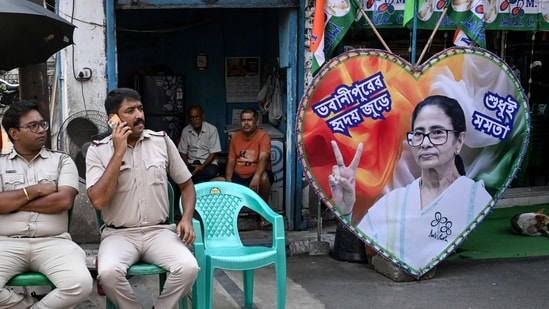
BJP alleges TMC’s ‘gunda vahini’ impersonated its workers to create disorder: ‘Will face consequences’
# BJP Accuses TMC of Impersonating Bengal Cadre
**By Staff Correspondent, National Political Desk | May 6, 2026**
On Wednesday, May 6, 2026, the Bharatiya Janata Party (BJP) launched a severe political attack against West Bengal’s ruling Trinamool Congress (TMC), alleging that the latter’s *’gunda vahini’* (musclemen) orchestrated widespread disorder by impersonating BJP workers. Emerging from the highly charged pre-election landscape of Kolkata, the BJP claims this coordinated “false flag” operation was executed to mislead the public, defame the opposition party, and provoke unwarranted administrative crackdowns on legitimate political workers. Warning of severe political and legal repercussions, BJP central leadership declared that the perpetrators behind this democratic subversion “will face consequences.” [Source: Hindustan Times | Additional: General Electoral Analysis].
## The Anatomy of the Alleged Impersonation
The accusations leveled by the BJP highlight a complex and dangerous evolution in grassroots political warfare. According to the party’s state representatives, individuals affiliated with the TMC intentionally donned BJP party colors, carried counterfeit flags, and chanted opposition slogans while engaging in public disturbances and vandalism. The primary objective, the BJP alleges, was to create a deceptive visual narrative for local media and bystanders, framing the BJP as a party of lawlessness and chaos.
The term *’gunda vahini’* translates directly to a “squad of thugs” or musclemen, a phrase frequently invoked in the notoriously volatile theater of West Bengal politics to describe unofficial, localized enforcers used by political factions. BJP officials claim that these impersonators deliberately targeted sensitive constituencies where the BJP has been steadily gaining electoral ground. By inciting violence under the guise of the opposition, the ruling party allegedly sought to justify heavy-handed police interventions, thereby resulting in the arrest and intimidation of genuine opposition cadre.
“This is a desperate tactic by a government that recognizes the shifting ground beneath its feet,” noted a senior political strategist monitoring the state. “By manufacturing disorder and assigning the blame to the opposition, a ruling party can simultaneously demoralize its rivals and present itself to the electorate as the sole guarantor of peace.”
## Escalating Tensions Ahead of the 2026 Assembly Polls
To understand the gravity of these allegations, they must be viewed through the lens of the upcoming 2026 West Bengal Legislative Assembly elections. The state has long been a fiercely contested battleground. In the previous 2021 assembly elections, Chief Minister Mamata Banerjee’s TMC secured a resounding victory, halting the BJP’s aggressive expansion in the eastern state. However, the BJP successfully positioned itself as the principal opposition, fundamentally altering the state’s bipolar political dynamic.
As 2026 approaches, the stakes have reached a fever pitch. The TMC is battling anti-incumbency sentiments, localized corruption allegations, and the natural fatigue that accompanies prolonged governance. Conversely, the BJP is attempting to consolidate its organizational machinery at the booth level, a historically weak point for the party in rural Bengal.
The political climate has subsequently transformed into a pressure cooker. Skirmishes over territory, wall-writing rights, and party office locations are everyday occurrences. The BJP’s latest allegation suggests an escalation from standard political rivalry to sophisticated psychological operations designed to manipulate voter perception. If true, the impersonation of political workers represents a severe degradation of democratic norms in the region. [Source: Historical Electoral Trends, West Bengal].
## The Ruling Trinamool Congress Responds
The Trinamool Congress has vehemently denied the allegations, characterizing the BJP’s claims as a baseless fabrication designed to mask the opposition party’s internal structural failures. TMC spokespersons have consistently maintained that the localized disturbances are the result of factional infighting within the BJP’s own ranks, a narrative they have pushed in response to various incidents of political unrest over the past three years.
TMC leadership contends that the BJP, struggling to present a unified local leadership in several districts, is preemptively creating a “victimization narrative” to excuse anticipated electoral setbacks. “The opposition party is entirely fragmented. When their own indisciplined workers clash over local supremacy, they conveniently attempt to shift the blame to the TMC,” a state-level TMC representative stated during a recent press briefing.
This strategy of narrative warfare is typical in West Bengal’s political ecosystem. Whenever violence occurs, a predictable cycle of blame follows, making it exceedingly difficult for the general public and independent observers to discern the truth. The lack of objective, verifiable ground reporting in remote constituencies further obscures the reality, allowing both parties to entrench themselves in their respective narratives.
## Expert Perspectives on “False Flag” Electoral Tactics
The weaponization of identity in local politics presents a unique challenge to democratic integrity. Dr. Arindam Sen, an independent political sociologist specializing in South Asian electoral dynamics, notes that the tactic of impersonating political rivals is an evolutionary step in political violence.
“Historically, political violence in the region was about brute force—capturing polling booths or physically intimidating voters,” Dr. Sen explains. “Today, with the proliferation of smartphones and social media, optics matter as much as physical control. A ‘false flag’ operation, where party workers masquerade as the opposition to incite chaos, is designed primarily for digital consumption. A viral video of supposed opposition workers destroying public property does more damage to a campaign than traditional grassroots campaigning can repair.”
This modern “fog of war” places a massive burden on the electorate. Voters are bombarded with conflicting information, doctored videos, and partisan interpretations of ground-level events. The ultimate casualty is public trust in the electoral process itself. When citizens cannot trust the political affiliations of the individuals causing unrest in their neighborhoods, political apathy and cynicism inevitably take root.
## Demands for Election Commission Intervention
In light of the escalating allegations, the BJP has signaled its intent to aggressively petition the Election Commission of India (ECI). The opposition party is demanding sweeping institutional interventions to guarantee a free and fair electoral process in 2026. Central to their demands is the early and extensive deployment of Central Armed Police Forces (CAPF) to bypass what they view as a compromised state police apparatus.
The BJP has also outlined specific administrative requests aimed at curtailing false flag operations and impersonations:
**Proposed Election Security Enhancements by the Opposition:**
| Proposed Measure | Objective | Implementation Challenge |
| :— | :— | :— |
| **Mandatory Biometric Verification** | Ensure only legitimate, registered agents are present at polling stations. | High logistical cost and requirement for advanced technological infrastructure. |
| **Pervasive CCTV Surveillance** | Continuous monitoring of sensitive wards to accurately identify perpetrators of violence. | Data privacy concerns and vulnerability of cameras to vandalism. |
| **Early CAPF Deployment** | Establish area domination by neutral central forces weeks prior to polling days. | State-Center jurisdictional friction; allegations of federal overreach by the ruling state government. |
| **Fast-Track Tribunals** | Immediate adjudication of political violence and impersonation complaints. | Existing judicial backlogs and the complex nature of gathering verifiable evidence. |
The Election Commission faces a monumental task. Balancing the autonomy of the state’s law enforcement agencies with the constitutional mandate to ensure peaceful elections requires diplomatic finesse and administrative rigor. Previous elections have seen the ECI implement staggered, multi-phase voting to allow for the concentrated movement of central forces, a strategy likely to be expanded in 2026. [Source: Election Commission of India Procedural Guidelines].
## Ramifications for the Common Electorate
While political parties engage in high-stakes rhetorical battles, the common citizens of West Bengal bear the brunt of the instability. The normalization of terms like *’gunda vahini’* and the casual expectation of political violence cast a dark shadow over the state’s democratic traditions.
For the average voter, allegations of impersonation create a chilling effect. The fear of being caught in the crossfire of manufactured political violence often leads to decreased civic engagement and suppressed voter turnout in highly contested zones. Furthermore, it distracts from the core issues of governance. When the political discourse is dominated by accusations of thuggery and false flag operations, debates regarding infrastructure, economic development, healthcare, and education are sidelined.
The psychological toll on local political workers is equally severe. Genuine grassroots volunteers find themselves operating in an environment characterized by paranoia and distrust, fearing that they may be falsely implicated in violence orchestrated by disguised rivals.
## Conclusion and Future Outlook
The BJP’s allegations that the TMC is utilizing a *’gunda vahini’* to impersonate opposition workers represent a severe escalation in the battle for West Bengal. As the clock winds down to the critical 2026 Assembly elections, these claims highlight a political environment fraught with mutual suspicion and strategic hostility.
Whether these allegations are entirely factual, partially accurate, or a strategic political deflection, their very existence underscores a desperate need for robust electoral oversight. The Election Commission of India, alongside independent civil society organizations, will be heavily relied upon to pierce through the political fog and maintain peace.
Ultimately, the true test lies with the electorate of West Bengal. Voters will be required to navigate an unprecedented maze of political messaging, digital misinformation, and ground-level theatrics to make their voices heard. As both the ruling Trinamool Congress and the Bharatiya Janata Party prepare for what promises to be one of the most fiercely contested elections in recent Indian history, the demand for transparency, accountability, and the absolute safeguarding of democratic integrity has never been more urgent.





