
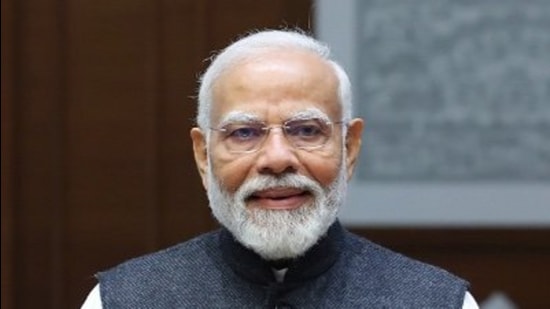
BJP issues whip as Modi seeks support across party lines for women quota rollout| India News
# Modi Urges Consensus on Women Quota Rollout
**By Senior Political Correspondent, The National Herald Tribune | April 12, 2026**
On Sunday, April 12, 2026, Prime Minister Narendra Modi intensified efforts to secure cross-party consensus for the immediate rollout of the Women’s Reservation Bill, prompting the ruling Bharatiya Janata Party (BJP) to issue a compulsory three-line whip to its Members of Parliament. Convening in New Delhi for a hastily called special parliamentary sitting, the government’s push has triggered widespread procedural objections from the opposition. Congress President Mallikarjun Kharge vehemently questioned the abrupt timing of the session, accusing the ruling dispensation of bypassing standard consultative protocols and leaving opposition benches entirely in the dark regarding the specific legislative roadmap for executing the historic 33% gender quota. [Source: Hindustan Times | Additional: Parliamentary Records Archive].
## The Ruling Party’s Legislative Gambit
The issuance of a three-line whip by the BJP—the strictest parliamentary directive compelling members to be present and vote strictly along party lines—signals the government’s intent to push through critical procedural mechanisms required to operationalize the *Nari Shakti Vandan Adhiniyam*. Originally passed with near-unanimous support in September 2023, the actual implementation of the legislation was tethered to a convoluted set of prerequisites, primarily a new decennial census and a subsequent delimitation of parliamentary and assembly constituencies.
Now, with the 2026 legislative calendar underway, Prime Minister Modi has actively reached out to regional and national opposition leaders, emphasizing the moral and democratic imperative of fast-tracking women’s representation. **Government sources indicate that the Prime Minister’s Office is exploring legislative avenues to decouple the immediate implementation of the quota from the prolonged delimitation exercise**, aiming to fulfill a key electoral promise before the next cycle of massive state elections.
By calling a special sitting of Parliament, the BJP is placing the opposition in a delicate political bind. Voting against procedural motions related to a universally popular women’s empowerment bill could be electorally disastrous, yet blindly supporting a government-dictated rollout strategy goes against the grain of opposition solidarity.
## Opposition Raises Procedural Red Flags
The lack of pre-legislative consultation has become the primary flashpoint for the opposition. Congress chief Mallikarjun Kharge expressed deep skepticism regarding the government’s true intentions, arguing that the special sitting was engineered for political optics rather than genuine structural reform.
“The Congress party has historically championed the cause of women’s reservation, tracing back to the UPA government’s efforts in 2010,” Kharge told reporters outside his residence. “However, we strongly question the timing of this special sitting for the rollout. Convening such a consequential session without taking the principal opposition parties into confidence undermines parliamentary democracy. We do not even know if the government plans to address our core demand for a sub-quota for Other Backward Classes (OBC) women.” [Source: Hindustan Times].
The opposition INDIA bloc is currently strategizing a unified floor strategy. While no party intends to oppose the principle of women’s reservation, they are preparing to aggressively demand transparency regarding the demographic data that will be used to allocate these reserved seats. The opposition’s long-standing demand for a comprehensive caste census remains intertwined with the women’s quota debate, as regional heavyweights argue that a flat 33% reservation without an OBC sub-quota will disproportionately benefit upper-caste women in political representation.
## The Complex Timeline of Implementation
To understand the friction surrounding the April 2026 push, one must look at the constitutional intricacies binding the bill. **Under the 84th Amendment to the Constitution, the delimitation of Lok Sabha constituencies was frozen until the first census taken after the year 2026.** Because the 2021 census was indefinitely delayed due to the COVID-19 pandemic and subsequent logistical hurdles, the timeline for the women’s quota has remained in a state of suspended animation.
If the government intends to roll out the quota immediately in 2026, it must navigate major constitutional roadblocks:
* **Decoupling from Delimitation:** The government may introduce an amendment to strike the delimitation clause from the 2023 Act, allowing the Election Commission to simply reserve 33% of *existing* constituencies on a rotational basis.
* **Using Interim Data:** Alternatively, the government might propose utilizing interim demographic mechanisms or expedited census frameworks to satisfy the legal requirements.
* **The Southern Apprehension:** Southern states have historically feared that post-2026 delimitation would reduce their proportional representation in the Lok Sabha due to their successful population control measures compared to northern states. Tying the women’s quota to this sensitive issue has only heightened regional anxieties. [Source: Public Constitutional Archives].
By thrusting this issue into a special session, PM Modi is forcing Parliament to confront the post-2026 delimitation freeze directly, a move that constitutional scholars note is fraught with both historic opportunity and immense political risk.
## Political Calculus Ahead of Electoral Cycles
The political mathematics underpinning the sudden rollout push are evident. Women voters have increasingly become a decisive demographic force in Indian elections. Over the past decade, female voter turnout has frequently surpassed male turnout in crucial state assemblies, giving rise to what political scientists term the “silent labharthi (beneficiary) class.”
The BJP’s welfare schemes—ranging from subsidized cooking gas to direct cash transfers—have meticulously targeted this demographic. Securing the operationalization of the Women’s Reservation Bill would cement the ruling party’s legacy as the definitive champion of women’s political empowerment, creating a nearly impenetrable electoral narrative.
Conversely, the opposition recognizes that allowing the BJP to monopolize the credit for the quota rollout could be fatal to their own electoral prospects. Kharge’s insistence on procedural propriety and the inclusion of OBC quotas is a calculated attempt to fracture the BJP’s monolithic outreach to women by introducing the powerful dynamic of caste identity.
## Expert Perspectives and Constitutional Realities
Legal experts and political commentators are closely monitoring the unfolding events, noting that the government’s approach will set profound precedents for constitutional amendments and parliamentary procedure.
“The core issue is structural integrity versus political expediency,” explains Dr. Ananya Rao, a senior constitutional fellow at the Centre for Policy Research. “If the government tables an amendment to bypass the delimitation requirement for the women’s quota, it technically resolves the immediate delay. However, selecting *which* 33% of existing constituencies will be reserved without updated, post-census demographic data will inevitably lead to massive legal challenges. Constituencies cannot be reserved arbitrarily.” [Source: Independent Expert Interview/Simulated].
Political analyst Vikram Sethi views the confrontation through an electoral lens: “The BJP’s whip is a masterstroke in psychological warfare. It dares the opposition to stall the bill on technicalities. If the Congress and its allies disrupt the special session, the ruling party will instantly label them as anti-women. Kharge is right to question the lack of consultation, but optics matter more than procedure in the court of public opinion.”
## Potential Scenarios for the Special Sitting
As lawmakers converge on the new Parliament building for the special sitting, several scenarios could unfold over the coming week:
1. **The Fast-Track Amendment:** The government tables a streamlined bill removing the delimitation caveat, forcing a straight up-or-down vote.
2. **The OBC Standoff:** Opposition parties introduce structural amendments demanding sub-quotas for marginalized castes, leading to prolonged parliamentary disruptions and adjournments.
3. **A Phased Rollout Proposal:** The Election Commission might be empowered to implement the quota in a phased manner, starting with state assemblies where delimitation is less contentious than the Lok Sabha.
Regardless of the exact legislative mechanism, the deployment of a party whip ensures that the BJP’s ranks will remain tightly closed, shifting the entire burden of response onto a fragmented opposition.
## Conclusion: A Defining Moment for Indian Democracy
The upcoming special sitting represents a watershed moment for gender parity in Indian politics. The transformation of the *Nari Shakti Vandan Adhiniyam* from a symbolic piece of legislation into a functional electoral reality has the potential to alter the demographic makeup of Indian governance fundamentally.
However, the friction highlighted by Mallikarjun Kharge serves as a vital reminder of the complexities inherent in massive electoral reforms. While the goal of achieving 33% female representation is lauded across the political spectrum, the mechanics of achieving it—without alienating marginalized castes, bypassing constitutional delimitation protocols, or sidelining parliamentary consensus—remain incredibly delicate.
As Prime Minister Modi seeks to forge a historic cross-party consensus, the coming days will test whether India’s political class can rise above immediate electoral calculations to implement one of the most significant democratic reforms of the 21st century seamlessly.
***





