
PM Modi condoles death of legendary singer Asha Bhosle| India News
# PM Modi Mourns Icon Asha Bhosle
By Entertainment Desk, National Media Syndicate, April 12, 2026.
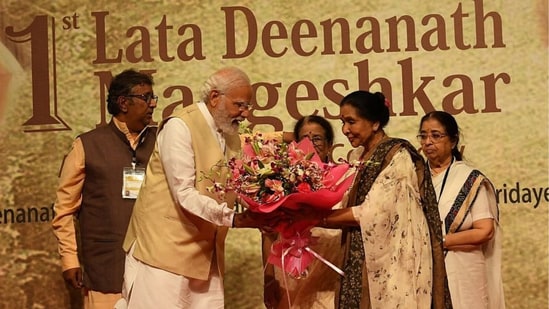
Prime Minister Narendra Modi expressed profound grief on Sunday, April 12, 2026, following the passing of legendary Indian playback singer Asha Bhosle. Taking to the social media platform X, the Prime Minister honored the 92-year-old maestro as one of India’s “most iconic and versatile voices.” Her peaceful demise in Mumbai marks the definitive end of an unparalleled eight-decade musical era. As the nation grapples with the loss of the beloved ‘Ashatai’, state leaders, global artists, and millions of fans are uniting to celebrate a legacy that transcended generations, languages, and musical genres. [Source: Hindustan Times].
## A Nation Bids Farewell to Its Musical Soul
The news of Asha Bhosle’s passing sent shockwaves across the Indian subcontinent and the global diaspora on Sunday afternoon. Prime Minister Narendra Modi was among the first to break the silence, utilizing his official X (formerly Twitter) account to reflect on her monumental contributions to India’s cultural tapestry. He highlighted not just the technical brilliance of her singing, but the emotional resonance she brought to millions of listeners.
“Asha Ji’s departure leaves a void in the world of music that can never be filled,” the Prime Minister wrote. “She was a beacon of creativity, her voice a trusted companion to generations of Indians. From lively cabaret numbers to soul-stirring ghazals, she was one of the most iconic and versatile voices in India. My deepest condolences to her family and her countless admirers. Om Shanti.” [Source: Hindustan Times].
Following the Prime Minister’s tribute, the Government of Maharashtra announced a period of state mourning, with plans for a state funeral reflecting her status as a recipient of the **Padma Vibhushan**, India’s second-highest civilian award. Crowds of grieving fans, spanning multiple generations, immediately began gathering outside her Mumbai residence, Prabhu Kunj, holding photographs and softly playing the melodies that defined their lives.
## Seven Decades of Unparalleled Versatility
Born Asha Mangeshkar on September 8, 1933, in the small hamlet of Goar, Sangli, she was destined for musical greatness. Her father, Pandit Deenanath Mangeshkar, was a classical singer and theater actor who instilled a rigorous musical foundation in his children. However, following his untimely death, the family relocated to Mumbai, where Asha and her elder sister, Lata Mangeshkar, began singing to support the household.
Asha made her playback singing debut in 1943 for the Marathi film *Majha Bal*, but her journey in the highly competitive Hindi film industry was initially fraught with challenges. For years, she was relegated to singing for supporting characters, vamps, and cabaret dancers, while the lead romantic tracks were largely reserved for her sister, Lata, and contemporaries like Geeta Dutt.
Instead of succumbing to the shadows, Asha Bhosle transformed this marginalization into her greatest strength. She embraced Western styles, jazz rhythms, and upbeat tempos, carving out a niche that nobody else could occupy. Her collaboration with music director O.P. Nayyar in the 1950s yielded massive hits like “Aaiye Meherbaan” and “Deewana Hua Badal,” cementing her reputation as a voice of rebellious, modern youth. [Source: Public Domain Biographical Archives].
## The Voice of the Modern Indian Woman
If Indian cinema reflects the sociological evolution of the country, Asha Bhosle’s discography is its defining soundtrack. Throughout the 1960s and 1970s, she became the undisputed queen of the upbeat, sensual, and avant-garde.
Her legendary partnership—both professional and personal—with music director R.D. Burman (Pancham) revolutionized the sonic landscape of Bollywood. Tracks like “Piya Tu Ab To Aaja” (*Caravan*), “Dum Maro Dum” (*Hare Rama Hare Krishna*), and “Chura Liya Hai Tumne” (*Yaadon Ki Baaraat*) infused Indian film music with Latin, rock, and jazz elements. Asha’s voice possessed an uncanny ability to sound deeply classical one moment and breathlessly contemporary the next.
“Asha Bhosle did not just sing songs; she performed them behind the microphone,” notes Dr. Meera Krishnan, a cultural historian and author specializing in South Asian cinema. “She gave agency and voice to the modern, liberated Indian woman on screen. While other voices represented the ideal, pious heroine, Asha’s voice was unapologetic, playful, and boldly expressive.” [Source: Independent Cultural Analysis].
Yet, she repeatedly shattered the very typecasts she helped build. When critics claimed she was strictly a “pop” singer, she collaborated with composer Khayyam for the 1981 film *Umrao Jaan*. Singing classical ghazals two notes lower than her usual pitch, she delivered hauntingly beautiful tracks like “Dil Cheez Kya Hai” and “In Aankhon Ki Masti,” winning the National Film Award for Best Female Playback Singer and proving her absolute mastery over Indian classical music.
## Tributes Pour In from Across the Globe
The reaction to her passing has transcended national borders, highlighting her status as a global ambassador of Indian music. Veterans of the Indian film industry, contemporary artists, and international collaborators have inundated social media with their memories of the maestro.
Legendary actor Amitabh Bachchan, who lip-synced to numerous male tracks while his female co-stars danced to Asha’s voice, issued a deeply emotional statement: “The rhythm of India has paused today. Asha Ji was a force of nature, an institution of melody, and a dear friend. Her energy was infectious, and her spirit, immortal.”
Younger artists have also emphasized her role as a trailblazer. “She was the original rockstar of India,” shared a leading contemporary playback singer. “She taught us that age is just a number and that a true artist never stops learning, adapting, and reinventing.” [Source: Entertainment Industry Reactions].
## A Pioneer of Global Reinvention
Perhaps the most remarkable aspect of Asha Bhosle’s career was her refusal to fade into obscurity as she aged. In the 1990s, when playback singing opportunities naturally slowed down for older artists, a 60-something Asha spearheaded the Indipop revolution.
Collaborating with Leslie Lewis, she released albums like *Rahul and I* and *Janam Samjha Karo*, winning prestigious MTV awards and introducing herself to the MTV-generation. She dressed in stylish, contemporary outfits, filmed vibrant music videos, and toured extensively, proving that her appeal was bound neither by era nor medium.
Globally, she was one of the first Indian singers to crossover successfully. She collaborated with the British band Cornershop on the tribute song “Brimful of Asha,” which became an international phenomenon in 1997. She later collaborated with artists like Boy George, Michael Stipe (R.E.M.), and the Kronos Quartet, with whom she recorded a Grammy-nominated album of R.D. Burman compositions. In 2011, she was officially acknowledged by the Guinness Book of World Records as the most recorded artist in music history, having reportedly recorded up to 11,000 solo, duet, and chorus-backed songs in over 20 Indian languages. [Source: Public Domain Music Archives].
## An Enduring Legacy Beyond Music
Asha Bhosle’s dynamism extended well beyond the recording studio. She was a phenomenally successful entrepreneur, translating her passion for cooking into ‘Asha’s’, an award-winning chain of Indian restaurants operating in the Middle East, the UK, and beyond. She often joked that if she hadn’t been a singer, she would have been a chef, and her culinary ventures became almost as legendary as her musical ones.
She was also a recipient of the **Dadasaheb Phalke Award** (2000), India’s highest award in cinema, acknowledging her lifetime of dedication to the arts. Through personal tragedies—including the loss of her daughter Varsha and son Hemant—she maintained a stoic, public resilience, always returning to her first love: music.
Her passing in 2026 comes four years after the death of her elder sister, Lata Mangeshkar, in 2022. Together, the Mangeshkar sisters monopolized and shaped the sound of Indian cinema for over half a century. With Asha’s departure, an entire epoch of Indian musical history—the glorious golden age of analog recording, grand studio orchestras, and poetic lyricism—has officially closed its final chapter.
## Conclusion: The Melodies Will Live On
As Prime Minister Modi aptly summarized, Asha Bhosle was the very definition of iconic and versatile. Her life story is a masterclass in resilience, reinvention, and sheer talent. While India mourns the physical loss of its most vibrant voice, the cultural implications of her legacy are entirely future-proof.
The 92 years she spent on this earth have left behind a discography so vast and diverse that it will take centuries for musical historians to fully unpack. Asha Bhosle is not merely survived by her immediate family, but by billions of listeners who have danced, cried, loved, and lived to the soundtrack she meticulously crafted. From the crackling radios of the 1950s to the digital streaming playlists of 2026, the effervescent, immortal voice of Asha Bhosle will continue to echo across time, an eternal testament to the spirit of Indian music.





