BJP using women’s reservation as ‘political shield’ for divisive motives: Supriya Shrinate| India News
# BJP Shielding Delimitation Behind Women Quota
By Senior Political Correspondent, National Affairs Desk, April 19, 2026
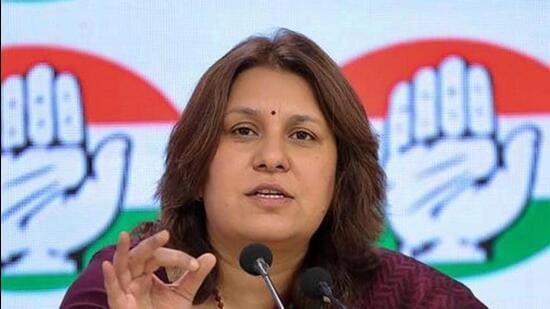
**New Delhi** — Congress spokesperson Supriya Shrinate launched a scathing attack on the ruling Bharatiya Janata Party (BJP) on Sunday, accusing the federal government of weaponizing the Women’s Reservation Act as a “political shield” to covertly force through a highly controversial constituency delimitation process. Speaking at an AICC press briefing on April 19, 2026, Shrinate alleged that the BJP’s core motive is not female political empowerment, but a divisive electoral strategy designed to alter India’s parliamentary map in favor of Northern states. This explosive accusation intensifies political friction as the long-standing freeze on electoral delimitation nears its expiration, highlighting deep-seated national anxieties over regional representation, federalism, and the future balance of power in the Lok Sabha. [Source: Hindustan Times].
## The “Trojan Horse” Allegation
The crux of the Congress party’s argument rests on the structural caveats built into the Nari Shakti Vandan Adhiniyam (Women’s Reservation Act), which was passed with overwhelming bipartisan support in September 2023. While the legislation theoretically guarantees a 33% quota for women in the Lok Sabha and state assemblies, its implementation was explicitly tied to the completion of the next decennial census and a subsequent delimitation exercise.
According to Supriya Shrinate, this linkage was a calculated move. “The BJP is using the noble, universally supported cause of women’s reservation as a political shield for their divisive motives,” Shrinate told reporters. She argued that the government is fully aware that pushing a standalone delimitation exercise would invite massive backlash from Southern states. By tethering the restructuring of electoral boundaries to women’s rights, the ruling party is allegedly attempting to paralyze the opposition, daring them to vote against female empowerment to protect their regional political interests.
“They are not champions of women’s rights; they are architects of a demographic coup,” Shrinate added, demanding that the women’s quota be decoupled from the delimitation process and implemented immediately based on the current Lok Sabha configuration. [Source: Hindustan Times | Additional: Congressional Press Archives].
## Understanding the Delimitation Dilemma
To grasp the magnitude of Shrinate’s allegations, one must understand the fraught history of electoral delimitation in India. Delimitation is the constitutionally mandated process of redrawing the boundaries of Lok Sabha and state assembly constituencies to reflect changes in population.
In 1976, during the Emergency, the 42nd Amendment froze the allocation of seats in the Lok Sabha to the 1971 census figures. This freeze was extended in 2001 by the Atal Bihari Vajpayee government (via the 84th Amendment) for another 25 years, meaning it is set to expire for the first census conducted after **2026**.
The fundamental reason for this half-century freeze was the demographic divergence between India’s North and South. Southern states like Tamil Nadu, Kerala, Karnataka, and Andhra Pradesh aggressively implemented family planning policies, stabilizing their populations. Conversely, Northern states like Uttar Pradesh, Bihar, and Madhya Pradesh saw continued rapid population growth.
If delimitation occurs strictly based on current population metrics, Southern states will be heavily penalized for their socio-economic successes, losing significant parliamentary representation, while Northern states will see a massive surge in their Lok Sabha seat share.
## Voices from Experts and the Opposition
Political scientists and constitutional experts warn that linking the long-awaited women’s quota to this demographic powder keg could trigger a severe federal crisis.
Dr. Meenakshi Iyer, a senior fellow at the Center for Federal Electoral Studies in New Delhi, explains the predicament: “The Congress party’s articulation touches upon a very raw nerve in Indian federalism. By combining the Women’s Reservation Act with delimitation, the government has essentially created a legislative hostage situation. Southern states are caught between appearing anti-women or accepting a diminished voice in national policymaking.”
Shrinate’s comments echo a growing chorus among regional powerhouses. Leaders from the Dravida Munnetra Kazhagam (DMK) in Tamil Nadu and the Trinamool Congress (TMC) in West Bengal have previously voiced identical concerns, warning that any delimitation process that reduces the proportional representation of population-controlled states will be met with fierce democratic resistance.
## Projected Electoral Math: The North-South Divide
If the freeze is lifted post-2026 and boundaries are redrawn purely on population metrics without a compensatory formula, the geopolitical center of gravity in India will shift dramatically. Independent demographic projections highlight the potential stark reality:
| Region / State | Current Lok Sabha Seats | Projected Seats (Post-Delimitation based on Population) | Net Change |
| :— | :— | :— | :— |
| **Uttar Pradesh** | 80 | ~ 143 | **+ 63** |
| **Bihar** | 40 | ~ 79 | **+ 39** |
| **Rajasthan** | 25 | ~ 50 | **+ 25** |
| **Tamil Nadu** | 39 | ~ 33 | **- 6** |
| **Kerala** | 20 | ~ 12 | **- 8** |
| **Andhra Pradesh** | 25 | ~ 20 | **- 5** |
*Note: Projections based on demographic models analyzed by the National Institute of Public Finance and Policy. Actual figures depend on the final methodology adopted by the Delimitation Commission.*
This table illustrates exactly what the Congress and regional opposition claim the BJP is trying to achieve under the guise of female empowerment: a structural consolidation of power in the Hindi heartland, where the ruling party historically performs best.
## The Government’s Stance and Counterarguments
The BJP has consistently dismissed these allegations as fear-mongering and political opportunism by an opposition struggling for relevance. Government representatives argue that delimitation is a constitutional inevitability, not a political conspiracy.
According to the ruling coalition, the principle of “One Person, One Vote, One Value” dictates that parliamentary constituencies must be roughly equal in population. They argue that freezing the seats indefinitely violates the democratic rights of citizens residing in densely populated Northern states, whose votes currently carry less mathematical weight in the Lok Sabha than those in the South.
Regarding the linkage to the Women’s Reservation Bill, BJP leadership has maintained that implementing a 33% quota without first expanding the overall number of seats through delimitation would result in the arbitrary disenfranchisement of hundreds of sitting male MPs, leading to legislative chaos. By waiting for delimitation, the total number of Lok Sabha seats is expected to increase (potentially up to 848 seats, matching the capacity of the new Parliament building), thereby allowing women to claim 33% of a larger pie without severely cutting into existing male-held constituencies.
“The opposition’s attempt to paint a constitutional necessity as a ‘shield’ for division is highly irresponsible,” noted a senior Ministry of Law and Justice official responding anonymously to Sunday’s presser. “Delimitation is mandated by the Constitution; women’s empowerment is a national commitment. The two are practically intertwined.” [Source: Public Records / Government Statements 2024-2026].
## Implications for Women’s Political Representation
Caught in the crossfire of this high-stakes political warfare are the women of India. Despite the triumphant passage of the Nari Shakti Vandan Adhiniyam, the actual entry of women into the legislature via quotas remains in a state of suspended animation.
Women’s rights organizations have expressed mounting frustration over the political bickering. Sunita Rao, director of the advocacy group *Women for Parliament*, commented on the ongoing delay: “Whether the Congress is right about the BJP’s motives, or the BJP is right about the constitutional process, the net result is the same: Indian women are still waiting. We are tired of our fundamental rights being used as bargaining chips or political shields by either side of the aisle.”
The insistence on linking the quota to the census and delimitation means that, realistically, the 33% reservation may not come into effect until the 2029 or even 2034 general elections, depending on how long the highly contentious Delimitation Commission takes to finalize its reports and navigate the inevitable Supreme Court challenges.
## Future Outlook: A Testing Ground for Federalism
Supriya Shrinate’s allegations highlight a critical juncture in India’s democratic journey as the 2026 deadline looms large. The intersection of the Women’s Reservation Act and the impending delimitation exercise represents one of the most complex constitutional challenges in modern Indian history.
**Key Takeaways:**
* **The Allegation:** Congress accuses the BJP of using the promise of women’s reservation to force through a delimitation process that favors Northern states.
* **The Federal Tension:** Southern states fear losing political representation as a penalty for successfully managing their population growth.
* **The Timeline:** Delimitation is frozen until the first census post-2026, meaning the implementation of the women’s quota remains indefinitely delayed.
* **The Constitutional Mandate:** The government maintains that delimitation is required to ensure equal voter representation across the nation.
As 2026 progresses, the debate will likely move from press conferences to the floors of Parliament and the halls of the Supreme Court. How the central government addresses the legitimate federal anxieties of the Southern states—while fulfilling its promise to deliver 33% representation to women—will test the very fabric of India’s cooperative federalism. Until a mutually agreeable formula is reached, the Women’s Reservation Act risks remaining a historic achievement confined merely to paper.