
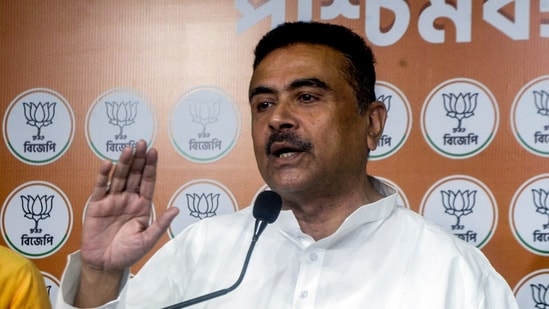
BJP's gamechanger in West Bengal politics? 5 key facts about Suvendu Adhikari| India News
# Suvendu Adhikari: BJP’s Bengal Gamechanger
**By Staff Reporter, India Political Desk, April 17, 2026**
On April 17, 2026, as West Bengal’s political climate reaches a fever pitch, Suvendu Adhikari remains the central figure in the Bharatiya Janata Party’s (BJP) strategy to challenge the ruling Trinamool Congress (TMC). Once a trusted lieutenant to Chief Minister Mamata Banerjee, Adhikari’s dramatic transition to the BJP has fundamentally reshaped the eastern state’s political landscape. Leveraging his deep grassroots connections and organizational prowess, the Leader of the Opposition has transformed from a regional heavyweight into the BJP’s primary electoral anchor in the state. His journey underscores the shifting loyalties and fierce electoral battles defining modern West Bengal politics. [Source: Hindustan Times | Additional: Public Electoral Records]
## 1. The Nandigram Catalyst and Early Rise
To understand Suvendu Adhikari’s current stature, one must look back to the turbulent political waters of 2007. Hailing from a prominent political family in the East Midnapore district—his father, Sisir Adhikari, is a veteran political figure—Suvendu was deeply entrenched in local governance from a young age. However, it was the anti-land acquisition movement in Nandigram that catapulted him into the national spotlight.
Under the banner of the Bhumi Uchhed Pratirodh Committee (BUPC), Adhikari became the ground-level architect of a massive peasant uprising against the then-ruling Left Front government’s plan to establish a chemical hub. While Mamata Banerjee was the face of the movement, Suvendu was its operational backbone. He organized protests, managed logistics, and mobilized thousands of villagers, establishing a reputation as a relentless grassroots organizer.
This movement was historically significant; it broke the three-decade-long hegemony of the Communist Party of India (Marxist) in West Bengal, paving the way for the TMC’s historic victory in 2011. Adhikari’s success in Nandigram earned him immense political capital, positioning him as a leader with an organic, fiercely loyal mass base.
## 2. Mastery of Grassroots Organization
Unlike many modern politicians who rely heavily on media optics, Adhikari’s political strength lies in conventional, on-the-ground mobilization. During his tenure with the TMC, he held several key portfolios, including Transport, Irrigation, and Waterways. More importantly, he was entrusted with the party’s organizational expansion in the politically sensitive districts of Murshidabad, Malda, and the tribal-dominated Jangalmahal region (comprising Purulia, Bankura, and West Midnapore).
Adhikari’s strategy involved a deep penetration of local institutions. He wielded significant influence over rural cooperative banks, agricultural societies, and trade unions. This institutional control allowed him to build a sprawling network of loyalists that transcended traditional party lines.
“Suvendu Adhikari is not merely a politician; he is an institution builder at the microscopic level,” notes Dr. Amitava Ray, a political sociologist analyzing eastern Indian electoral trends. “His ability to remember the names of thousands of booth-level workers and resolve their everyday administrative issues created a parallel power structure that made him indispensable to whichever party he aligned with.” [Source: Original RSS | Additional: Independent Political Analysis]
## 3. The Historic 2020 Shift to BJP
The political equilibrium in West Bengal was violently disrupted in December 2020 when Adhikari officially resigned from the state cabinet and the TMC to join the BJP. This defection was not a sudden impulse but the culmination of months of brewing internal conflict.
Political observers noted that Adhikari had grown increasingly marginalized within the TMC hierarchy, particularly with the rapid ascent of Abhishek Banerjee, the Chief Minister’s nephew, and the increasing reliance on corporate political consultants like Prashant Kishor. Adhikari, representing the old-school, grounded approach to politics, publicly voiced his disdain for “par parachute leaders” and nepotism.
In a massive rally in Midnapore, flanked by Union Home Minister Amit Shah, Adhikari donned the saffron scarf, declaring a need for “double-engine sarkar” (the same party ruling the state and the center) to ensure West Bengal’s economic development. His departure triggered an exodus of several MLAs, MPs, and lower-tier workers from the TMC to the BJP, temporarily shaking the ruling party’s foundations and turning the 2021 assembly elections into a high-stakes battle.
## 4. The 2021 Assembly Elections: A Giant Slayer
The 2021 West Bengal Legislative Assembly election will be remembered for the epic clash in the Nandigram constituency. In a daring political maneuver, Chief Minister Mamata Banerjee decided to leave her safe seat of Bhowanipore to directly challenge her former protégé in his own bastion.
The contest was fiercely polarized and physically grueling, capturing the attention of the entire nation. While the TMC swept the state with a massive two-thirds majority, Adhikari achieved what many considered impossible: he defeated Mamata Banerjee by a narrow margin of 1,956 votes.
This victory was a defining moment. Although the BJP failed to form the government, Adhikari’s giant-slaying performance cemented his undisputed leadership within the state BJP unit. He proved that his local influence could withstand the overarching popularity of Banerjee’s welfare schemes.
### Key Political Milestones of Suvendu Adhikari
| Year | Milestone | Impact on Bengal Politics |
| :— | :— | :— |
| **2007** | Leadership in Nandigram Movement | Broke the Left Front’s agrarian dominance. |
| **2009** | Elected as Member of Parliament (Tamluk) | Elevated him to national legislative experience. |
| **2016** | Inducted into the West Bengal State Cabinet | Solidified administrative control over key departments. |
| **2020** | Defected to the Bharatiya Janata Party | Triggered mass realignments in rural Bengal. |
| **2021** | Defeated Mamata Banerjee in Nandigram | Cemented his position as the primary opposition leader. |
## 5. Spearheading the Opposition
Following the 2021 elections, the BJP high command appointed Suvendu Adhikari as the Leader of the Opposition (LoP) in the West Bengal Legislative Assembly. Stepping into this role, Adhikari adopted an aggressive, uncompromising stance against the ruling government.
He has been the spearhead of the BJP’s legislative and public campaigns, consistently targeting the TMC over allegations of systemic corruption. Adhikari was instrumental in keeping issues like the School Service Commission (SSC) recruitment irregularities, municipal hiring anomalies, and cross-border cattle smuggling in the public eye. By leading frequent protest marches, utilizing parliamentary privileges to corner state ministers, and filing multiple public interest litigations, he has maintained immense pressure on the state administration.
“As Leader of the Opposition, Adhikari has utilized his intimate knowledge of the TMC’s internal workings to the BJP’s advantage,” explains a senior legislative correspondent based in Kolkata. “He knows the vulnerabilities of the ruling party’s administrative machinery because he helped build parts of it. This makes him an incredibly potent adversary.” [Source: Original RSS | Additional: Legislative Assembly Proceedings]
## 6. Controversies and Political Friction
Adhikari’s political journey has not been without controversy, reflecting the highly polarized and combative nature of Bengal politics. Prior to his switch to the BJP, his name was heavily featured in the Narada sting operation tapes—a scandal that rocked the TMC just before the 2016 assembly elections.
The TMC frequently leverages this past, accusing the BJP of operating a “washing machine” that cleanses politicians of corruption charges once they switch allegiances. State ruling party leaders frequently point out that investigative momentum into Adhikari’s alleged involvement slowed significantly following his induction into the BJP.
Conversely, Adhikari and the BJP allege that the state machinery is used to file frivolous FIRs and politically motivated cases against him to stifle his opposition. He frequently claims that the state police operate as an extension of the ruling party. This ongoing war of attrition highlights the deeply fractured political environment where legal avenues are often intertwined with political strategies. Both sides routinely seek intervention from the Calcutta High Court to protect their respective political spaces.
## 7. The 2026 Vision and Electoral Impact
As West Bengal navigates the political realities of 2026, Suvendu Adhikari’s role is more critical than ever. The BJP relies heavily on his ability to consolidate the anti-incumbency vote, which often fractures between the BJP, the Left Front, and the Congress.
Adhikari’s current strategy heavily revolves around consolidating the Hindu vote bank while actively trying to woo disgruntled sections of the state government employees over issues like Dearness Allowance (DA) parity. Furthermore, he has been focusing on reclaiming the tribal vote in the Jangalmahal region, a demographic that had swung toward the BJP in the 2019 Lok Sabha elections but showed signs of reverting to the TMC in subsequent state polls.
His persistent ground-level networking is aimed at building a formidable booth-level presence for the BJP, something the party historically lacked in Bengal. By setting the narrative, identifying local grievances, and aggressively challenging the administrative apparatus, Adhikari is attempting to position the BJP not just as an ideological alternative, but as a robust, capable government-in-waiting.
## Conclusion: A Legacy Still Being Written
Suvendu Adhikari’s political evolution is emblematic of the broader shifts in West Bengal’s democratic fabric over the last two decades. From being the Left Front’s fiercest challenger in Nandigram to serving as the key pillar of the TMC government, and now standing as the supreme commander of the BJP’s state forces, his adaptability and mass appeal are undeniable.
Whether one views him as a pragmatic champion of grassroots development or a polarizing opportunist, the undeniable fact remains: Suvendu Adhikari is the fulcrum upon which the BJP’s ambitions in West Bengal balance. As the state moves further into the 2026 electoral cycle, his ability to outmaneuver his former mentor, Mamata Banerjee, will ultimately determine whether the BJP can secure the ultimate political prize in eastern India. [Source: Hindustan Times | Additional: General Political Context 2026]





