
Centre asks ZEE5 to halt ‘Lawrence of Punjab’ release over concerns of glorifying Lawrence Bishnoi| India News
# Govt Halts ZEE5 Lawrence Bishnoi Series
By Staff Desk, Media Watch India, April 25, 2026
The Union Government has officially directed streaming platform ZEE5 to halt the release of its highly anticipated biographical series, ‘Lawrence of Punjab,’ citing serious concerns over the potential glorification of incarcerated syndicate leader Lawrence Bishnoi. The Ministry of Information and Broadcasting (I&B) intervened on Saturday, April 25, 2026, issuing an advisory warning digital platforms to exercise “due caution and discretion” when producing documentaries or biopics centered on active criminals. The intervention underscores New Delhi’s escalating crackdown on digital content that authorities believe could romanticize gang culture, disrupt public order, and influence vulnerable youth across North India.
## The Government’s Advisory Explained
The sudden halt of the ZEE5 series comes on the heels of a broader policy shift regarding Over-The-Top (OTT) content regulation in India. According to the advisory issued by the Centre, streaming services must critically evaluate the societal impact of their programming. The government document emphasized that while creative freedom is a constitutional right, it cannot be weaponized to build cults of personality around individuals facing severe criminal charges.
“Digital platforms must exercise due caution and discretion while producing biopics or documentaries on criminals,” the advisory stated, directly referencing the impending release of ‘Lawrence of Punjab.’ [Source: Hindustan Times | Additional: Ministry of Information and Broadcasting public advisories]. The directive leans heavily on the Information Technology (Intermediary Guidelines and Digital Media Ethics Code) Rules, which mandate that platforms self-regulate content that could incite the commission of an offense or threaten public order.
Authorities have long argued that media portrayals can inadvertently serve as public relations tools for organized crime syndicates. By framing criminals as misunderstood anti-heroes, production houses risk normalizing illegal activities. The Centre’s swift action against ZEE5 serves as a definitive warning to the entire entertainment industry: the commercial capitalization of active criminal cases will face intense regulatory scrutiny.
## The Controversial Subject: Lawrence Bishnoi
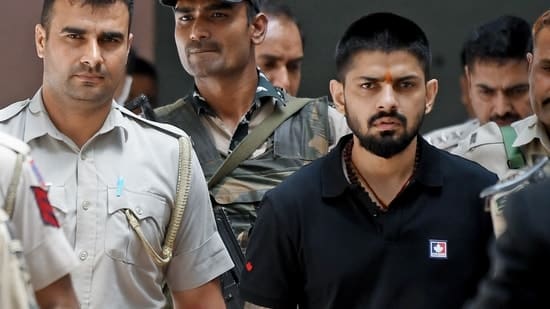
To understand the gravity of the Centre’s intervention, one must examine the subject of the halted series. Lawrence Bishnoi is currently one of the most heavily guarded prisoners in India, facing numerous charges linked to a vast, transnational organized crime syndicate. Over the last several years, his name has dominated national headlines, tied to high-profile extortion cases, rival syndicate clashes, and alleged involvement in the targeting of prominent public figures.
Despite being incarcerated, Bishnoi has maintained a disturbing level of notoriety and digital influence. His syndicate’s alleged ability to operate across international borders has made him a primary target for federal investigative agencies, including the National Investigation Agency (NIA). [Source: General public records up to April 2026].
The concern for law enforcement is not merely his alleged operational reach, but his evolving pop-culture infamy. Social media platforms often feature fan-made edits, music videos, and posts that lionize his actions, framing him through a distorted lens of regional pride and rebellion. Given this highly volatile context, a mainstream web series dedicated to his life story—even if framed as a cautionary tale—was viewed by the Home Ministry and the I&B Ministry as a catastrophic risk to public safety.
## OTT Platforms and the True Crime Dilemma
The suspension of ‘Lawrence of Punjab’ brings the burgeoning “true crime” and gangster genres on Indian OTT platforms into sharp focus. Over the past five years, streaming giants have aggressively commissioned documentaries, docu-series, and dramatized biopics based on real-life Indian criminals. Audiences have shown a voracious appetite for these dark, gritty narratives, driving massive subscription numbers and viewership metrics.
However, the ethical line between documenting a crime and glorifying a criminal is notoriously thin. While traditional cinema in India operates under the strict purview of the Central Board of Film Certification (CBFC), OTT platforms have historically enjoyed a more relaxed, self-regulatory environment. This has allowed filmmakers to explore grittier, more realistic portrayals of the underworld.
Yet, critics argue that these dramatizations often employ cinematic tools—such as stylized slow-motion sequences, charismatic casting, and sympathetic origin stories—that subconsciously manipulate the audience into rooting for the antagonist. When the subject is a deceased historical figure, the societal risk is minimal. But when the subject is a living, active participant in ongoing judicial processes, the media portrayal can interfere with justice and embolden the criminal’s followers.
## Expert Perspectives on Media Ethics and Law
Media analysts and legal experts have weighed in on the Centre’s decision, highlighting the complex intersection of free speech and social responsibility.
“The fundamental issue here is the commodification of active criminality,” explains Dr. Aarav Mehta, a professor of Media Ethics and Sociology at a leading New Delhi university. “When a major platform like ZEE5 produces a high-budget series on a figure like Lawrence Bishnoi, they are inevitably providing a massive platform that validates his existence in the public consciousness. In regions where youth unemployment is high, these ‘gangster’ narratives are not consumed as entertainment; they are consumed as aspirational career paths.” [Source: Independent expert analysis].
From a legal standpoint, the government’s intervention tests the limits of Article 19(1)(a) of the Indian Constitution, which guarantees freedom of speech and expression. However, this right is subject to “reasonable restrictions” under Article 19(2), specifically concerning public order and incitement to an offense.
Advocate Naina Desai, a specialist in digital media law, notes the legal tightrope: “The Centre is utilizing the IT Rules of 2021 to enforce this halt. While platforms argue for creative liberty, the government has a compelling state interest in preventing media that could trigger law and order situations. The burden will now fall on streaming platforms to prove that their content is purely educational or journalistic, rather than sensationalist.”
## ZEE5’s Response and Industry Fallout
Following the Ministry’s directive, ZEE5 has reportedly pulled all promotional material for ‘Lawrence of Punjab’ from its platform and social media channels. While the company has yet to release a detailed public statement regarding the financial and production impact of the halt, insider sources suggest that the project has been placed under an indefinite “legal and creative review.”
The fallout from this incident is expected to ripple across the entire Indian streaming ecosystem. Competitors like Netflix, Amazon Prime Video, and Disney+ Hotstar are reportedly holding emergency meetings with their legal and compliance teams to review their upcoming slates of true-crime content.
Production houses are now faced with a challenging new reality: investing millions of rupees into true crime series carries a significant regulatory risk. Showrunners may now be forced to pivot away from active, controversial figures, opting instead for fictionalized accounts or focusing on cases that have reached complete legal finality. The era of the “real-time” criminal biopic in India may be effectively over.
## Societal Impact: The Danger of “Gangster Pop Culture”
The Centre’s advisory is not born in a vacuum; it is a response to ground realities reported by law enforcement agencies, particularly in Punjab, Haryana, and Delhi. Police officials have repeatedly warned about the phenomenon of “gangster pop culture,” where young men from rural and semi-urban areas are drawn into organized crime, mesmerized by the wealth, power, and fear associated with syndicate leaders.
* **Social Media Weaponization:** Criminal syndicates increasingly use digital platforms to claim responsibility for acts, recruit new members, and build a localized mythology.
* **Impressionable Youth:** Sociologists note that when traditional pathways to success seem blocked, the stylized rebellion seen in media portrayals of gangsters becomes dangerously appealing to marginalized youth.
* **Victim Trauma:** There is also the severe psychological impact on the victims of these syndicates. Dramatizing a criminal’s life while families of victims are still seeking justice is widely viewed as deeply insensitive.
By asking ZEE5 to halt the series, the government is attempting to sever the feedback loop where real-world crime inspires media content, which in turn inspires further real-world crime.
## Precedents and the Road Ahead
This is not the first time the Indian government has clashed with the entertainment industry over the depiction of controversial figures. Historically, films based on terrorists, separatists, and historical dacoits have faced intense scrutiny, mandated cuts, or outright bans by the CBFC. However, the direct intervention in an OTT release signals a maturation—and tightening—of digital media oversight.
The immediate future will likely see a formalization of the “due caution” advisory. Industry experts anticipate that the I&B Ministry might introduce specific, written guidelines regarding the depiction of living criminals who have pending cases in Indian courts. Streaming platforms may be required to establish specialized, independent review boards comprising legal experts and sociologists to vet scripts before production begins.
For creators, this represents a frustrating constriction of artistic liberty. Documentarians argue that shining a light on the darkest corners of society is vital for public awareness and institutional accountability. They posit that ignoring a figure like Bishnoi does not erase his influence; it merely leaves his narrative entirely in the hands of unverified social media rumors.
## Conclusion
The Centre’s directive to halt ZEE5’s ‘Lawrence of Punjab’ represents a watershed moment in Indian digital broadcasting. By prioritizing public order and the psychological welfare of the youth over the commercial and creative liberties of streaming platforms, the government has drawn a firm line in the sand against the glorification of active criminal syndicates. [Source: Hindustan Times].
As the digital entertainment landscape continues to evolve, the balance between compelling storytelling and responsible broadcasting will remain highly contested. While audiences crave the thrill of the true-crime genre, the reality of gang violence and its devastating real-world consequences cannot be ignored. Moving forward, digital platforms operating in India will have to navigate a strictly monitored ecosystem, ensuring that their quest for viewership does not inadvertently crown the nation’s most dangerous individuals as digital heroes.





