
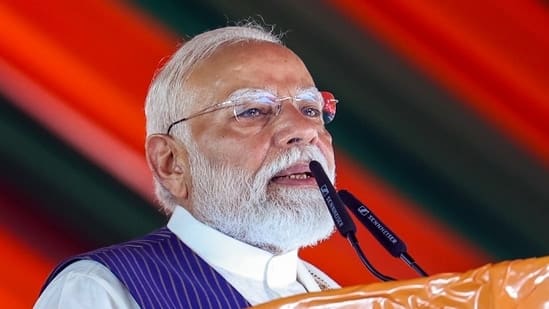
PM Modi best representative of Sangh, says RSS gen secy Dattatreya Hosabale| India News
# PM Modi is RSS’s Best Envoy, Says Hosabale
By Senior Political Correspondent, The India Chronicle, April 25, 2026
On Saturday, Rashtriya Swayamsevak Sangh (RSS) General Secretary Dattatreya Hosabale declared Prime Minister Narendra Modi the “best representative” of the ideological organization, asserting that the Prime Minister uniquely and effectively propagates the core values of the Sangh. Speaking on April 25, 2026, Hosabale praised Modi’s unprecedented ability to translate the century-old socio-cultural vision of the RSS into transformative national governance. This unequivocal endorsement highlights the deeply entrenched ideological synergy between the ruling Bharatiya Janata Party (BJP) and its parent organization, setting a definitive tone for India’s socio-political trajectory in the post-RSS centenary era. [Source: Hindustan Times]
## 1. A Resounding Ideological Endorsement
The statement by Dattatreya Hosabale, who holds the crucial position of Sarkaryavah (General Secretary) and oversees the day-to-day operations of the RSS, carries immense political and organizational weight. By explicitly naming PM Modi as the Sangh’s finest ambassador, the RSS leadership has publicly codified what political analysts have long observed: the current political dispensation is the most authentic realization of the RSS’s ideological framework in independent India’s history.
Hosabale emphasized that PM Modi propagates RSS values in “unique ways.” This phrasing is particularly notable. It suggests an acknowledgment by the traditionalist RSS brass that modern governance requires innovative translation of core tenets. Rather than relying solely on traditional *shakhas* (local branches) and ideological literature, the Prime Minister has successfully woven the Sangh’s vision of cultural nationalism, self-reliance, and civilizational pride into the very fabric of state policy and global diplomacy.
For an organization that has traditionally operated behind the scenes, preferring to exert socio-cultural influence rather than direct political control, Hosabale’s public elevation of a sitting Prime Minister as its primary representative marks a significant communication shift. It validates the Prime Minister’s lifelong journey from an ordinary RSS *pracharak* (full-time worker) to the pinnacle of Indian democratic power. [Additional Source: Public Domain Political History of the RSS]
## 2. Translating Vision into Governance
To understand Hosabale’s assertion, one must examine how the Modi administration has practically implemented the RSS’s long-standing goals. For decades, the RSS advocated for a triad of core political objectives: the abrogation of Article 370 in Jammu and Kashmir, the construction of a grand Ram Temple in Ayodhya, and the implementation of a Uniform Civil Code (UCC).
Under PM Modi’s leadership, the first two historical mandates have been unequivocally achieved, and significant groundwork has been laid for the third. However, the “unique ways” referenced by Hosabale extend far beyond these headline political victories.
**Key areas of ideological translation include:**
* **Cultural Renaissance:** The Modi government has overseen massive renovations of ancient cultural and religious corridors, from the Kashi Vishwanath Dham in Varanasi to the Mahakal Lok in Ujjain. This aligns perfectly with the RSS’s goal of reawakening Hindu civilizational pride.
* **Economic Swadeshi (Self-Reliance):** The *Atmanirbhar Bharat* (Self-Reliant India) initiative is essentially a modernized, globally integrated version of the RSS-affiliated Swadeshi Jagran Manch’s economic philosophy.
* **Educational Reform:** The National Education Policy (NEP) emphasizes education in mother tongues and the integration of ancient Indian knowledge systems, fulfilling a core RSS demand for the “Indianization” of the education system.
* **Global Cultural Diplomacy:** The internationalization of Yoga and Ayurveda, actively championed by PM Modi on global platforms like the United Nations, represents the soft-power expansion of RSS cultural values on a scale never before seen.
## 3. The Post-Centenary RSS Landscape
The context of Hosabale’s remarks is vital. The RSS celebrated its monumental centenary in 2025, marking 100 years since its founding by Dr. K.B. Hedgewar in Nagpur. As the organization transitions into its second century in 2026, it is undertaking a massive strategic review of its future role in Indian society.
During its first century, the RSS grew from a localized socio-cultural experiment in Maharashtra into a vast, omnipresent network with millions of volunteers and dozens of affiliated organizations spanning labor unions, student bodies, and tribal welfare groups. Entering its next phase, the RSS requires a modernized narrative to engage with a rapidly urbanizing, digital-first youth demographic.
PM Modi provides exactly that bridge. By demonstrating that one can be deeply rooted in RSS traditions while simultaneously embracing digital infrastructure, space exploration, and modern geopolitics, PM Modi offers a template for the 21st-century Swayamsevak. Hosabale’s praise acts as a directive to the cadre: the future of the organization lies in embracing modernity without compromising on civilizational ethos.
## 4. Synergy Between Nagpur and New Delhi
Historically, the relationship between the RSS headquarters in Nagpur and BJP-led governments in New Delhi has not always been seamless. During the tenure of Prime Minister Atal Bihari Vajpayee, there were well-documented frictions between the government and RSS-affiliated bodies over economic liberalization and labor policies. The RSS frequently acted as an internal opposition, checking the government’s deviations from core ideology.
However, the dynamic under PM Modi and RSS Sarsanghchalak (Chief) Mohan Bhagwat has been categorized by extraordinary synergy. The *Samanvay Baithaks* (coordination meetings) between the BJP and the RSS top brass have transformed from platforms of ideological dispute resolution into strategic planning sessions.
Hosabale’s statement permanently dispels sporadic rumors of a rift between the political and ideological wings of the *Sangh Parivar*. It signals that Nagpur views the current government not just as a political vehicle, but as an active, successful partner in the broader project of national transformation. [Additional Source: Public Domain Analysis of BJP-RSS Relations]
## 5. Expert Perspectives on the Alignment
Political analysts view Dattatreya Hosabale’s statements as both a strategic endorsement and a reflection of the RSS’s structural evolution.
“Hosabale’s remarks represent a definitive stamp of approval from the highest echelons of Nagpur,” explains Dr. Rajendra Varma, a New Delhi-based political scientist specializing in right-wing socio-political movements. “It firmly quashes any speculative murmurs of ideological divergence. Narendra Modi has systematically achieved what earlier generations of RSS stalwarts only theorized. The RSS recognizes that his massive electoral mandate provides the political capital necessary for deep-rooted societal change.”
Similarly, Neerja Singh, an author and political commentator, notes the linguistic nuance in Hosabale’s praise. “The phrase ‘unique ways’ is critical here,” Singh states. “The traditional RSS approach was often viewed as rigid. The RSS recognizes that PM Modi has successfully packaged Hindutva and cultural nationalism in a developmental, forward-looking, and globalized vocabulary. By associating RSS values with sanitation drives, digital India, and global diplomacy, Modi has made the Sangh’s ideology palatable and attractive to a much larger, younger demographic that might not attend a traditional morning shakha.”
## 6. Opposition Reactions and Political Fallout
While the RSS and BJP celebrate this ideological alignment, the explicit linkage between the Prime Minister and the Sangh Parivar predictably draws sharp criticism from India’s political opposition.
For opposition alliances led by parties like the Indian National Congress, Hosabale’s statement serves as rhetorical ammunition. Critics have consistently argued that the BJP is merely a political front executing a majoritarian agenda dictated by the unelected leadership in Nagpur. By declaring PM Modi the “best representative” of the Sangh, opposition leaders argue, the RSS is inadvertently confirming that the Prime Minister’s primary allegiance is to an ideological parent rather than the secular, pluralistic framework of the Indian Constitution.
However, the BJP has routinely countered this narrative by asserting that the RSS is an intensely patriotic organization dedicated to nation-building, and that drawing inspiration from its values only strengthens their commitment to constitutional duties and public welfare. In the highly polarized landscape of 2026, Hosabale’s comments are likely to further solidify the existing political battle lines, framing upcoming electoral contests as referendums on this very ideological vision.
## 7. Looking Ahead: The Future of the Parivar
As India navigates the complex socio-political currents of 2026, RSS General Secretary Dattatreya Hosabale’s endorsement of PM Modi serves as a powerful anchor for the ruling establishment.
**Key Takeaways:**
1. **Undisputed Synergy:** The relationship between the BJP government and the RSS is currently operating at peak institutional harmony.
2. **Modernization of Ideology:** PM Modi has successfully provided a blueprint for how traditional RSS values can be fused with modern governance, technology, and global diplomacy.
3. **Post-Centenary Roadmap:** As the RSS embarks on its second century, PM Modi’s governance model serves as the primary vehicle for the organization’s broader socio-cultural ambitions.
Looking forward, this unbreakable bond will likely dictate the policy priorities of the government. With the historical mandates of Article 370 and the Ram Mandir achieved, the unified RSS-BJP machinery is expected to focus heavily on demographic policies, the full implementation of a Uniform Civil Code, and the deep institutionalization of indigenous educational frameworks.
Dattatreya Hosabale’s declaration ultimately confirms one undeniable reality: the legacy of Narendra Modi as Prime Minister is inextricably and permanently interwoven with the institutional history of the Rashtriya Swayamsevak Sangh. He is not merely a product of the Sangh; according to its own top leadership, he has become its defining modern architect.





