
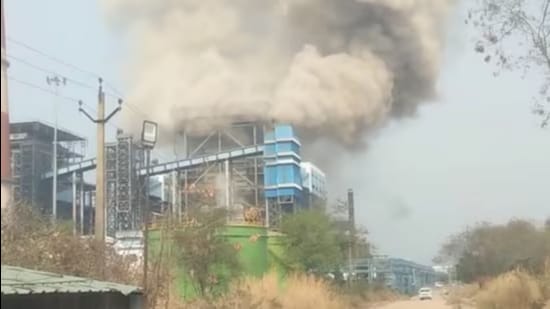
Chhattisgarh boiler explosion: Toll rises to 14| India News
# Chhattisgarh Boiler Blast: Death Toll Hits 14
By Staff Reporter, India News Desk, April 15, 2026
The death toll in a devastating boiler explosion at an industrial facility in Raigarh, Chhattisgarh, has tragically risen to 14 as rescue and recovery operations continued into Wednesday morning. Local police confirmed the updated casualty figures, noting that five critically injured workers have been urgently airlifted to specialized burn units in Raipur for advanced medical treatment. The remaining injured personnel are currently receiving emergency care at various district hospitals across Raigarh. The catastrophic blast, which completely leveled a significant portion of the manufacturing unit earlier this week, has prompted immediate high-level government inquiries into severe safety protocol violations and alleged industrial negligence. [Source: Hindustan Times | Additional: Regional Emergency Response Protocols].
## Emergency Response and Rescue Operations
The immediate aftermath of the explosion was characterized by widespread chaos, dense toxic smoke, and a desperate scramble to extract survivors from the mangled steel and concrete debris. Initial reports indicate that the blast occurred during a routine operational shift change, a time when foot traffic on the factory floor is typically at its highest. This unfortunate timing significantly contributed to the high number of casualties.
First responders, including the State Disaster Response Force (SDRF) and local fire brigades, were dispatched within minutes of the explosion. However, the sheer intensity of the thermal event initially hampered rescue efforts. The blast wave not only destroyed the primary boiler house but also triggered secondary structural collapses in adjacent workshops. Police and emergency rescue teams had to use heavy earth-moving equipment and specialized thermal imaging cameras to locate trapped workers under the hazardous rubble.
**Key Rescue Facts:**
* **Initial Deployment:** Over 50 emergency personnel, including medical triage teams.
* **Logistical Challenges:** High residual heat, risk of secondary explosions, and toxic particulate matter in the air.
* **Current Status:** Rescue operations have transitioned into recovery and site-clearing phases, with the immediate perimeter secured by state police.
## Medical Triage: The Critical Shift to Raipur
Treating victims of severe industrial boiler explosions presents one of the most complex challenges in emergency medicine. Boiler blasts typically cause a devastating combination of blunt force trauma, severe thermal burns from superheated steam, and inhalation injuries.
According to local police statements, the severity of the injuries necessitated a complex medical triage operation. “Five of those injured have been shifted to Raipur for advanced treatment while the remaining are admitted to hospitals in Raigarh,” a senior police official confirmed during a morning press briefing [Source: Hindustan Times].
The decision to transfer the five most critical patients to Raipur—Chhattisgarh’s capital—underscores the gravity of their condition. Raipur is home to advanced tertiary care facilities, including the All India Institute of Medical Sciences (AIIMS), which possesses dedicated burn units capable of handling complex skin grafting, respiratory therapies for inhalation burns, and critical care monitoring. The patients remaining in Raigarh are reportedly being treated for varying degrees of concussions, bone fractures, and second-degree burns. Medical superintendents at Raigarh district hospitals have mobilized extra surgical staff and called for emergency blood donations to manage the sudden influx of patients.
## Anatomy of the Explosion: Preliminary Investigations
While a formal forensic investigation is still in its infancy, industrial safety experts and officials from the Directorate of Industrial Health and Safety (DIHS) are already scrutinizing the facility’s maintenance logs. Boiler explosions, often referred to technically as Boiling Liquid Expanding Vapor Explosions (BLEVE), are rarely spontaneous. They are typically the culmination of systemic mechanical failures or human error.
An industrial boiler operates under extreme pressures, converting water into high-pressure steam to drive turbines or facilitate chemical processing. If the internal pressure surpasses the structural integrity of the steel vessel, and the automated safety relief valves fail to open, the resulting rupture is catastrophic. The sudden depressurization causes the superheated water to instantly flash into steam, expanding its volume by over 1,600 times in a fraction of a second. This rapid expansion creates a shockwave comparable to a high-yield explosive device.
Preliminary site assessments suggest investigators will focus on three primary failure points:
1. **Safety Valve Malfunction:** Whether the pressure relief valves were corroded, illegally bypassed, or improperly calibrated.
2. **Low Water Level Escalation:** A common cause where a lack of water causes the boiler tubes to overheat and melt, leading to structural failure.
3. **Metallurgical Fatigue:** Whether the boiler vessel had surpassed its operational lifespan and suffered from undetected metal fatigue or internal corrosion.
## Expert Analysis: The Cost of Negligence
Industrial safety experts view the rising death toll in Raigarh as a grim reminder of the gaps in regulatory compliance across India’s heavy industry sectors. Dr. Arvind Menon, an independent industrial safety auditor and former mechanical engineer, provided insight into the mechanics of such preventable disasters.
“Boiler explosions of this magnitude rarely, if ever, occur without a preceding chain of negligent maintenance or operational oversight,” Dr. Menon explained. “Modern industrial boilers are equipped with multiple, redundant failsafe mechanisms—from automated water level sensors to mechanical pressure relief valves. For a catastrophic rupture to occur, several of these redundancies must fail simultaneously. This usually points to a culture where routine maintenance is deferred, warning alarms are ignored, or mandatory safety inspections under the Boilers Act are treated as mere paperwork rather than critical life-saving protocols.” [Source: Independent Expert Analysis on Industrial Safety].
Such expert consensus suggests that the upcoming state investigation will likely pivot from looking at mechanical failure to examining potential criminal negligence on the part of the plant’s management.
## The Broader Context: Industrial Safety in Chhattisgarh
Chhattisgarh is a vital artery in India’s industrial heartland, boasting massive reserves of coal and iron ore. Consequently, the state is heavily populated with thermal power plants, steel mills, and auxiliary manufacturing units—all of which rely heavily on high-pressure boiler systems.
While this industrial boom has driven economic growth, it has also brought the critical issue of occupational safety to the forefront. Labor unions and human rights advocates have long criticized the lack of rigorous, unannounced factory inspections.
**Standard Industrial Boiler Safety Protocols vs. Common Ground Realities:**
| Safety Protocol | Regulatory Requirement | Common Compliance Failures Observed |
| :— | :— | :— |
| **Annual Certification** | Mandatory inspection by Chief Inspector of Boilers. | Reliance on third-party certifiers who may not conduct rigorous physical checks. |
| **Water Quality Testing** | Regular testing to prevent mineral scale buildup inside tubes. | Deferred descaling maintenance, leading to localized overheating and tube bursts. |
| **Operator Licensing** | Boilers must be operated only by certified Boiler Attendants. | Use of untrained or contractual labor to monitor complex pressure systems to cut operational costs. |
| **NDT (Non-Destructive Testing)** | Ultrasonic or X-ray testing of boiler welds for microscopic cracks. | Skipped due to the high cost and required downtime of the manufacturing unit. |
The recurring theme in many such industrial belts is the reliance on a largely transient, contract-based workforce. These laborers often lack the technical training required to identify the early warning signs of machinery failure, making them disproportionately vulnerable when disaster strikes.
## Government Intervention and Compensation
In the wake of the tragedy, the state administration has initiated a multi-tiered response. Authorities have immediately sealed the premises of the Raigarh facility to preserve evidence for the forensic teams. A First Information Report (FIR) is expected to be registered against the factory owners and the plant manager under sections of the Bharatiya Nyaya Sanhita (BNS) pertaining to causing death by negligence and endangering human life.
Furthermore, state officials have announced financial assistance for the victims’ families. While the exact figures are currently being formalized by the Chief Minister’s Office, standard operating procedures for such industrial disasters typically involve an ex-gratia payment to the next of kin of the deceased, alongside comprehensive coverage of medical expenses for all injured workers.
Labor rights advocates, however, emphasize that financial compensation, while necessary, is a reactive measure. They are pressing the state government to initiate a comprehensive, state-wide safety audit of all heavy industrial plants, prioritizing facilities that have been operational for more than a decade.
## Conclusion and Future Outlook
The Raigarh boiler explosion, with a devastating death toll of 14 and multiple severe injuries, is a stark tragedy that underscores the lethal consequences of industrial oversight. As five critically injured workers fight for their lives in Raipur and others recover in Raigarh, the immediate focus rightly remains on emergency medical care and supporting the grieving families [Source: Hindustan Times].
However, as the dust settles, this incident must serve as a catalyst for systemic change. The future of industrial safety in Chhattisgarh and across India relies heavily on modernizing regulatory frameworks. The integration of continuous, IoT-based automated pressure monitoring systems, mandatory and transparent third-party safety audits, and strict enforcement of the Factories Act are imperative. Until occupational safety is prioritized over production targets and operational cost-cutting, the risk of preventable industrial catastrophes will continue to shadow the nation’s economic progress. The ongoing investigation will not only determine the exact mechanical cause of the Raigarh blast but will also test the legal system’s capacity to hold negligent entities accountable.





