
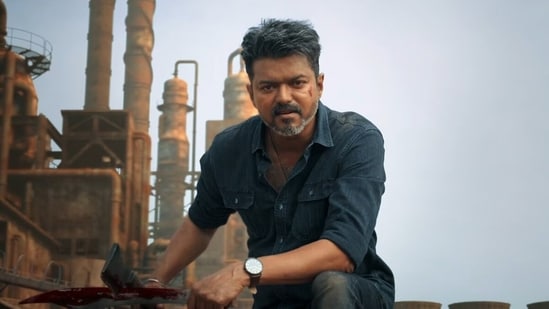
Cong slams Centre over ‘Jana Nayagan’ leak, BJP hits back| India News
# Congress Slams Govt Over Jana Nayagan Film Leak
**By Special Correspondent, National Desk | April 12, 2026**
A massive political row erupted in New Delhi on Sunday over the unprecedented pre-release online leak of the highly anticipated pan-India film *Jana Nayagan*. The Indian National Congress launched a scathing attack on the ruling BJP-led Central Government, citing a colossal failure of cybersecurity and digital copyright enforcement that threatens India’s multi-billion dollar film industry. In a swift retaliation, the Bharatiya Janata Party (BJP) dismissed the allegations as gross political opportunism, ordering a comprehensive probe by central cyber agencies to track the source of the leak, turning a cinematic crisis into a fiery national political debate. [Source: Hindustan Times].
## The Anatomy of a Mega-Budget Leak
*Jana Nayagan* (translated as *Leader of the People*), touted as one of the most expensive cinematic projects of 2026, was scheduled for a massive global theatrical release next week. However, high-definition (4K) copies of the entire film, complete with post-production watermarks, began circulating on encrypted messaging platforms like Telegram and decentralized torrent networks late Saturday evening.
The immediate financial ramifications for the film’s producers, distributors, and exhibitors are staggering. Industry insiders estimate that a pre-release leak of this magnitude could shave off up to **30% to 40% of the film’s projected opening weekend box office revenue**. For a project built on a reported budget of over ₹300 crore, the digital hemorrhage translates to catastrophic financial losses.
“The *Jana Nayagan* leak is not a shaky, theater-recorded camera print; it is a pristine studio master copy,” explained Rajesh Padmanabhan, an independent film trade analyst based in Mumbai. “This indicates a severe breach in the post-production or digital distribution pipeline. The economic infrastructure of the film industry relies heavily on the theatrical window, and a breach of this scale shakes the confidence of institutional investors.” [Source: Independent Industry Analysis].
## Congress Mounts a Fierce Offensive
Seizing upon the crisis, the Indian National Congress swiftly positioned the leak as a symptom of a broader administrative failure by the Central Government. In a press briefing held early Sunday, senior Congress leaders accused the BJP of neglecting India’s intellectual property (IP) frameworks while actively promoting a hollow “Digital India” narrative.
“The illegal release of *Jana Nayagan* is not merely an isolated case of film piracy; it is a glaring indictment of the Centre’s inability to secure India’s digital borders,” a leading Congress spokesperson stated. “Millions of livelihoods—from spot boys and technicians to distributors and cinema hall owners—depend on the film industry. The government has utterly failed to implement robust anti-piracy mechanisms despite passing legislation. If the Ministry of Information and Broadcasting cannot protect the country’s soft power, what is the point of their grand technological claims?”
The opposition further alleged that the regulatory bodies responsible for monitoring digital piracy are underfunded, understaffed, and technologically outpaced by modern cybercriminal syndicates. They pointed out that despite the highly publicized amendments to anti-piracy laws in recent years, the conviction rate for digital copyright theft remains abysmally low.
## BJP Hits Back, Demands Deep Probe
The BJP was quick to respond to the Congress’s allegations, accusing the opposition of politicizing a criminal act. Senior BJP leaders and Union Ministers hit back, defending the government’s track record on digital security and turning the spotlight onto potential insider complicity within the film’s production network.
“The Congress party’s attempt to score cheap political points over a criminal act of piracy shows their desperation,” a BJP spokesperson countered during a televised debate. “The Modi government has enacted the most stringent anti-piracy laws in the history of independent India. We have immediately directed the Indian Cyber Crime Coordination Centre (I4C) and the Computer Emergency Response Team (CERT-In) to launch a thorough, multi-agency investigation. We will trace the IP addresses, seize the servers, and bring the culprits to justice.”
Government sources indicate that preliminary investigations suggest the leak may have originated from a post-production studio or a localization facility rather than a failure of external governmental cybersecurity. By calling for a deep probe, the BJP aims to shift the narrative from a “policy failure” to a “criminal breach of trust” within the private sector, emphasizing that government agencies are actively managing the crisis. [Source: Hindustan Times].
## The Economic Toll of Digital Piracy
The political slugfest over *Jana Nayagan* brings the chronic issue of digital piracy back into the national spotlight. According to a 2025 economic report on the Indian Media and Entertainment sector, digital piracy causes an annual revenue loss of approximately **₹20,000 crore to ₹25,000 crore** to the Indian film industry.
While the introduction of OTT platforms initially curbed physical piracy (DVDs and CDs), the proliferation of high-speed 5G internet and sophisticated anonymizing technologies has given rise to a new, highly organized form of digital theft.
### Key Factors Driving Modern Piracy
* **Encrypted Distribution Networks:** Platforms like Telegram allow users to share massive files in private groups, shielded by end-to-end encryption, making it exceedingly difficult for law enforcement to track the original seeders.
* **Offshore Hosting:** Pirate websites frequently host their servers in countries with lax copyright enforcement, effectively bypassing Indian legal jurisdiction.
* **Proxy Domains:** Even when the Department of Telecommunications (DoT) blocks a pirate domain, operators instantly migrate to mirror sites, playing an endless game of digital whack-a-mole.
“The technological sophistication of piracy rings has evolved drastically,” noted Dr. Meera Sanyal, Director of the Centre for Digital Security. “We are no longer dealing with a lone hacker in a basement. These are highly organized transnational syndicates that monetize stolen content through illicit digital advertising and cryptocurrency-based extortion.”
## Evaluating the Cinematograph (Amendment) Act
Much of the political debate surrounding the *Jana Nayagan* leak centers on the efficacy of the **Cinematograph (Amendment) Act, 2023**. Championed by the BJP government as a landmark reform, the Act introduced stringent punishments for film piracy, including jail terms of up to three years and fines up to 5% of a film’s audited production cost.
The Congress argues that the *Jana Nayagan* incident proves the law is a “paper tiger.” If a flagship, mega-budget film cannot be protected under this new legal regime, they argue, smaller independent filmmakers are virtually defenseless.
However, legal experts point out that the law itself is sound, but the execution remains hampered by technological realities. “The 2023 Amendment gave authorities the teeth to prosecute, but you cannot prosecute a ghost,” explained senior copyright lawyer Vikram Sethi. “When a film is leaked via a server based in Eastern Europe or South America, the diplomatic and jurisdictional hurdles make swift action nearly impossible. The government’s law is strong domestically, but internet piracy is a borderless crime.”
To bridge this gap, the Ministry of Information and Broadcasting recently appointed a series of Nodal Officers empowered to direct internet service providers (ISPs) to take down pirated content within 48 hours. While this has removed thousands of illicit links, the pre-release nature of the *Jana Nayagan* leak meant the damage was done within the first few hours of the file going viral.
## Future Implications for the Film Industry
The immediate fallout of the *Jana Nayagan* leak is forcing production houses to fundamentally rethink their digital security protocols. Industry guilds are already demanding tighter regulations on how digital cinema packages (DCPs) and post-production files are handled.
Moving forward, the industry is likely to adopt several emergency measures:
1. **AI-Driven Threat Intelligence:** Utilizing artificial intelligence to monitor the dark web and messaging platforms for mentions of a film’s proprietary assets before release.
2. **Forensic Watermarking:** Implementing invisible, blockchain-based watermarks that can trace a leaked file back to the exact individual or studio terminal that authorized the export.
3. **Zero-Trust Post-Production:** Restricting digital access strictly on a need-to-know basis, ensuring no single technician has access to a compiled, unencrypted master file.
## Conclusion: Navigating Politics and Entertainment
The online leak of *Jana Nayagan* has transcended the boundaries of entertainment news to become a flashpoint for national political discourse. For the Congress, it serves as a potent talking point to challenge the Central Government’s claims of digital superiority and governance. For the BJP, it is a critical test of their investigative machinery and their commitment to safeguarding the economic interests of India’s vast cultural sector.
As central cyber agencies work around the clock to identify the culprits, the Indian film industry watches with bated breath. The outcome of this investigation will likely set a massive legal and technological precedent. If the perpetrators are caught and severely punished under the new anti-piracy laws, it could serve as the ultimate deterrent. However, if the source remains shrouded in digital anonymity, the political opposition will undoubtedly use this incident as enduring proof of systemic vulnerability.
Ultimately, the battle over *Jana Nayagan* highlights a stark reality: in an era of hyper-connectivity, the line between cinematic art, cybercrime, and national politics has been permanently blurred. The filmmakers, meanwhile, have launched a desperate social media campaign, pleading with audiences to reject the pirated versions and experience their years of hard work in the theaters as originally intended. Whether the Indian audience honors that request remains the ultimate deciding factor in this unfolding saga.





