
Disable Community Notes on X or get publisher tag, Parliament panel moots| India News
# India Panel: Cut X Notes or Get Publisher Tag
By Vikram Sethi, Senior Tech Policy Correspondent, April 12, 2026
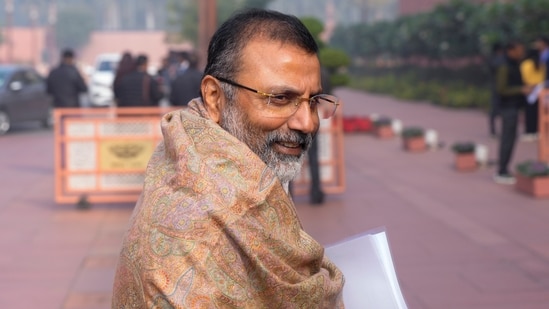
A prominent Parliamentary committee has urged the Ministry of Electronics and Information Technology (MeitY) to issue a sweeping directive to social media platforms, specifically targeting X (formerly Twitter), to either disable “Community Notes” or be legally classified as publishers. Led by Member of Parliament Nishikant Dubey on Sunday, the panel argued that appending crowdsourced fact-checks to user posts constitutes editorial intervention. Consequently, platforms doing so should forfeit their intermediary protections, bear full legal liability for hosted content, and potentially face a new “publisher tax.” This aggressive regulatory maneuver marks a watershed moment in India’s ongoing battle over digital sovereignty and content moderation.
## The Collision of ‘Safe Harbor’ and Crowdsourced Moderation
At the heart of this legislative storm is Section 79 of the Information Technology (IT) Act, which currently grants digital platforms “safe harbor” protections. This critical legal shield categorizes social media networks as neutral intermediaries, absolving them of legal liability for the content posted by their millions of users. However, this protection is conditional. Platforms must remain strictly neutral conduits; the moment they engage in curating, editing, or fundamentally altering the context of a user’s post, they risk crossing the line from an intermediary into an active publisher.
[Source: Hindustan Times | Additional: Section 79, IT Act 2000 legal framework]
The introduction and expansion of “Community Notes” on X by owner Elon Musk has blurred these once-clear legal boundaries. Initially designed to combat misinformation without resorting to outright censorship or account bans, Community Notes allow approved contributors to append contextual information, fact-checks, and clarifications directly beneath viral posts. While praised globally by digital rights advocates as a decentralized alternative to corporate censorship, Indian lawmakers increasingly view the feature as a backdoor editorial tool.
During the latest parliamentary session, the committee articulated a rigid binary: either a platform hosts content neutrally, or it exercises editorial oversight. By applying Community Notes—even if the notes are crowdsourced—the algorithm determines which context is displayed, thereby influencing public perception.
## Demystifying the “Publisher Tag” and Potential Tax
Nishikant Dubey’s remarks to the committee underscored a growing frustration among political figures whose statements and campaign materials have frequently been appended with contradictory Community Notes. The panel’s recommendation to MeitY is unambiguous. It demands that the government force platforms to either strip away these contextual features or formally register under a “publisher tag.”
A “publisher tag” is far more than a semantic relabeling. Under Indian law, traditional publishers—like newspapers, television networks, and digital news portals—are subject to rigorous editorial standards, strict compliance with the Press Council of India, and severe civil and criminal liabilities for defamation, hate speech, and the dissemination of false information. If X is tagged as a publisher, the company could be sued directly for any defamatory content posted by a user, a scenario that would fundamentally break the modern social media business model.
Furthermore, the snippet from the parliamentary debate explicitly mentioned imposing a “publisher tax.” Industry analysts suggest this refers to dual economic penalties. First, a regulatory compliance levy targeting massive digital platforms that curate content. Second, it aligns with a broader global push to force “publishers” to compensate traditional journalistic organizations for the news content shared and monetized on their platforms, similar to legislative efforts previously seen in Australia and Canada.
[Source: Hindustan Times | Additional: Global News Media Bargaining Codes]
## Industry Experts Warn of Unintended Consequences
The immediate reaction from the technology sector and digital rights community has been one of deep concern. Legal experts argue that stripping platforms of safe harbor for attempting to contextualize misinformation creates a paradoxical regulatory environment.
“The Parliamentary panel’s proposition places platforms in an impossible catch-22,” said Dr. Rajiv Menon, a former legal advisor to MeitY and current director at the Digital Policy Institute in New Delhi. “Under the IT Rules of 2021, platforms are already mandated to proactively remove misinformation. Yet, when X utilizes a crowdsourced tool to provide context rather than engaging in heavy-handed censorship, the government threatens to revoke their intermediary status. It penalizes platforms for deploying the very anti-misinformation measures the state previously demanded.”
Civil liberties groups are equally alarmed. They suggest that the government’s true grievance may not be about the mechanics of algorithms, but rather the disruption of political narratives. Over the past three years, Community Notes have frequently debunked manipulated media, out-of-context videos, and exaggerated statistical claims made by various political parties across the ideological spectrum. By forcing X to disable the feature, lawmakers might inadvertently be paving the way for unchecked digital propaganda during crucial electoral cycles.
## The Impending Digital India Act (DIA) Framework
This parliamentary recommendation arrives at a critical juncture as India finalizes the much-anticipated Digital India Act (DIA), the comprehensive successor to the two-decade-old IT Act of 2000. For months, MeitY has been drafting provisions aimed at regulating artificial intelligence, deepfakes, and algorithmic accountability.
The debate over the “publisher tag” aligns perfectly with hints previously dropped by MeitY officials regarding the tiered classification of intermediaries. The DIA is expected to introduce specialized categories for platforms based on their size, functionality, and influence. The panel’s recommendation could easily be incorporated into the final draft of the DIA, officially creating a legal threshold where the use of fact-checking overlays automatically triggers publisher classification.
[Source: Hindustan Times | Additional: Proposed Digital India Act drafts, 2025-2026]
If MeitY acts on Dubey’s recommendations, X will face a difficult strategic choice. Disabling Community Notes in India would appease lawmakers and preserve safe harbor, but it would deeply compromise the global uniformity of Musk’s platform design and likely draw severe backlash from free-speech absolutists. Conversely, accepting the publisher tag would invite a deluge of litigation that the company’s legal teams are currently ill-equipped to handle in South Asia’s largest market.
## Global Precedents and Comparative Regulation
India is not operating in a vacuum. The tension between platform neutrality and content curation is a global regulatory headache. However, the Indian approach starkly contrasts with jurisdictions like the European Union. Under the EU’s Digital Services Act (DSA), platforms are actively encouraged and legally required to implement systemic risk mitigation tools—such as Community Notes—to combat disinformation, particularly concerning public health and civic discourse.
“In Europe, failing to provide context to viral misinformation can result in massive fines,” notes Shreya Lall, a cybersecurity researcher based in Bengaluru. “In India, providing that exact same context might now result in a loss of corporate immunity. It is a fundamental divergence in internet governance philosophies. India is signaling that only the state, or traditional registered media, should have the authority to establish the definitive truth of a matter.”
Furthermore, in the United States, Section 230 of the Communications Decency Act continues to protect platforms even when they actively moderate or append notes to content, though this too has faced fierce bipartisan challenges. The Indian parliamentary panel’s aggressive posture could serve as a blueprint for other nations seeking greater control over narrative dissemination within their borders.
## Future Outlook and Key Takeaways
The recommendation to issue a “publisher tag” or disable Community Notes represents a defining moment in platform governance. As MeitY evaluates the parliamentary panel’s moots, several immediate consequences are likely:
* **Algorithmic Reassessment:** X and similarly structured platforms (like Meta’s Facebook and Instagram, which also use fact-checking overlays) will likely conduct emergency audits of their legal exposure under Indian law.
* **Political Implications:** The push to remove crowdsourced fact-checking will raise concerns about the integrity of political discourse online, leaving users reliant solely on platform censorship (takedowns) rather than nuanced context.
* **Economic Impact:** The looming threat of a “publisher tax” could deter new digital platforms from entering the Indian market, fearing exorbitant compliance costs and legal liabilities.
Ultimately, the parliamentary panel’s demand highlights a profound discomfort with decentralized truth-seeking mechanisms. Whether MeitY translates this demand into a binding executive order remains to be seen. However, the message from New Delhi to Silicon Valley is unequivocal: the era of unchecked self-regulation and experimental moderation tools operating under the shield of safe harbor is rapidly drawing to a close. Social media giants must now prepare to either strip their platforms to bare-bones conduits or strap in for the heavy legal burdens of traditional publishing.





