
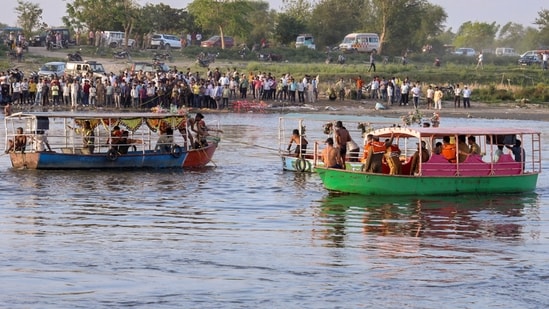
Vrindavan boat tragedy: Video shows passengers chanting ‘Radhe Radhe’, had no safety vests| India News
# Vrindavan Boat Tragedy: Video Exposes Flaws
On Saturday, **April 11, 2026**, a devastating boat capsizing incident on the Yamuna River in Vrindavan resulted in a tragic loss of life, casting a grim shadow over the holy city. Moments before the disaster, a heartbreaking video emerged showing unsuspecting pilgrims joyously clapping and chanting “Radhe Radhe.” Crucially, the footage revealed a glaring and fatal safety violation: not a single passenger was wearing a life jacket. As local authorities and disaster response teams launch immediate rescue operations, the tragedy highlights severe, persistent lapses in local maritime safety regulations amid surging religious tourism in Uttar Pradesh. [Source: Hindustan Times].
## The Chilling Final Moments Captured on Camera
In the digital age, tragedies are often preceded by moments of documented innocence, rendering the eventual disaster even more harrowing. The viral footage, which surfaced mere hours after the incident, paints a poignant picture of religious devotion abruptly turning into a nightmare. According to reports by the **Hindustan Times**, the video captures a densely packed wooden boat navigating the waters of the Yamuna River. The pilgrims, comprising families, women, and the elderly, are seen clapping in unison and enthusiastically chanting “Radhe Radhe,” entirely unaware of the impending catastrophe.
What stands out most prominently to safety analysts reviewing the footage is the absolute absence of basic water safety gear. None of the passengers are seen wearing life vests, and there appear to be no visible safety rings or emergency buoyancy aids on the vessel. The stark contrast between the spiritual euphoria of the devotees and the complete disregard for navigational safety underscores a fatalistic approach to religious tourism that continues to plague India’s domestic travel sector.
## Anatomy of the Capsizing: Overcrowding and Unpredictable Currents
While the exact sequence of events that led to the boat overturning remains under formal investigation, initial assessments point toward a combination of severe overcrowding and the unpredictable currents of the Yamuna River. Traditional wooden boats operating along the ghats of Vrindavan and Mathura are frequently loaded well beyond their structural capacity. During peak pilgrimage seasons, the economic incentive for boatmen to maximize passenger numbers per trip heavily outweighs adherence to safety limits.
When a boat is overloaded, its center of gravity shifts dangerously. Any sudden movement by the passengers—whether reacting to a scenic view, shifting weight to take photographs, or participating in religious chants—can cause the vessel to tilt. Once water breaches the hull of an overloaded boat, capsizing happens in a matter of seconds. The Yamuna, while seemingly placid near the riverbanks, often harbors strong undercurrents and sudden drop-offs that can disorient even strong swimmers, making the absence of life jackets a guaranteed death sentence for many. [Additional Source: Inland Waterways Authority of India Safety Guidelines].
## The Persistent Crisis of Missing Safety Vests
The revelation that the passengers lacked safety vests is not an isolated anomaly but a symptom of a deeply entrenched systemic failure. Across India’s holy rivers—from the Ganges in Varanasi to the Yamuna in Vrindavan—the enforcement of maritime safety laws remains tragically lax.
“The absence of life jackets is not just a regulatory oversight; it is a systemic normalization of risk,” explains Dr. Meera Sanyal, an independent risk management analyst specializing in mass-gathering events. “There is often a misplaced sense of divine protection among pilgrims, coupled with the apathy of unregulated boat operators. Furthermore, authorities frequently turn a blind eye until a tragedy of this magnitude forces a temporary crackdown.”
Under the **Inland Vessels Act of 2021**, which aims to ensure the safety of inland water transport, the provision and wearing of life jackets are heavily emphasized. However, translation from legislative mandate to on-the-ground enforcement at local ghats is virtually non-existent. Boatmen often argue that high-quality life jackets are prohibitively expensive, and passengers frequently refuse to wear them, citing discomfort or the brevity of the river crossing.
## Unregulated Tourism and Infrastructure Strain
Vrindavan, a focal point of the Krishna Janmabhoomi circuit, attracts tens of millions of domestic and international tourists annually. The sheer volume of foot traffic places an immense strain on local infrastructure. During weekends and religious festivals, the ghats are swarmed with devotees eager to take a boat ride, perform rituals, and offer prayers from the water.
This booming religious tourism economy has led to a proliferation of unregistered and unlicensed boat operators. Many of these vessels bypass routine safety inspections and structural integrity checks. The local river police, often understaffed and ill-equipped, struggle to monitor the sprawling networks of ghats effectively. The resulting regulatory vacuum creates a lucrative environment for unauthorized operators who prioritize rapid turnover over passenger welfare. The economic pressure on marginalized boatmen (the Mallah community) also plays a role, as they rely on these peak tourist influxes for their seasonal livelihoods, often operating continuously from dawn until dusk.
## Immediate Rescue Operations and the “Golden Hour”
In the immediate aftermath of the capsizing, chaos ensued on the riverbanks. As is common in such incidents, local boatmen and bystanders were the critical first responders, diving into the murky waters of the Yamuna to pull struggling passengers to safety. Their rapid intervention during the crucial “golden hour” undoubtedly saved lives, though their efforts were hampered by the lack of organized rescue equipment.
Shortly after, official rescue teams, including units from the **State Disaster Response Force (SDRF)** and the **National Disaster Response Force (NDRF)**, were deployed to the site. Utilizing inflatable Zodiac boats, deep-water divers, and sonar equipment, they initiated a massive search and rescue operation. However, the muddy waters and strong sub-surface currents of the Yamuna pose significant challenges to recovery efforts, turning the rescue mission into a prolonged and agonizing wait for the families of the missing.
## Accountability and the Cycle of Neglect
In the wake of the tragedy, public outrage has swiftly turned toward the administration. Why were heavily loaded boats allowed to operate without life jackets in plain sight of local authorities? This question echoes the aftermath of previous boat tragedies in India, such as the Godavari River disaster in Andhra Pradesh or various capsizings in Bihar and Assam.
Historically, the response to such tragedies follows a predictable, reactionary pattern: immediate compensation for the victims’ families, the suspension of a few lower-level officials, and a temporary ban on boating activities. However, long-term, sustainable reforms frequently lose momentum once the media spotlight fades. Accountability remains diffused across multiple departments—ranging from local municipal corporations to state tourism boards and inland water transport departments—allowing the blame game to impede meaningful structural changes.
## Charting a Safer Course for India’s Waterways
To break this fatal cycle, experts argue that India must modernize the management of its inland waterways, treating religious tourism hubs with the same regulatory rigor as commercial maritime ports.
1. **Mandatory Geo-Tagging and Licensing:** Every passenger boat must be registered, inspected, and clearly painted with its maximum passenger capacity.
2. **Subsidized Safety Gear:** Recognizing the economic constraints of local boatmen, state governments could provide subsidized, high-quality life jackets, making their use a strict condition for operating licenses.
3. **E-Ticketing Systems:** Implementing digital ticketing at official ghats can mathematically prevent overloading, ensuring that the number of tickets sold strictly matches the boat’s safe capacity.
4. **Pre-Boarding Briefings:** Similar to aviation, a brief, mandatory safety instruction regarding balancing the boat and remaining seated should become standardized practice.
## Conclusion
The Vrindavan boat tragedy of April 2026 serves as a grim and urgent wake-up call. The haunting video of pilgrims chanting “Radhe Radhe” mere moments before their lives were upended will remain etched in the public memory as a testament to the tragic intersection of pure devotion and administrative negligence. [Source: Hindustan Times]. While no amount of post-disaster analysis can undo the loss suffered by the grieving families, the incident demands immediate, unyielding legislative action. Ensuring the presence of life jackets, strictly regulating boat capacities, and empowering local river police are non-negotiable steps. Devotion should never come at the cost of life, and it is the paramount duty of the state to ensure that India’s sacred waters do not become graveyards of systemic apathy.
***
*By Senior Correspondent, National News Desk, April 11, 2026.*





