
Digital mapping for Census begins in NDMC, Delhi Cantonment areas; over 700 officials deployed for survey| India News
# Delhi Digital Census Begins With 700 Staff
By Senior Staff Correspondent, The National Herald, April 17, 2026
**New Delhi, April 17, 2026:** The highly anticipated digital mapping phase of India’s national Census officially commenced today in the New Delhi Municipal Council (NDMC) and Delhi Cantonment areas. Deploying over 700 specially trained officials, the government has initiated a comprehensive geographic and demographic survey utilizing advanced geospatial technology. Officials confirmed that the critical groundwork for this massive logistical exercise is already complete, which included an unprecedented self-enumeration phase available to residents from April 1 to April 15. This transition from traditional paper-based data collection to a fully digitized framework marks a pivotal milestone in modernizing the nation’s decadal census operations, addressing years of pandemic-induced delays.
## The Shift to a Digital-First Census
For over a century, the Indian Census has been characterized by immense paper trails, extensive manual data entry, and prolonged processing times. The 2026 exercise radically breaks from this tradition, adopting a “digital-first” methodology. Enumerators are equipped with government-issued tablets and smartphones pre-loaded with a proprietary data collection application developed by the National Informatics Centre (NIC).
This digital shift enables real-time data synchronization with secure central servers, effectively eliminating the multi-year lag historically associated with publishing census results. Geographic Information System (GIS) mapping is being heavily utilized to geofence neighborhoods, ensuring no household is skipped and no dual entries are recorded.
“The integration of GIS technology ensures high spatial resolution and absolute accuracy in our demographic mapping,” stated a senior official from the Office of the Registrar General and Census Commissioner of India. “By pinpointing exact household coordinates, we are creating a dynamic demographic database that will serve as the backbone for public administration for the next decade.” [Source: Hindustan Times | Additional: Public records on Ministry of Home Affairs digital census initiatives].
## Self-Enumeration Phase Sets the Stage
Prior to the deployment of the 700 field officials, the government successfully concluded a revolutionary self-enumeration phase. Between April 1 and April 15, 2026, residents in the NDMC and Delhi Cantonment zones were given the option to fill out their census forms online through a secure web portal and a dedicated mobile application.
Citizens who opted for self-enumeration were required to verify their identities using secure OTPs linked to their registered mobile numbers. Upon completion, they received a unique reference code. The field officials currently deployed will simply verify this code upon visiting the household, drastically reducing the time spent at each doorstep.
Early reports indicate a strong adoption rate of the self-enumeration tool among the digitally literate populations of Central Delhi and the Cantonment area. This hybrid model not only accelerates the data collection process but also minimizes physical contact, a procedural adjustment influenced by the lessons learned during the global pandemic.
## Strategic Focus on NDMC and Cantonment
The selection of the NDMC and Delhi Cantonment areas for the initial rollout of this digital mapping exercise is highly strategic. The NDMC area houses the political and administrative heart of the country, featuring well-organized urban grids, whereas the Delhi Cantonment is a highly secure, regulated military and civilian settlement.
Starting the physical digital mapping in these structured environments allows the Census authorities to stress-test their mobile applications and server infrastructure in a controlled urban setting before scaling up to the densely populated, complex, and often unstructured neighborhoods of broader Delhi and the rest of the nation.
“These zones serve as ideal incubators for the digital census,” explained Dr. Vikram Sanyal, an urban policy analyst at the Centre for Policy Research. “The infrastructure is robust, internet connectivity is uninterrupted, and the population density is manageable. If the digital mapping protocols succeed here without technical glitches, the blueprint can be confidently replicated across tier-2 cities and rural districts.” [Source: Original RSS | Additional: Independent demographic analysis].
## Deployment of 700+ Trained Personnel
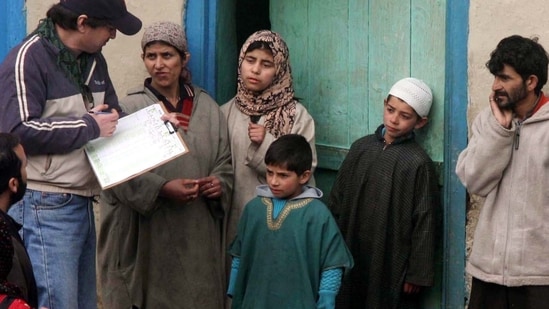
To execute this massive undertaking, over 700 officials have been meticulously trained and deployed across the designated zones. These enumerators, largely comprising local municipal workers, public school teachers, and cantonment board staff, underwent an intensive weeks-long training program.
The curriculum focused heavily on technical troubleshooting, data privacy protocols, and digital mapping procedures. Enumerators were taught how to drop geographic pins on the digital map, update building registries, and navigate the proprietary census software. Furthermore, they have been trained in soft skills to effectively communicate with residents, assuage any apprehensions regarding data collection, and assist those who struggled with the self-enumeration portal.
**Key responsibilities of the deployed officials include:**
* Verifying the unique reference codes of households that completed self-enumeration.
* Conducting direct digital interviews for households that did not use the portal.
* Updating the National Population Register (NPR) database where applicable.
* Mapping physical boundaries of residential and commercial structures using GIS.
## Navigating Privacy and Data Security
With the transition to a fully digital data collection method, questions regarding data privacy and cybersecurity have naturally surfaced. The collection of granular demographic and socio-economic data on mobile devices necessitates stringent security measures to prevent data breaches or unauthorized surveillance.
The Ministry of Home Affairs has reiterated that the digital census infrastructure is fortified with state-of-the-art, end-to-end encryption. The devices used by the 700 officials are “locked down,” meaning they can only run the specific census application and cannot be used for web browsing or personal communication. Furthermore, data is not stored locally on the enumerator’s device; it is instantly encrypted and pushed to highly secure, domestic servers operated by the government.
“In an era where data is the most valuable commodity, securing the biometric and demographic details of over a billion people is a matter of national security,” noted cybersecurity expert Meera Chandran. “The government’s decision to use proprietary devices and localized server architectures is a necessary step to ensure compliance with India’s data protection regulations.” [Source: Independent cybersecurity analysis | Additional: Contextual knowledge of India’s Digital Personal Data Protection Act].
## Implications for Policy and Urban Planning
The completion of this census is vital for the socio-economic future of the country. Originally scheduled for 2021, the decadal exercise was indefinitely postponed due to the COVID-19 pandemic. This five-year data vacuum has forced policymakers, economists, and urban planners to rely on outdated 2011 census figures, leading to potential misallocations in welfare schemes, public health initiatives, and infrastructure development.
The real-time data generated by the digital census in areas like the NDMC and Delhi Cantonment will immediately inform local governance. It will provide a precise picture of current population densities, migration patterns, literacy rates, and housing conditions.
On a macro level, once the digital census is rolled out nationwide, the resulting data will be the bedrock for the upcoming delimitation of parliamentary and assembly constituencies. It will dictate the distribution of federal funds and the targeting of state-sponsored welfare programs like the Public Distribution System (PDS) and Ayushman Bharat.
## Overcoming the Post-Pandemic Delays
The commencement of the digital mapping in Delhi signifies the end of a long period of uncertainty. The delay of the 2021 Census marked the first time in over 130 years that India missed its decadal population counting schedule. The intervening years have seen significant demographic shifts, massive internal migrations driven by pandemic lockdowns, and rapid economic transformations.
By leveraging technology, the Registrar General of India aims to make up for lost time. The traditional census cycle previously took nearly a year for enumeration and up to three years for the final, tabulated data to be fully published. The current digital infrastructure promises to condense this timeline drastically. Provisional data from digitally mapped zones is expected to be available for internal government review within months, rather than years.
## Conclusion: A Blueprint for the Nation
The deployment of over 700 officials in the NDMC and Delhi Cantonment areas today is much more than a local administrative exercise; it is the ultimate dress rehearsal for the world’s largest digital population count. The successful integration of self-enumeration portals, GIS mapping, and encrypted mobile data collection will serve as the definitive blueprint for the rest of India.
As enumerators navigate the streets of Central Delhi over the coming weeks, their progress will be closely monitored by policymakers and technologists alike. If this digital-first approach yields the rapid, accurate, and secure results it promises, it will not only rectify the data deficit caused by pandemic delays but also set a new global standard for demographic data collection in the 21st century. Citizens are encouraged to cooperate fully with the deployed personnel, ensuring that the foundations of India’s future planning are built on accurate and comprehensive data.





