
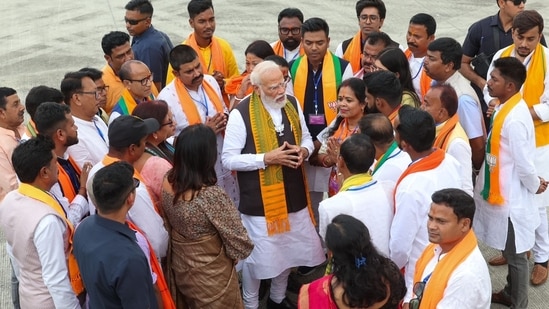
Election 2026 LIVE: Yusuf Pathan calls SIR an injustice to eligible voters; PM Modi targets Mamata Banerjee| India News
# PM Modi Rallies Bengal Amid 2026 Poll Battles
By Staff Correspondent, The Electoral Observer, April 13, 2026
On April 13, 2026, the political landscape of India is sharply focused on critical state assembly elections, with West Bengal and Tamil Nadu emerging as fierce democratic battlegrounds. Prime Minister Narendra Modi has intensified his campaign in West Bengal, launching sharp rhetorical strikes against the Mamata Banerjee-led Trinamool Congress (TMC) and projecting that the Bharatiya Janata Party (BJP) is poised to form the state government. Modi’s rallies center heavily on accusations of systemic corruption spanning the TMC’s 15-year tenure. Simultaneously in the south, a passionate debate over alleged “Hindi imposition” is dominating the electoral narrative in Tamil Nadu, highlighting India’s complex federal dynamics and the enduring power of regional identity politics. [Source: Hindustan Times | Additional: Election Commission of India Public Briefings].
## The BJP’s Aggressive Push in West Bengal
Prime Minister Narendra Modi’s recent rallies across West Bengal signal a highly coordinated effort by the BJP to unseat the incumbent TMC. Addressing massive crowds, the Prime Minister focused his critique on the 15 years of governance under Chief Minister Mamata Banerjee. Having first assumed power in 2011 after dismantling the 34-year reign of the Left Front, the TMC is now facing the natural friction of long-term incumbency.
The BJP’s campaign heavily emphasizes allegations of administrative malfeasance, citing past controversies surrounding local recruitment processes, municipal allocations, and the alleged misuse of central welfare funds. By framing the 2026 election as a definitive battle against corruption, the BJP aims to consolidate anti-incumbency sentiments. Prime Minister Modi’s assertion that the BJP “will form the government” is designed to project immense confidence to the party cadre, who are working to improve upon their performance from the 2021 assembly elections, where they established themselves as the principal opposition.
## The TMC Strikes Back: Defending 15 Years of Governance
The Trinamool Congress has mounted a robust defense, vehemently denying the BJP’s allegations and characterizing the central government’s rhetoric as an assault on Bengali pride. Chief Minister Mamata Banerjee and senior TMC leadership have consistently pushed back against corruption claims, attributing them to a politically motivated utilization of central investigative agencies meant to intimidate political rivals.
To counter the anti-incumbency narrative, the TMC is spotlighting its expansive portfolio of social welfare programs. Schemes such as *Lakshmir Bhandar* (direct cash transfers to women) and *Kanyashree* (financial support for female students) have historically cultivated a deeply loyal voter base, particularly among rural demographics and women.
“The electoral arithmetic in West Bengal often comes down to the friction between macro-level anti-incumbency and the micro-level impact of state welfare distribution,” notes Dr. Ananya Sen, an independent political analyst based in Kolkata. “The TMC is betting that tangible economic benefits will outweigh the opposition’s corruption narratives, while the BJP hopes voter fatigue and the desire for administrative change will break the TMC’s defensive lines.” [Source: Independent Political Analysis, 2026].
## Demographics and the Arithmetic of Bengal
Understanding the 2026 West Bengal election requires looking closely at shifting demographic allegiances. In 2021, the TMC secured a landslide victory by consolidating the minority vote and drawing substantial support from female voters through targeted welfare initiatives. However, the BJP successfully made inroads into various tribal communities and Scheduled Caste demographics in the northern and western belts of the state.
For the BJP to bridge the gap and achieve a majority in the 294-seat assembly, political strategists suggest they must retain their strongholds in North Bengal while penetrating the densely populated, TMC-dominated districts of South Bengal. The Left-Congress alliance, which has struggled to retain its historical vote share, remains a wildcard; their performance could inadvertently split anti-TMC votes or, conversely, draw secular votes away from the ruling party. Both major parties are currently engaged in intensive grassroots mobilization, recognizing that narrow margins in suburban constituencies could determine the ultimate victor.
## Tamil Nadu: The Linguistic Debate Resurfaces
While rallies in the east focus on governance and welfare, the southern state of Tamil Nadu is witnessing a very different, yet historically profound, electoral debate. The issue of alleged “Hindi imposition” has once again flared up, emerging as a major friction point between the ruling Dravida Munnetra Kazhagam (DMK) and the national BJP.
Language politics in Tamil Nadu is not a new phenomenon; it is the bedrock of the Dravidian political movement, dating back to the anti-Hindi agitations of the 1930s and 1960s. In 2026, this debate has been reignited by disagreements over national educational frameworks, the language of communication used by central government enterprises, and the phrasing of central examinations.
The DMK, led by Chief Minister M.K. Stalin, has framed the election as a fundamental defense of the Tamil language and state autonomy. By accusing the central government of quietly prioritizing Hindi at the expense of regional languages, the DMK aims to galvanize Tamil sub-nationalism. This narrative positions the state government as the protector of Tamil cultural heritage against what they describe as a homogenizing central authority.
## The BJP’s Cultural Counter-Strategy in the South
The BJP, traditionally viewed as a northern-centric party by its southern critics, has been working aggressively to shed this label and expand its footprint in Tamil Nadu. The national leadership has strongly denied any attempts to impose Hindi, instead emphasizing their respect for Tamil culture, literature, and history. Initiatives like the *Kashi Tamil Sangamam*, designed to celebrate the historical links between northern and southern India, represent the BJP’s strategic attempt to bypass the DMK’s linguistic firewall.
Furthermore, the BJP and its regional allies are attempting to shift the discourse in Tamil Nadu away from language and toward administrative efficiency, anti-corruption, and the benefits of a “double-engine government” (where the same party rules both the center and the state). They argue that the DMK uses the Hindi imposition narrative as an emotional distraction from infrastructural and governance shortfalls.
“The debate in Tamil Nadu is essentially a clash of two distinct nationalisms,” explains Dr. R. Karthik, a Chennai-based sociologist. “The DMK champions a linguistic and federalist nationalism, while the BJP offers a centralized, civilizational nationalism. The 2026 voter is caught between emotional linguistic loyalties and the pragmatic promises of central integration.” [Source: Sociological Perspectives on Dravidian Politics].
## Broader National Implications: Kerala and Assam
The Hindustan Times LIVE updates also highlighted ongoing electoral developments in Kerala and Assam, reminding observers that the 2026 state polls are a massive, multi-front democratic exercise. Each state offers a unique gauge of the national mood.
In Assam, the incumbent BJP government is working to secure another term by balancing its developmental infrastructure push with complex regional identity politics concerning the state’s indigenous populations. Meanwhile, in Kerala, the traditional bipolar contest between the Communist Party of India (Marxist)-led LDF and the Congress-led UDF remains fiercely competitive, with the BJP continually attempting to establish a formidable third front.
When viewed collectively, these state elections serve as a vital barometer for the Indian political climate. They test the limits of the BJP’s national dominance, the resilience of powerful regional chieftains like Mamata Banerjee and M.K. Stalin, and the viability of the Congress party’s alliance strategies.
## Key Battleground Dynamics to Watch
As the election machinery moves into its final phases, political analysts are closely monitoring specific dynamics in each state. The outcome will depend on which overarching narrative resonates most deeply with the electorate.
**Comparative Overview of 2026 State Election Dynamics:**
| State | Dominant Election Issues | Incumbent Party | Primary Challenger(s) |
| :— | :— | :— | :— |
| **West Bengal** | Welfare distribution, 15-year Anti-incumbency, Corruption allegations | Trinamool Congress (TMC) | Bharatiya Janata Party (BJP) |
| **Tamil Nadu** | Linguistic identity, State autonomy, Centralization debates | Dravida Munnetra Kazhagam (DMK) | AIADMK / BJP Alliance |
| **Assam** | Infrastructure development, Indigenous rights, Demographic shifts | Bharatiya Janata Party (BJP) | Congress / Regional Alliances |
| **Kerala** | Economic management, Anti-incumbency, Minority outreach | Left Democratic Front (LDF) | United Democratic Front (UDF) / BJP |
In West Bengal, the true test will be whether PM Modi’s aggressive anti-corruption campaign can effectively pierce the protective armor of Mamata Banerjee’s extensive grassroots welfare network. In Tamil Nadu, the central question is whether the DMK’s reliance on the emotive issue of linguistic identity can withstand the BJP and AIADMK’s focus on governance and central development funds.
## Conclusion: The Ultimate Verdict
As the 2026 state assembly elections progress, the starkly different campaigns in West Bengal and Tamil Nadu underscore the sheer diversity of India’s democratic landscape. Prime Minister Narendra Modi’s sharp critiques of the TMC’s 15-year rule in Bengal highlight a high-stakes battle over governance and incumbency. Conversely, the intense debate over Hindi imposition in Tamil Nadu reflects ongoing philosophical differences regarding the nature of Indian federalism and cultural integration.
Ultimately, the power resides with the voters. They are tasked with weighing sweeping national narratives against their immediate local realities. Whether they prioritize regional identity, promised administrative overhauls, or the continuation of established welfare frameworks, the results of these elections will undoubtedly shape India’s legislative and political trajectory for years to come.





