
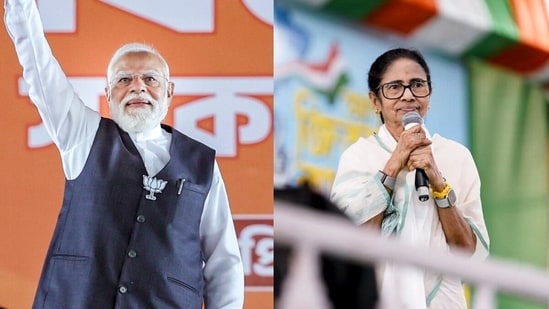
Election 2026 LIVE: PM Modi launches attack on TMC, says BJP will form govt in West Bengal| India News
# Modi Targets TMC as TN Debates Language in 2026
By Senior Correspondent, Political Desk, April 13, 2026
Prime Minister Narendra Modi intensified his campaign for the upcoming 2026 West Bengal Assembly elections on Monday, launching a sharp attack against the Mamata Banerjee-led Trinamool Congress (TMC). Addressing a massive rally, the Prime Minister accused the incumbent state government of presiding over 15 years of systemic corruption, expressing confidence that the Bharatiya Janata Party (BJP) will secure a majority and form the next government. Meanwhile, more than a thousand miles away in Tamil Nadu, the electoral discourse has sharply pivoted toward linguistic identity, with the debate over the alleged imposition of Hindi by the central government emerging as a fiercely contested election issue. [Source: Hindustan Times]
## The Battleground of West Bengal: Anti-Incumbency vs. Regional Identity
As West Bengal braces for a highly anticipated electoral showdown in 2026, the BJP has calibrated its strategy to focus heavily on governance, transparency, and anti-incumbency. Having come to power in 2011 by ending three decades of Left Front rule, the TMC is now completing its 15th year in office. Prime Minister Modi’s rallies are strategically targeting this long tenure, framing it as an era marred by administrative stagnation and graft.
The BJP’s campaign rhetoric has been relentless, pointing to past controversies surrounding teacher recruitment processes, municipal allocations, and alleged irregularities in the distribution of federal ration supplies. **”The narrative of ’15 years of corruption’ is designed to consolidate the anti-TMC vote base,”** notes Dr. Ananya Sen, a political sociologist based in Kolkata. “The BJP is attempting to shift the discourse from regional emotionality to absolute administrative accountability, hoping to capture the frustration of the state’s educated youth and rural voters alike.” [Additional: Academic Electoral Analysis]
By promising a “double-engine government”—a term the party uses to describe the benefits of having the same party in power at both the state and central levels—the BJP aims to convince voters that alignment with New Delhi will unlock unprecedented economic development and infrastructural growth for West Bengal.
## Trinamool Congress Mounts a Fierce Defense
Despite the aggressive posturing from the national ruling party, the Trinamool Congress remains a formidable electoral machine in West Bengal. Chief Minister Mamata Banerjee and her senior leadership have swiftly countered the BJP’s allegations by framing the central government’s actions as hostile federal overreach.
The TMC’s defense mechanism relies heavily on two pillars: **sub-nationalism (Bengali pride) and a massive umbrella of welfare economics**. The state government has expanded direct cash transfer schemes, notably *Lakshmir Bhandar* (financial assistance for women) and *Kanyashree* (conditional cash transfers for adolescent girls). TMC leaders consistently argue that central investigative agencies are being weaponized to target opposition leaders and distract from the central government’s own macroeconomic shortcomings.
Furthermore, the TMC leadership has accused New Delhi of withholding crucial federal funds owed to the state for rural employment schemes and housing projects. By presenting themselves as the sole defenders of Bengal’s autonomy and cultural heritage, the incumbent party hopes to offset localized anti-incumbency and retain its dominant grip on rural constituencies.
## Tamil Nadu and the Resurgence of the Linguistic Divide
While governance and welfare dominate the political theater in the East, the Southern state of Tamil Nadu is witnessing an election campaign deeply rooted in cultural and linguistic identity. The debate over alleged “Hindi imposition” has once again taken center stage, serving as a primary mobilizing tool for regional parties, particularly the ruling Dravida Munnetra Kazhagam (DMK). [Source: Hindustan Times]
Tamil Nadu has a long and potent history of anti-Hindi agitations dating back to the 1930s and peaking in the 1960s. In the run-up to the 2026 assembly polls, this historical sensitivity has been reignited by debates surrounding the National Education Policy (NEP), the language of instruction in centrally funded institutions, and the use of Hindi in central government examinations and public sector employment.
The DMK has aggressively positioned itself as the vanguard of the Tamil language and Dravidian culture. Party leaders have utilized their manifestos and public platforms to allege that the national government is subtly attempting to homogenize India’s diverse linguistic fabric to the detriment of non-Hindi speaking states.
## Strategic Realignments in the South
The BJP’s approach in Tamil Nadu has required a highly nuanced strategy. Acknowledging the emotional resonance of the Tamil language, the national party leadership has made concerted efforts to celebrate Tamil culture on global platforms. Prime Minister Modi frequently quotes ancient Tamil poets like Thiruvalluvar and emphasizes the antiquity of the language in his public addresses.
However, the BJP and its regional allies are trying to pivot the electoral conversation away from language and toward administrative delivery and infrastructure. They accuse the DMK of using the “language bogeyman” to mask its own governance deficits, dynastic politics, and unfulfilled poll promises.
Ramesh Krishnan, a Chennai-based political analyst, observes: **”The battle lines in Tamil Nadu are sharply drawn between ideological heritage and national integration. While the DMK consolidates its base through the prism of linguistic rights and federalism, the opposition is attempting to forge a coalition based on anti-incumbency, economic aspirations, and a rejection of family-run politics.”** [Additional: Independent Political Commentary]
## A Tale of Two States: Core Election Issues
To understand the diverging political landscapes in India’s 2026 election cycle, a comparison of the primary campaign platforms reveals distinct regional priorities.
| State | Primary Campaign Focus | Incumbent Strategy | Opposition Strategy |
| :— | :— | :— | :— |
| **West Bengal** | Anti-corruption vs. Welfare/Autonomy | Highlighting social welfare, citing federal fund blockades | Emphasizing “15 years of scams”, promising “double-engine” growth |
| **Tamil Nadu** | Linguistic Identity vs. Infrastructure | Championing Tamil pride, fighting alleged central homogenization | Promoting national integration, attacking dynastic politics |
Both states represent crucial battlegrounds, albeit for different reasons. West Bengal is a state where the BJP has made significant inroads over the past decade and is desperate to cross the final threshold into executive power. Tamil Nadu, conversely, remains a state where national parties have historically struggled to break the duopoly of Dravidian majors, requiring complex alliance arithmetic.
## Demographic Shifts and the “Silent Voter”
In both West Bengal and Tamil Nadu, the outcome of the 2026 elections will heavily depend on shifting demographic loyalties, particularly among women and first-time voters.
In West Bengal, women voters have traditionally formed a robust bulwark for the TMC, largely due to targeted cash-benefit schemes that provide direct financial autonomy. The BJP is actively attempting to breach this demographic by promising enhanced security for women and greater economic opportunities that transcend basic welfare, pointing to high rates of female unemployment in the state.
In Tamil Nadu, the youth demographic is increasingly split. While linguistic pride remains a strong unifying factor, there is also a growing demand for high-tier job creation and industrial modernization. Both the DMK and the opposition are heavily courting young voters with promises of startup hubs, global investments, and educational reforms.
## Broader Implications for India’s Federal Structure
The simultaneous unfolding of these state elections highlights the persistent tension within India’s federal structure. The rhetoric deployed in both West Bengal and Tamil Nadu underscores a recurring debate over the centralization of power versus state autonomy.
When regional leaders like Mamata Banerjee and the leadership in Tamil Nadu accuse the central government of overreach—whether through financial blockades or linguistic policies—they are engaging in a broader ideological battle over the nature of Indian federalism. Conversely, the central leadership argues that alignment and uniformity in specific administrative areas are necessary for equitable national development and global competitiveness.
These assembly elections will serve as an essential barometer for the success of these competing visions. A victory for the BJP in West Bengal would validate its aggressive anti-corruption campaign and its model of centralized welfarism. On the other hand, the retention of power by regional heavyweights in either state would reinforce the resilience of sub-national identities against national narratives.
## Conclusion and Future Outlook
As the 2026 election cycle heats up, the contrasting campaigns in West Bengal and Tamil Nadu highlight the vast complexity of the Indian electorate. In the East, PM Modi’s direct assault on the TMC’s 15-year record sets the stage for a bitter fight over governance, corruption, and welfare delivery. In the South, the resurrection of the Hindi imposition debate proves that historical and cultural fault lines remain potent electoral forces. [Source: Hindustan Times]
Over the coming weeks, as manifestos are released and multi-phase voting commences, both national and regional parties will be tested on their ability to translate these grand campaign narratives into localized voter mobilization. Whether the electorate prioritizes promises of administrative cleansing or the preservation of regional autonomy will soon determine the political destiny of these key states for the remainder of the decade.





