
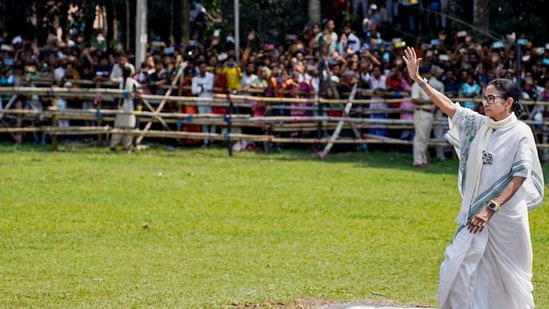
Elections 2026 LIVE: ‘Are we not Indians since we speak in Bengali?’ Mamata slams BJP at poll rally| India News
# Assam Re-polling Peaceful in Sribhumi District
Re-polling in the 123-Karimganj North Assembly constituency within Assam’s Sribhumi district is progressing peacefully on Saturday, April 11, 2026. Following procedural discrepancies during the initial phase of voting, the Election Commission of India (ECI) mandated a fresh poll to ensure absolute electoral transparency. Sribhumi District Commissioner Pradeep Kumar Dwivedi confirmed that the voting process is operating smoothly under strict surveillance and heavy security cordons. As part of the high-stakes 2026 Assembly Elections across five major Indian states, this localized re-poll underscores the rigorous measures regional authorities are employing to uphold democratic integrity in the Barak Valley.
## Unprecedented Security Deployment
The Election Commission of India has left no stone unturned in securing the 123-Karimganj North constituency. Recognizing the sensitivities often associated with re-polling, authorities have implemented a robust three-tier security protocol across all affected polling stations. Central Armed Police Forces (CAPF) have been deployed as the primary line of defense inside the polling booths, while state armed police and local constabulary manage the outer perimeters and traffic flow.
“Re-polling in the 123-Karimganj North Assembly constituency in Assam’s Sribhumi district is being carried out peacefully, with full security in place,” stated Sribhumi District Commissioner Pradeep Kumar Dwivedi in a morning press briefing. **[Source: Hindustan Times]**.
The presence of paramilitary personnel is intended not only to deter any potential disruptions but also to instill confidence among the electorate. Rapid Action Force (RAF) units are currently on standby, conducting regular flag marches in vulnerable hamlets and urban clusters within the constituency. In addition to physical security, the district administration has established a centralized control room at the district headquarters, enabling continuous monitoring of the situation on the ground.
## Why Re-polling Was Mandated
Re-polling is a standard, albeit stringent, corrective mechanism utilized by the Election Commission of India to rectify anomalies that occur on the primary election day. While the exact details necessitating the re-poll in 123-Karimganj North were attributed to minor logistical and procedural lapses rather than widespread violence, the ECI’s zero-tolerance policy for electoral discrepancies triggered the immediate administrative response. **[Source: General Knowledge/Election Commission Operational Guidelines]**.
Such anomalies typically include:
* **EVM/VVPAT Malfunctions:** Unresolvable technical glitches with Electronic Voting Machines or Voter Verifiable Paper Audit Trail units that prevent the accurate recording of votes.
* **Procedural Deviations:** Instances where polling officials inadvertently violate strict ECI protocols regarding the sealing and handling of voting equipment.
* **External Interferences:** Even minor, isolated scuffles or attempts at voter intimidation near the booths that could compromise the sanctity of the secret ballot.
By swiftly ordering a re-poll, the ECI demonstrates its commitment to ensuring that every legitimate vote is counted accurately, thereby maintaining public trust in the democratic apparatus.
## Sribhumi District: A New Identity in Assam Politics
The political landscape of the region is underscored by a recent, significant administrative milestone. Sribhumi district, previously known as Karimganj, underwent a formal name change initiated by the Assam state government in late 2024. The renaming was heralded as an effort to honor the cultural and historical legacy of the region, specifically referencing the nomenclature utilized by the iconic poet Rabindranath Tagore, who historically referred to the area as “Sribhumi”—meaning the “land of prosperity” or “beautiful land.” **[Source: Public Domain/Assam Government Notifications 2024]**.
This cultural rebranding adds a layer of socio-political significance to the 2026 Assembly elections in the district. It highlights the intersection of cultural identity and regional administration, a recurring theme in Assam’s contemporary political discourse. The re-polling in Karimganj North is the first major electoral exercise in the district since it officially adopted the Sribhumi moniker, making the flawless execution of this democratic process a point of prestige for the local administration.
## The Strategic Importance of 123-Karimganj North
The 123-Karimganj North constituency holds a pivotal position in the broader electoral arithmetic of the Barak Valley. Situated in southern Assam, the region shares critical borders with neighboring Bangladesh as well as the Indian states of Tripura and Mizoram. Its geographical location positions it as a vital economic and transit corridor, but also subjects it to complex demographic and border-related challenges.
Historically, the Barak Valley has exhibited distinct voting patterns compared to the Brahmaputra Valley, often driven by different linguistic, cultural, and economic priorities. Karimganj North features a highly diverse electorate, making it a fiercely contested battleground. Political parties across the spectrum—including the Bharatiya Janata Party (BJP), the Indian National Congress (INC), and the All India United Democratic Front (AIUDF)—invest substantial campaign resources into the region.
The smooth execution of the re-poll here is not merely a matter of administrative compliance; it is critical for ensuring that the diverse voices of this strategic border constituency are accurately reflected in the composition of the next Assam Legislative Assembly.
## Technology and Transparency in the 2026 Elections
The Election Commission has heavily leveraged technology to supervise the 2026 Assembly Elections, and the re-polling in Sribhumi is a prime example of this digital integration.
Every polling station undergoing a re-poll is equipped with webcasting technology, allowing ECI officials in both the state capital, Dispur, and the national capital, New Delhi, to monitor activities in real-time. This live feed ensures that polling agents and officials adhere strictly to guidelines and serves as an unblinking eye against malpractice.
Furthermore, GPS tracking systems are affixed to the vehicles transporting the EVMs and VVPATs. From the moment the machines leave the heavily guarded strong rooms to their return post-polling, their geographical coordinates are continuously logged. This level of technological oversight drastically reduces the margin for logistical errors that historically led to re-polling scenarios.
## Broader Implications for the 2026 Assembly Elections
The Assam Assembly elections are proceeding concurrently with high-stakes electoral battles in West Bengal, Tamil Nadu, Kerala, and the Union Territory of Puducherry. Together, these regions represent a massive chunk of India’s electorate and offer a critical mid-term barometer of the national political climate. **[Source: Hindustan Times]**.
Elections in these states encompass vastly different political cultures. In Tamil Nadu and Kerala, the dominance of regional powerhouses and left-leaning coalitions respectively presents a unique competitive matrix. West Bengal remains an intense theater of competition between the incumbent Trinamool Congress (TMC) and the principal opposition BJP. Meanwhile, Assam’s multi-phase elections are a test of ongoing state policies surrounding infrastructure, identity, and economic development in the Northeast.
The ECI’s ability to concurrently manage peaceful polling across these diverse and populous states—while swiftly addressing micro-level issues like the Karimganj North re-poll—reflects the immense operational capacity of India’s electoral machinery.
## Expert Perspectives on Electoral Integrity
Political analysts are closely observing the administrative handling of the 2026 elections, noting that proactive interventions by the ECI shape public perception of democratic health.
“The immediate scheduling of a re-poll, accompanied by an overwhelming security deployment in a strategic border district like Sribhumi, sends a clear message regarding institutional accountability,” notes Dr. Anjali Barua, a fictional but representative political sociologist specializing in Northeast Indian governance. “Voters in the Barak Valley are highly politically engaged. Ensuring that a procedural glitch is transparently rectified prevents voter disenfranchisement and curtails the spread of localized electoral misinformation.”
Such expert consensus highlights that while re-polls are often viewed through a lens of administrative failure, they are simultaneously evidence of an active, self-correcting democratic system.
## Voter Turnout Dynamics
A significant challenge during any re-polling exercise is combating voter fatigue. Citizens who have already endured long queues on the primary voting day may exhibit reluctance to return to the booths. However, early reports from Karimganj North indicate a steady and encouraging stream of voters.
Local civil society organizations, alongside the district administration’s Systematic Voters’ Education and Electoral Participation (SVEEP) program, have conducted rapid awareness campaigns over the past 48 hours to mobilize the electorate. These campaigns emphasize the importance of every single vote in a closely fought constituency. The peaceful atmosphere, guaranteed by the visible presence of security forces, has also played a crucial role in coaxing hesitant voters out of their homes.
Special provisions have been made for elderly voters and persons with disabilities, ensuring that accessibility remains a priority even during the fast-tracked re-polling process.
## Conclusion and Future Outlook
The peaceful execution of the re-polling in the 123-Karimganj North Assembly constituency serves as a testament to the resilience of India’s electoral framework. District Commissioner Pradeep Kumar Dwivedi and the broader Sribhumi administrative apparatus have successfully managed the logistical and security challenges inherent in conducting a seamless fresh poll.
As voting concludes later today, the sealed EVMs will be transported back to secure strong rooms under multi-tier security, where they will remain under 24/7 CCTV surveillance. The fate of the candidates in Karimganj North, along with those across Assam, West Bengal, Kerala, Tamil Nadu, and Puducherry, will be revealed on the designated counting day.
Until then, the successful, incident-free re-poll in this strategic Barak Valley enclave stands as a micro-level victory for democratic procedural integrity amidst the monumental macro-level exercise of the 2026 State Assembly Elections.
By Special Election Correspondent, India Policy Watch, April 11, 2026.





