
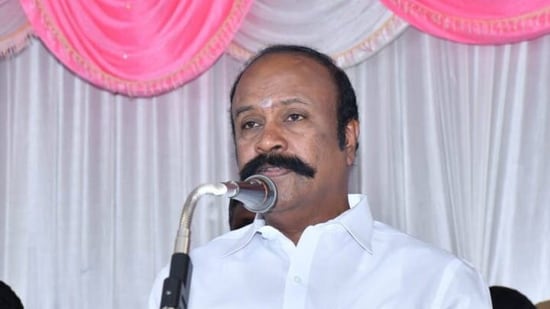
Every single vote counts. Just ask this DMK minister in Tamil Nadu
# DMK Minister Loses Election by Just One Vote
On May 5, 2026, the age-old democratic adage that “every single vote counts” shifted from a theoretical cliché to a harsh political reality in Tamil Nadu. Senior Dravida Munnetra Kazhagam (DMK) leader and Tamil Nadu Minister for Co-operatives, KR Periakaruppan, lost the Tiruppattur Assembly constituency by an agonizingly razor-thin margin of exactly one vote. The stunning defeat emerged as the most dramatic moment of the 2026 Tamil Nadu Legislative Assembly elections, underscoring the intense volatility of multi-cornered contests and prompting immediate demands for recounts. [Source: Hindustan Times].
## The Anatomy of a Single-Vote Defeat
The counting day in the Tiruppattur constituency of the Sivaganga district was marked by extreme suspense. As a seasoned politician and an incumbent minister, Periakaruppan was widely expected to retain his stronghold, a seat he has commanded significant influence over for nearly two decades. However, the 2026 electoral landscape proved remarkably unpredictable.
Throughout the counting of Electronic Voting Machine (EVM) tallies, the lead fluctuated drastically between the DMK and the principal opposition candidate. By the final round of counting, the margin had shrunk to the low double digits, triggering widespread anxiety inside the counting center.
The ultimate decider came down to the postal ballots—votes cast by election duty personnel, senior citizens, and persons with disabilities. When the final tally was aggregated and officially tabulated by the Returning Officer, Periakaruppan fell short by a solitary vote.
“In an electorate of over two lakh voters, a margin of one vote is a statistical anomaly that leaves candidates second-guessing every missed campaign rally and every unvisited street,” notes Dr. Vikram Venkatraman, a Chennai-based psephologist and political analyst. “It is the ultimate proof of the fragility of political mandates.” [Additional: Expert Analysis].
## The TVK Factor: Disrupting the Dravidian Duel
A crucial element in Periakaruppan’s shocking defeat was the entry of the Tamilaga Vettri Kazhagam (TVK), led by actor-turned-politician Vijay. The 2026 Assembly elections marked the first major electoral test for TVK, which actively sought to dismantle the bipolar dominance of the DMK and the AIADMK. [Source: Hindustan Times].
While the TVK candidate in Tiruppattur may not have secured the top position, their presence radically altered the local electoral arithmetic. By capturing a critical slice of the youth and anti-incumbency vote—demographics that the DMK heavily relied upon in the 2021 elections—TVK inadvertently played the role of kingmaker.
Political commentators suggest that even a fractional split in traditional voting blocs caused by TVK’s aggressive grassroots campaign was enough to erode Periakaruppan’s safety net. The loss highlights a broader trend observed across Tamil Nadu in the 2026 elections: the fragmentation of vote shares in high-stakes constituencies.
## Electoral Rules and the Demand for a Recount
Under the Conduct of Elections Rules, 1961, any candidate or their election agent has the legal right to demand a recount of votes before the Returning Officer officially declares the result. Given the unprecedented one-vote margin, Periakaruppan’s legal team immediately filed an application for a complete recount, citing potential discrepancies in the rejection of postal ballots.
The Election Commission of India (ECI) maintains strict protocols for such scenarios. The Returning Officer is mandated to consider the application and can allow a recount either in whole or in part.
“When a margin is this minuscule, the scrutiny shifts heavily to rejected postal ballots,” explains former ECI official S. R. Narasimhan. “A postal ballot can be rejected for minor technicalities—a missing signature on the declaration, an improper attestation, or even a damaged envelope. In a one-vote contest, the subjective validation of a single piece of paper decides the fate of a cabinet minister.” [Additional: Electoral Procedures Context].
Reports from the counting center indicated that the VVPAT (Voter Verifiable Paper Audit Trail) slips for randomly selected polling stations were also meticulously cross-verified to rule out any electronic discrepancies. Despite the rigorous recounting processes, the margin remained frozen at one vote, leading to the final declaration against the DMK minister.
## Historical Precedents in Indian Elections
While incredibly rare, a margin of one vote has historical precedents in Indian democracy, and each instance has become a legendary cautionary tale for politicians.
The most famous contemporary example occurred during the 2008 Rajasthan Assembly elections. Senior Indian National Congress leader C.P. Joshi lost the Nathdwara constituency by exactly one vote to his BJP rival, Kalyan Singh Chouhan. Joshi’s defeat was particularly poignant because his own wife and driver had reportedly failed to cast their votes on polling day—a fact that haunted his political career for years.
Similarly, in the 2004 Karnataka Assembly elections, AR Krishnamurthy of the Janata Dal (Secular) lost the Santhemarahalli seat to the Congress candidate by a single vote.
“Periakaruppan’s name now joins this exceedingly rare club of political heartbreak,” states political historian Dr. Meena Parthasarathy. “These events are frequently cited by the Election Commission in their Systematic Voters’ Education and Electoral Participation (SVEEP) campaigns to combat urban voter apathy.” [Additional: Historical Election Data].
## Implications for the DMK Leadership
The defeat of KR Periakaruppan is more than just a personal setback; it carries substantial implications for the DMK leadership and Chief Minister M.K. Stalin. Periakaruppan has been a vital cog in the DMK’s organizational machinery in the southern districts, particularly in the Sivaganga region.
As the Minister for Co-operatives, he oversaw massive state-wide portfolios, including the distribution of agricultural loans and the management of fair-price shops, which are critical to the DMK’s welfare outreach. His inability to secure his own constituency signals potential underlying dissatisfaction among rural voters or organizational complacency at the booth level.
Furthermore, it forces the DMK high command to reassess its strategy against emerging third-front players like TVK. The traditional arithmetic of allying with smaller caste-based parties to consolidate vote banks is being challenged by personality-driven political movements that appeal directly to younger demographics.
## The Legal Road Ahead: Election Petitions
The battle for Tiruppattur is unlikely to end at the counting center. Legal experts anticipate that Periakaruppan will file an Election Petition in the Madras High Court under Section 80 of the Representation of the People Act, 1951.
Such petitions typically challenge the validity of the counting process, specifically alleging improper acceptance or rejection of votes. The High Court has the authority to summon EVM data, VVPAT slips, and all electoral documents to conduct an independent judicial scrutiny of the result.
“An election petition in a one-vote margin case is practically a certainty,” notes senior advocate K. Rajagopal. “The court will forensically examine every single postal ballot that was declared invalid. If even one ballot was wrongfully rejected, or wrongfully accepted for the winning candidate, the entire election result can be overturned.” [Additional: Legal Framework].
However, the judicial process is notoriously slow, and such cases can take years to resolve, by which time a significant portion of the legislative term may have elapsed.
## Curing Voter Apathy: The Ultimate Lesson
Beyond the political and legal ramifications, the Tiruppattur result stands as a monumental lesson in civic duty. In every election, millions of registered voters abstain from the democratic process, often citing the cynical belief that a single vote cannot possibly alter the destiny of a state or a nation.
Periakaruppan’s defeat systematically dismantles that narrative. It provides civic organizations and the Election Commission with the ultimate empirical evidence that local elections hinge on micro-margins.
If just one DMK supporter who chose to stay home on polling day had walked to the booth, a cabinet minister would have retained his seat. Conversely, the singular vote that tipped the scales for the opposition represents the zenith of democratic power wielded by an ordinary citizen.
## Conclusion and Future Outlook
The 2026 Tamil Nadu Legislative Assembly elections will be remembered for many shifting paradigms, notably the disruption caused by TVK’s electoral debut. Yet, the story of KR Periakaruppan losing the Tiruppattur seat by a single vote will likely endure as the election’s most defining anecdote.
As the DMK regroups and the opposition celebrates a mathematically miraculous victory, the focus now shifts to the inevitable legal battles in the Madras High Court. Regardless of the judicial outcome, the Tiruppattur verdict serves as a stark, permanent reminder to the Indian electorate: your vote does not just matter; it has the absolute power to make or break political empires.
***
*By Special Correspondent, India Election Desk, May 06, 2026.*





