
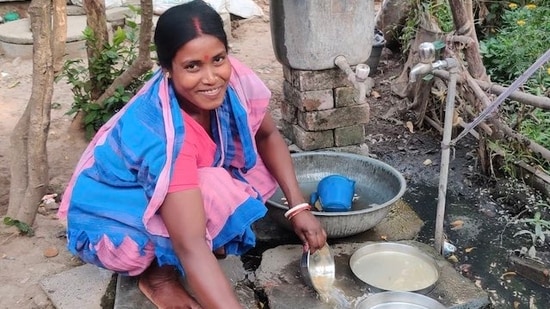
The rise of Kalita Maji: Domestic help who contested from BJP wins in Bengal's Ausgram
# Kalita Maji Wins Bengal Assembly Seat
By Special Correspondent, The India Observer, May 06, 2026
On Tuesday, May 5, 2026, Kalita Maji etched her name into Indian electoral history. Transitioning from washing utensils in affluent neighborhoods to securing a legislative victory, the Bharatiya Janata Party (BJP) candidate won the Ausgram assembly constituency in West Bengal. Defying monumental odds, financial limitations, and deeply entrenched political hierarchies, Maji’s victory stands as a profound testament to democratic accessibility. Her triumph over seasoned political veterans not only reshapes the local political landscape of the Purba Bardhaman district but also amplifies the voice of the marginalized working class in the state assembly [Source: Hindustan Times].
## A Historic Victory in Ausgram
The Ausgram constituency, a Scheduled Caste (SC) reserved seat, witnessed one of the most remarkable electoral battles of the 2026 West Bengal Legislative Assembly elections. In a state where political campaigns are increasingly dominated by high-profile rallies, massive funding, and corporate-style electioneering, Maji’s campaign stood out for its stark simplicity.
According to the official declarations following the May 5 counting day, Maji secured a decisive victory margin, unseating the incumbent Trinamool Congress (TMC) candidate. Her win is being heralded as a defining moment in a highly polarized state, proving that grassroots connection can still overpower established political machinery.
The victory in Ausgram is not merely a statistical addition to the BJP’s tally; it represents a socio-political earthquake. Voters in the rural belts of Purba Bardhaman largely consist of agricultural laborers, daily wage earners, and marginalized communities. Maji, who belongs to the socio-economically disadvantaged Bauri community, resonated deeply with this demographic. They saw their own daily struggles reflected in her calloused hands and modest demeanor [Source: Hindustan Times | Additional: Election Commission of India Preliminary Data 2026].
## From Cleaning Homes to State Assembly
The trajectory of Kalita Maji’s life is a masterclass in resilience. For over a decade, Maji’s daily routine began long before sunrise. Waking up at 4:00 AM, she managed her own household chores before traveling to clean three to four houses in her locality. Earning a meager monthly income that barely sustained her family, her life was emblematic of the invisible millions who form the backbone of India’s unorganized domestic workforce.
Her husband, a plumber and daily wage laborer, shared the burden of providing for their family and ensuring their son received an education. Despite these grinding economic hardships, Maji harbored a deep-seated desire for community service. She gradually became active in local panchayat politics, participating in protests demanding better wages, sanitation, and drinking water for her village.
Her first brush with widespread media attention occurred during the 2021 assembly elections when the BJP nominated her for the Ausgram seat. Although she lost that election to the TMC wave, the defeat did not deter her. Instead, she spent the next five years embedding herself deeper into the constituency. Unlike “parachute politicians” who disappear after an electoral loss, Maji returned to cleaning homes while simultaneously acting as a community organizer, assisting locals with ration card issues, healthcare access, and widow pensions.
## The Grassroots Campaign of 2026
When the 2026 elections approached, Maji’s campaign was characterized by its organic, crowd-funded nature. Running on a shoestring budget, she could not afford fleets of SUVs or large-scale digital advertising. Instead, her campaign was built on foot marches (*padyatras*) and door-to-door visits.
Her supporters—many of whom were fellow domestic workers, farm laborers, and local youth—donated small amounts ranging from ₹10 to ₹50 to fund her campaign literature.
“The optics of Kalita Maji asking for votes in the very neighborhoods where she was once employed to scrub floors is one of the most powerful images of modern Indian democracy,” notes Dr. Abhijit Sen, an independent political sociologist based in Kolkata. “It breaks the feudal remnants of the patron-client relationship. The worker is now the lawmaker.”
Her narrative struck a chord. She campaigned on the reality of inflation, the lack of secure jobs, and the struggles of women in unorganized sectors—issues she did not need to study in a manifesto, because she lived them every day.
## The BJP’s Subaltern Strategy in West Bengal
Maji’s victory is a crucial vindication of the BJP’s recalibrated strategy in West Bengal. After relying heavily on defectors from other parties in previous electoral cycles, the state BJP unit shifted its focus toward nurturing authentic, subaltern leadership for 2026.
By fielding candidates like Maji, the party aimed to consolidate the marginalized Hindu votes, particularly among the Matua, Bauri, and Bagdi communities. This “Subaltern Hindutva” strategy merges cultural identity politics with acute class-based economic messaging. Empowering a domestic helper to contest an assembly seat countered the opposition’s narrative that the BJP is a party of urban elites and businessmen.
The structural backing of the party machinery provided Maji with the necessary polling booth management, while her personal charisma and unvarnished truth supplied the mass appeal. It proved to be a winning combination in Ausgram, successfully bridging the gap between national party strategy and hyper-local aspirations.
## A Voice for the Marginalized: Legislative Agenda
Now holding the title of Member of the Legislative Assembly (MLA), Kalita Maji faces the daunting task of transitioning from an activist and laborer to a policymaker. Her stated agenda revolves heavily around the upliftment of the unorganized sector.
During her victory speech, Maji emphasized that her new office would be “a home for the homeless and a voice for the voiceless.” She has outlined several key priorities for her tenure:
| Policy Area | Proposed Initiative in Ausgram |
| :— | :— |
| **Labor Rights** | Advocating for a state-level registry and minimum wage standards for domestic workers. |
| **Healthcare** | Upgrading primary health centers (PHCs) in Ausgram with maternity and trauma care facilities. |
| **Infrastructure** | Ensuring 100% piped drinking water access to marginalized caste hamlets in the constituency. |
| **Education** | Establishing state-sponsored coaching centers for SC/ST students preparing for competitive exams. |
| **Women’s Safety** | Creating local task forces to address domestic violence and provide legal aid to rural women. |
*Table: Key legislative priorities outlined by MLA Kalita Maji.*
## Changing Dynamics in Bengal Politics
Maji’s rise signals shifting undercurrents in West Bengal’s political ecosystem. For over a decade, the ruling TMC has heavily relied on expansive welfare schemes, particularly targeting women (such as the *Lakshmir Bhandar* scheme), to maintain its rural stronghold. However, Maji’s win suggests that in certain pockets, voters are looking beyond cash transfer schemes, demanding structural empowerment and genuine representation from within their own ranks.
Political analysts argue that Maji’s success may trigger a ripple effect, forcing all major political parties in West Bengal—including the TMC and the Left-Congress alliance—to democratize their ticket distribution processes further. The era of the wealthy local strongman dominating rural politics is being actively challenged by the emergence of working-class leaders.
## Challenges Ahead
Despite the euphoria surrounding her historic win, the road ahead is fraught with systemic challenges. The state assembly’s bureaucratic environment, complex legislative procedures, and the deeply polarized nature of Bengal’s politics will test Maji’s endurance.
Critics and political opponents may attempt to scrutinize her lack of formal higher education. However, her supporters argue that what she lacks in academic degrees, she more than makes up for in ground-level wisdom and an intuitive understanding of poverty. To succeed, Maji will need robust support from her party’s legislative wing to navigate the complex administrative machinery of the state.
Furthermore, she will have to balance the high expectations of her constituents with the practical limitations of an opposition MLA in the state assembly. Delivering on infrastructure and welfare promises requires navigating state-sanctioned funds, which often becomes a point of friction between the state government and opposition legislators.
## Conclusion
The election of Kalita Maji from the Ausgram constituency is a narrative of hope that transcends partisan lines. Her journey from the backyards of affluent homes to the corridors of power in the West Bengal Legislative Assembly serves as a vibrant reminder of the constitutional promise of equality.
As Maji takes her oath as a legislator in May 2026, she carries the aspirations of millions of domestic workers and daily wage laborers across India. Her rise from political obscurity to a symbol of subaltern empowerment illustrates the dynamic, unpredictable, and ultimately empowering nature of Indian democracy. Whether she can translate her grassroots momentum into tangible legislative success remains to be seen, but her very presence in the assembly has already changed the status quo forever.





