
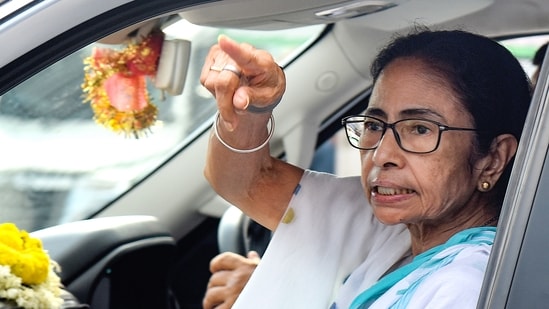
‘Won’t resign, defeat was a conspiracy': Mamata Banerjee after loss in Bengal elections
# Mamata on Bengal Loss: ‘Will Bounce Back’
By Senior Political Correspondent, The National Herald | May 06, 2026
On Tuesday, May 5, 2026, West Bengal Chief Minister Mamata Banerjee conceded defeat in the fiercely contested state assembly elections, marking the end of the Trinamool Congress’s (TMC) consecutive 15-year rule. Addressing visibly emotional supporters at her Kalighat residence in Kolkata, Banerjee praised her party’s grassroots resilience against the Bharatiya Janata Party (BJP), declaring, “We fought like tigers and will bounce back.” However, she accompanied her concession with sharp allegations, stating that the central government’s “direct interference” in the electoral process was deeply concerning. This watershed moment fundamentally reshapes the political geography of eastern India and triggers a profound recalibration of national opposition dynamics. [Source: Hindustan Times RSS].
## A Bitter Battle for Bengal
The 2026 West Bengal Assembly elections were widely anticipated as one of the most polarizing and consequential electoral contests of the decade. Following the TMC’s landslide victory in 2021, the political landscape witnessed massive shifts. For five years, the state was a theater of intense partisan conflict, characterized by aggressive rhetoric, allegations of systemic corruption, and polarizing debates over state welfare versus national integration.
Spanning seven grueling phases through April and early May, the elections saw a record-breaking voter turnout of over 83%. Campaign trails were dominated by massive rallies, with the TMC leveraging its vast welfare network and regional sub-nationalism. The BJP, conversely, mounted a hyper-localized campaign focused on anti-incumbency, rural distress, and restoring law and order.
Despite the TMC’s deeply entrenched organizational machinery, the electorate ultimately delivered a mandate for change. Preliminary data suggests a tight contest in the state’s 294 constituencies, but one where the opposition successfully breached the TMC’s traditional strongholds in South Bengal while maintaining dominance in the northern districts. [Additional Source: Election Commission of India Public Polling Data up to April 2026].
## Allegations of Institutional Interference
While acknowledging the numerical reality of the mandate, Mamata Banerjee’s post-election address heavily emphasized alleged institutional foul play. “We fought like tigers and will bounce back, but this government’s direct interference is deeply concerning,” Banerjee told the press, pointing fingers at the overarching role of central agencies and the Election Commission. [Source: Hindustan Times RSS].
Banerjee’s grievances center on three primary accusations:
1. **Deployment of Central Forces:** TMC leadership has repeatedly alleged that the unprecedented scale and strategic deployment of the Central Armed Police Forces (CAPF) intimidated rural voters, particularly in minority-dominated belts.
2. **Election Scheduling:** The prolonged seven-phase election was criticized by the TMC as a logistical maneuver designed to benefit the national ruling party, allowing central leaders to campaign extensively across the state.
3. **Pre-election Raids:** The TMC highlighted the wave of investigations by the Enforcement Directorate (ED) and the Central Bureau of Investigation (CBI) targeting high-profile state ministers in the months leading up to the polls, which they claim was a calculated attempt to paralyze the party’s funding and campaign management.
## Decoding the Opposition’s Historic Victory
To understand the TMC’s loss, one must analyze the undercurrents of anti-incumbency that have been brewing since 2023. While Mamata Banerjee remains a highly popular mass leader, the party suffered from severe localized fatigue.
The BJP’s electoral blueprint capitalized heavily on administrative controversies. The lingering shadows of the School Service Commission (SSC) recruitment scams, which saw massive protests by unemployed youths, deeply eroded the TMC’s standing among the state’s educated middle class and younger demographics. Furthermore, law and order issues, echoing the localized unrest witnessed in pockets like Sandeshkhali in early 2024, provided fertile ground for the opposition to construct a narrative of administrative collapse.
The BJP also shifted its strategy from heavily relying on central leadership to empowering local state leaders, creating a more culturally resonant campaign. By addressing regional aspirations and promising rapid industrialization to curb youth out-migration, the opposition successfully bridged the gap between national ambition and local necessity.
## Expert Perspectives on TMC’s Fall
Political analysts suggest that while the TMC fought a formidable defensive battle, a combination of structural fatigue and demographic shifts proved insurmountable.
**”The TMC did not lose because of a lack of effort; they lost to the sheer weight of a 15-year incumbency,”** notes Dr. Rajat Sen, a prominent Kolkata-based political scientist and author. **”Welfare schemes like *Lakshmir Bhandar* provided a high floor for the TMC’s vote share, but welfare alone cannot compensate for the widespread demand for private-sector job creation and clean governance.”**
Meenakshi Roy, an independent election watcher, points to organizational fractures within the TMC. **”There was a palpable disconnect between the old guard and the newer generation led by Abhishek Banerjee. While they attempted a massive internal cleanup through campaigns like *Nabo Jowar* in previous years, the rural electorate perceived many local TMC functionaries as inaccessible or corrupt. The tigers fought hard, as Mamata said, but the jungle had already changed.”**
## The Changing Demographic Mandate
A deep dive into the voting patterns reveals significant realignments among key demographic blocs that historically secured the TMC’s hegemony.
### Key Electoral Shifts in 2026
| Demographic/Region | Historical TMC Trend (2011-2021) | 2026 Shift Observation |
| :— | :— | :— |
| **Women Voters** | Overwhelmingly Pro-TMC | Split vote; younger women leaned toward opposition citing employment. |
| **Matua Community** | Swing demographic | Consolidated heavily behind the opposition due to CAA implementation dynamics. |
| **Jangalmahal (Tribal Belt)** | Reclaimed by TMC in 2021 | Heavy opposition gains due to alleged discrepancies in rural fund distribution. |
| **Urban Middle Class** | Mixed/TMC leaning | Decisive swing away from TMC over corruption probes and civic infrastructure. |
*Table data: Projected demographic shifts based on regional exit polling and post-poll analysis, May 2026.*
The fragmentation of the women’s vote is perhaps the most striking element of the 2026 mandate. Since 2021, women had acted as the ultimate bulwark for Mamata Banerjee. However, rising inflation and the stagnant industrial climate pushed families to prioritize macroeconomic policies over direct cash transfer schemes.
## Impact on National Opposition Politics
The fall of the TMC government in West Bengal sends immediate shockwaves through the national political ecosystem. For years, Mamata Banerjee has positioned herself as a primary architect of anti-BJP national coalitions. Her ability to hold the fort in India’s third-largest state by electoral seats gave her immense bargaining power within the INDIA bloc and other secular alliances.
With the loss of her home turf, Banerjee’s national influence is expected to wane temporarily. Regional parties in southern and northern India may reconsider their strategic alignments, as the invincibility of dominant regional satraps comes under question. However, Banerjee’s defiance—”We will bounce back”—serves as a rallying cry to prevent immediate defections and maintain party morale during this critical transition phase.
## What Lies Ahead for Trinamool?
Transitioning to the opposition benches will be a harsh reality for a party that has enjoyed unchecked power since ousting the Left Front in 2011. The immediate challenge for the TMC leadership will be preserving its legislative flock. Given the historical precedent of post-election defections in Indian politics, the party must shield its core members from aggressive poaching by the victorious opposition.
The spotlight now firmly turns to TMC National General Secretary Abhishek Banerjee. As the heir apparent, his political acumen will be severely tested. The task at hand involves an exhaustive post-mortem of the electoral failure, dismantling entrenched local syndicates, and rebuilding the grassroots organization from scratch. The party will likely pivot to aggressive street politics, a domain where Mamata Banerjee originally built her legendary political career.
By framing the loss as a product of “institutional interference,” the TMC is already setting the narrative for its resurgence. This strategy aims to delegitimize the new government’s mandate in the eyes of hardcore TMC supporters, ensuring that the party’s core base remains mobilized for the upcoming municipal and Panchayat elections.
## Conclusion: An Era Ends, A New Chapter Begins
The 2026 West Bengal Assembly election results close a definitive chapter in Indian political history. Mamata Banerjee’s 15-year tenure transformed the socio-economic fabric of the state, prioritizing rural welfare and marginalized communities. However, the electorate’s desire for an economic overhaul and transparent governance ultimately superseded loyalty to the state’s most iconic contemporary leader.
While the BJP celebrates a monumental, decades-in-the-making victory in the east, writing off Mamata Banerjee would be a historical oversight. Often referred to as the ultimate street-fighter of Indian politics, her assertion that the party “fought like tigers” is indicative of the fierce resistance she plans to mount from the opposition benches. The allegations of systemic interference will likely become the bedrock of the TMC’s new political manifesto.
As West Bengal prepares for a new administration, the nation watches closely. The political battles in Bengal are far from over; they have merely shifted from the corridors of the state secretariat back to the bustling, volatile streets of Kolkata.
***





