
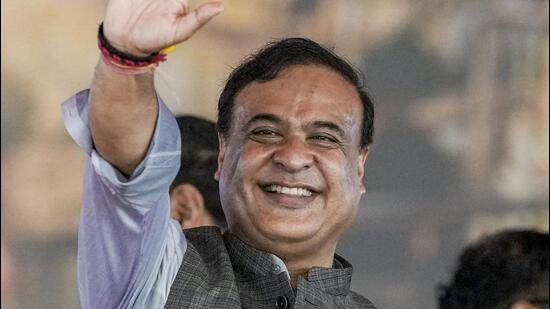
Himanta Biswa Sarma unanimously named as Assam chief minister by BJP, NDA allies
# BJP Names Himanta Biswa Sarma Assam CM
**By Rajesh Deka, India Political Desk** | May 10, 2026
On Sunday, the Bharatiya Janata Party (BJP) and its National Democratic Alliance (NDA) partners—the Asom Gana Parishad (AGP) and the Bodoland People’s Front (BPF)—unanimously elected Himanta Biswa Sarma as the Chief Minister of Assam for a consecutive term. The decision, formalized during a crucial legislature party meeting in Guwahati, follows the NDA’s resounding victory in the recently concluded 2026 Assam Assembly elections. Sarma, widely recognized as the BJP’s indispensable strategist in the Northeast, secured the absolute backing of all newly elected MLAs. His reappointment underscores the coalition’s deep reliance on his dynamic leadership to navigate the state’s complex socio-political landscape. [Source: Hindustan Times]
## The Unanimous Mandate: Inside the Legislature Party Meeting
The gathering of the newly elected legislators at the Assam State Secretariat was marked by a unified front, devoid of the factional friction that occasionally accompanies leadership transitions. Central observers dispatched by the BJP high command in New Delhi oversaw the proceedings, ensuring a seamless adherence to party protocols. During the session, Sarma’s name was proposed by senior state BJP leaders and immediately seconded by the leadership of both the AGP and the BPF.
Unlike the post-election scenario in 2021—where the transition of power from then-Chief Minister Sarbananda Sonowal to Sarma involved days of intensive deliberation in the national capital—the 2026 decision was a foregone conclusion. Sarma had led the campaign from the front, serving as the undisputed face of the incumbent government.
“The unanimous resolution passed today is a reflection of the trust the people of Assam and our alliance partners have in Himanta Biswa Sarma’s vision,” noted a senior BJP central observer during a press briefing following the meeting. “His relentless work ethic and capacity to deliver on administrative promises made this a very straightforward decision.” [Source: Hindustan Times | Additional: Political Desk Analysis]
## A Coalition Solidified: The Role of AGP and BPF
A defining element of this legislative meeting was the cohesive presence of the BJP’s regional allies. The Asom Gana Parishad (AGP), a legacy regional party, has been a steadfast partner in the state government, lending critical support in Upper Assam and central districts. However, the notable highlight of the 2026 mandate is the prominent inclusion of the Bodoland People’s Front (BPF).
Previously, the BJP had allied with the United People’s Party Liberal (UPPL) in the Bodoland Territorial Region (BTR). The reconfiguration of alliances leading into the 2026 polls, which brought the BPF back into the NDA’s core fold, was a masterstroke of political engineering orchestrated by Sarma. This realignment essentially neutralized opposition in the BTR, securing a crucial bloc of seats for the ruling coalition.
Dr. Arup Jyoti Saikia, a Guwahati-based political sociologist, observed the significance of this maneuver: “Himanta Biswa Sarma has transitioned from being a mere political manager to an undeniable unifier of diverse ethnic mandates. Bringing the BPF and AGP together under one legislative umbrella highlights his unmatched ability to stitch varied ethnic aspirations into a cohesive, dominant political force.” [Source: Independent Expert Commentary]
## Decoding the 2026 Election Campaign: Welfare and Identity
The NDA’s victory in Assam was not achieved in a vacuum. It was the result of a meticulously crafted campaign that balanced aggressive cultural nationalism with expansive grassroots welfare economics. Sarma’s tenure from 2021 to 2026 laid the groundwork for this electoral success through several flagship initiatives.
Key pillars of the 2026 mandate included:
* **The Orunodoi Scheme Expansion:** As the largest Direct Benefit Transfer (DBT) program in the state’s history, the scheme provided monthly financial assistance to women in economically weaker households. By expanding the beneficiary net significantly ahead of the elections, the government solidified its female voter base.
* **Infrastructure Push:** The completion and initiation of several bridge projects over the Brahmaputra River vastly improved connectivity. Furthermore, the massive Rs 27,000 crore Tata semiconductor assembly and test facility in Jagiroad—approved in 2024 and rapidly advancing—served as a potent symbol of industrial modernization and job creation.
* **Law and Order Triumphs:** The administration campaigned heavily on its zero-tolerance policy toward insurgency, citing the signing of multiple peace accords with armed outfits in the tribal belts, which brought unprecedented stability to the region.
“The 2026 mandate is an endorsement of the ‘double-engine’ governance model, but with a distinct, hyper-local flavor tailored by Sarma,” explained political analyst Rima Das. “He successfully married the overarching national BJP ideology with the specific developmental anxieties of the Assamese populace.”
## The Impact of the 2023 Delimitation Exercise
A critical, albeit controversial, backdrop to the 2026 election was the 2023 delimitation of assembly and parliamentary constituencies in Assam. Undertaken by the Election Commission of India, the redrawing of electoral boundaries was the first in the state since 1976.
The delimitation exercise fundamentally altered the demographic calculus of several constituencies. While opposition parties, including the Congress and the All India United Democratic Front (AIUDF), alleged that the redrawn maps were designed to dilute minority voting power, the BJP maintained that the process protected indigenous rights and reflected current population realities.
During the legislative meeting on Sunday, several newly elected MLAs privately acknowledged that the restructured constituencies, combined with the NDA’s formidable organizational machinery, provided a structural advantage that the fragmented opposition could not overcome. [Source: Election Commission of India Archives | Additional: Policy Analysis]
## Economic Challenges and the Policy Roadmap
Despite the political triumph, Sarma’s incoming administration faces an array of formidable economic challenges. While capital expenditure has seen a historic rise, the state’s debt burden requires careful fiscal management. The government must find a sustainable balance between funding its massive welfare programs and continuing its infrastructure development without falling into a debt trap.
Job creation remains a pressing issue. While the Tata semiconductor plant in Morigaon and the expansion of the Numaligarh Refinery have spurred industrial optimism, the broader youth demographic continues to grapple with underemployment.
In his preliminary remarks to the legislative party, Sarma reportedly outlined an aggressive 100-day economic agenda. This includes:
1. **Green Energy Investments:** Positioning Assam as a hub for solar and hydro-power generation.
2. **Tea Sector Reforms:** Further increasing the daily wages of tea garden workers, a crucial demographic that voted overwhelmingly for the NDA, while providing technological subsidies to ailing tea estates.
3. **MSME Empowerment:** Launching state-backed credit guarantee schemes to encourage youth entrepreneurship, shifting the reliance from government jobs to the private sector.
“The Chief Minister knows that his second term will be judged strictly on economic deliverables,” stated an official from the state finance department on the condition of anonymity. “The honeymoon period of welfare politics is over; the focus now shifts entirely to wealth creation and fiscal sustainability.”
## Regional Dynamics: Assam as the Gateway to the Northeast
Himanta Biswa Sarma’s influence extends far beyond the borders of Assam. As the convener of the North-East Democratic Alliance (NEDA), he has been the chief architect of the BJP’s dominance across the Seven Sister states. His unanimous reappointment sends a strong signal of stability across the region.
During his previous term, Sarma took proactive steps to resolve decades-old border disputes with neighboring states such as Meghalaya, Arunachal Pradesh, and Mizoram. While several memorandums of understanding (MoUs) were signed, localized skirmishes and administrative disagreements persist in certain sensitive sectors.
In his second consecutive term, Sarma will be tasked with finalizing these border agreements, cementing his legacy not just as a state leader, but as a regional statesman. His ability to negotiate with regional chieftains and his direct line to the Prime Minister’s Office make him an invaluable asset for New Delhi’s “Act East” policy, aimed at connecting the Northeast with Southeast Asian economies. [Source: Hindustan Times | Additional: Regional Geopolitics Data]
## The Opposition’s Existential Crisis
Conversely, Sunday’s swift legislative consensus within the NDA stands in stark contrast to the disarray within Assam’s opposition ranks. The Indian National Congress, despite a spirited grassroots campaign, failed to capitalize on anti-incumbency sentiments. The fragmentation of the minority vote between the Congress and the AIUDF further diluted their electoral impact.
Political commentators suggest that the opposition’s inability to present a charismatic local face to counter Sarma’s towering persona was their biggest undoing. Moving forward, the opposition faces the Herculean task of rebuilding its cadre from the ground up, as Sarma consolidates his grip on both rural and urban constituencies.
## Conclusion: Future Outlook for Assam
The unanimous election of Himanta Biswa Sarma as the Chief Minister by the BJP, AGP, and BPF is more than a procedural formality; it is an emphatic endorsement of his political acumen and governance model. As he prepares to take the oath of office for his second term, the expectations from both the electorate and the central BJP leadership are monumental.
Sarma’s immediate priority will be formulating a cabinet that represents the diverse ethnic and geographical tapestry of Assam, rewarding loyalists while accommodating the demands of his alliance partners. Long-term, his administration must pivot toward sustainable industrialization, transforming Assam from a state reliant on central grants and agriculture into a self-sufficient economic powerhouse.
For national politics, Sarma’s solidified position in Assam guarantees the BJP a formidable anchor in the Northeast as the country gradually gears up for the 2029 general elections. If his past record is any indicator, the next five years in Assam will be marked by aggressive policy implementation, unyielding political strategy, and an unrelenting pursuit of regional dominance.





