
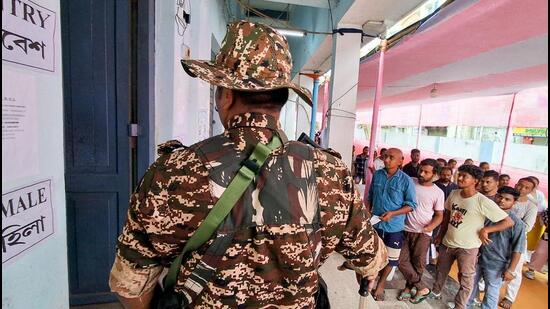
In 10 of 152 Bengal Phase 1 seats, an absolute fall in voter turnout from 2024| India News
# Bengal Phase 1: Turnout Drops in 10 Key Seats
**By Staff Reporter, Election Desk** | **April 24, 2026**
In a surprising electoral shift during Phase 1 of the 2026 West Bengal Assembly Elections, 10 out of the 152 contested seats recorded an absolute fall in voter turnout compared to the 2024 Lok Sabha polls. According to preliminary data released on Friday, this decline is particularly notable in four Muslim-majority constituencies—Samserganj, Lalgola, Bhagabangola, and Farakka. These specific assembly segments consistently elected Muslim legislators between 2011 and 2021. The sudden drop in absolute voter numbers in these traditional strongholds raises critical questions about voter apathy, shifting demographic allegiances, and the socio-economic realities keeping marginalized voters away from the ballot box.
## The Geography of the Voter Drop
The 152 seats that went to the polls in the first phase of the West Bengal elections span several critical districts, but the spotlight has sharply turned toward the Murshidabad and Malda belts. Out of the 10 Assembly Constituencies (ACs) witnessing an absolute decline in turnout, four stand out due to their distinct historical and demographic profiles: Samserganj, Lalgola, Bhagabangola, and Farakka.
[Source: Hindustan Times | Additional: Election Commission of India Preliminary Data]
These four constituencies share a deeply intertwined political history. Historically, they have been bastions of minority consolidation, electing a Muslim Member of the Legislative Assembly (MLA) in every state election from 2011 to 2021. This decade-long voting pattern highlights a consolidated electorate that traditionally mobilized in massive numbers.
An “absolute fall” is a crucial statistical metric. It does not merely indicate a drop in the *percentage* of voter turnout—which can be skewed by the addition of new voters to the electoral rolls—but rather a decline in the *actual number* of individuals who arrived at the polling booths to cast their ballots. For regions known for aggressive political mobilization and historically high polling percentages (often breaching the 80% mark), an absolute drop is a glaring anomaly.
## Demographic Implications and Minority Apathy
The demographic makeup of Samserganj, Lalgola, Bhagabangola, and Farakka is predominantly Muslim. For the ruling Trinamool Congress (TMC), as well as the opposition Left-Congress alliance, these voters form a critical base. The sudden reluctance of these voters to participate in the democratic process points toward a deeper socio-political undercurrent.
Dr. Soumitra Das, an independent political analyst and former professor of sociology at Calcutta University, suggests that this trend indicates severe voter fatigue. “The minority electorate in these border districts has historically been a highly mobilized voting bloc. They turned out in record numbers in 2021 to halt the Bharatiya Janata Party (BJP), and again in 2024 out of national political concerns,” Dr. Das notes. “However, by 2026, we are seeing signs of disillusionment. The lack of localized economic development, coupled with an exhaustion of polarized narratives, has led to political apathy. They are no longer voting out of fear, but they aren’t voting out of hope, either.”
Furthermore, these constituencies are heavily dependent on the informal economy. Samserganj, for instance, is a major hub for the bidi-rolling industry, employing thousands of women in precarious conditions. Stagnant wages and inflation have hit these communities hard, leading to a disconnect between the electorate and political campaigns that focus on macro-ideological battles rather than grassroots economic relief.
## Comparative Analysis: 2024 vs. 2026
To understand the magnitude of this electoral shift, it is essential to compare the current figures with the 2024 Lok Sabha elections. In 2024, the political climate in West Bengal was hyper-polarized. The implementation of the Citizenship Amendment Act (CAA) rules just weeks before the general elections acted as a massive catalyst, driving minority voters to the booths in unprecedented numbers to secure their political voice.
By contrast, the 2026 assembly elections are being fought on localized, state-level issues.
**Turnout Dynamics in Key Murshidabad Belts:**
* **2021 Assembly Polls:** High mobilization, strong anti-incumbency against the central government, resulting in turnouts exceeding 82% in seats like Bhagabangola.
* **2024 Lok Sabha Polls:** Sustained high turnout driven by national security and citizenship narratives.
* **2026 Assembly Polls (Phase 1):** A noticeable drop in actual footfall. Localized anti-incumbency, factionalism within local party units, and the absence of a unified existential threat have demobilized voters.
[Source: Historical Election Commission Data | Additional: State Electoral Trends Analysis]
When a voter base that feels secure from national threats suddenly stays home during state elections, it reflects a shift from ideological voting to transactional voting. If the local candidates fail to inspire confidence regarding municipal services, infrastructure, and employment, the electorate opts out.
## Impact on the Ruling Trinamool Congress (TMC)
The Trinamool Congress has enjoyed immense support from the minority communities of West Bengal since 2011. Chief Minister Mamata Banerjee’s administration has consistently relied on these constituencies as an electoral firewall against the rising tide of the BJP.
An absolute drop in turnout in seats like Farakka and Lalgola could be a cause for concern at the TMC headquarters in Kalighat. While the party’s welfare schemes, such as the immensely popular *Lakshmir Bhandar* (direct cash transfer to women), continue to yield dividends across rural Bengal, the data from Phase 1 suggests that welfare alone may not be enough to combat localized fatigue or factional infighting.
In places like Samserganj, intra-party rivalries within the TMC have frequently made headlines. When local leaders clash, their respective support bases often choose to abstain from voting rather than cross lines, directly leading to an absolute fall in vote counts.
## The Opposition’s Calculations: BJP and Left-Congress
For the opposition, interpreting this data requires nuance. The Left Front and the Indian National Congress, fighting in an alliance, traditionally viewed Murshidabad and Malda as their impregnable fortresses until the TMC dismantled them post-2011.
A drop in minority turnout could suggest that the Left-Congress alliance is failing to reclaim its lost ground. “If the minority voter is unhappy with the ruling TMC, the logical step would be to vote for the Congress or the Left. The fact that they are simply staying home indicates a lack of faith in the opposition’s ability to present a viable, winning alternative,” explains Ritesh Chowdhury, a senior political correspondent covering the Malda-Murshidabad belt.
Conversely, the BJP might view lower turnouts in minority-dominated areas as a tactical advantage. In closely contested seats, a demobilized minority vote can lower the winning threshold, potentially allowing a consolidated Hindu vote to secure victories for the saffron party in adjacent constituencies. However, seats like Bhagabangola and Lalgola are so heavily skewed demographically that even a suppressed turnout is unlikely to flip the seat directly to the BJP; rather, it threatens the margins of the prevailing secular parties.
## Migration, Heat, and Logistical Hurdles
Beyond pure politics, logistical and environmental factors must be scrutinized to explain the absolute fall in Phase 1 voter turnout.
1. **Labor Migration:** The districts of Murshidabad and Malda are among the highest contributors to India’s migrant workforce. Lakhs of young men from these ACs work in construction and agriculture in Kerala, Maharashtra, and the Middle East. During the highly charged 2024 Lok Sabha elections, many political parties funded the return journeys of these workers to ensure they cast their votes. In 2026, absent the same level of funding and national urgency, a significant portion of this demographic remained out of state.
2. **Severe Heatwaves:** April 2026 has witnessed blistering temperatures across the Gangetic plain, with the mercury consistently breaching the 41°C (105°F) mark. The Election Commission’s efforts to provide shaded waiting areas and drinking water have struggled to keep pace with the harsh realities of the regional summer. Elderly voters and daily wage laborers often skip voting to avoid heatstroke or the loss of a day’s crucial income.
[Source: Indian Meteorological Department April 2026 Reports | Additional: Socio-economic Demographics of Bengal Border Districts]
## Conclusion and Future Outlook
The absolute fall in voter turnout across 10 crucial seats in Phase 1 of the Bengal elections serves as a complex barometer for the state’s political health. The specific decline in Farakka, Samserganj, Lalgola, and Bhagabangola—areas that have staunchly backed Muslim MLAs for over a decade—shatters the myth of the permanently mobilized minority voter.
As West Bengal braces for the subsequent phases of the 2026 Assembly elections, all major political entities will be forced to recalibrate their strategies. For the ruling TMC, the immediate task is to re-energize its grassroots machinery to prevent further demobilization. For the Left-Congress, it is a wake-up call that anti-incumbency does not automatically translate into votes for the opposition.
Ultimately, the dipping numbers in these 10 constituencies underscore a growing demand for substantive governance over emotional or ideological rhetoric. When the final votes are counted, the margins in these historically vibrant democratic hubs may very well dictate the broader narrative of Bengal’s political future.





